

Winter camera control
What Are the Best Winter Photography Gloves?
Four current options for different shoot lengths, weather, budgets, and camera controls—with the drawbacks stated before you buy.
Price and availability check: September 5, 2026. They change, so confirm before ordering. Ratings are attributed to their retailer or brand source; they are not independent test scores.
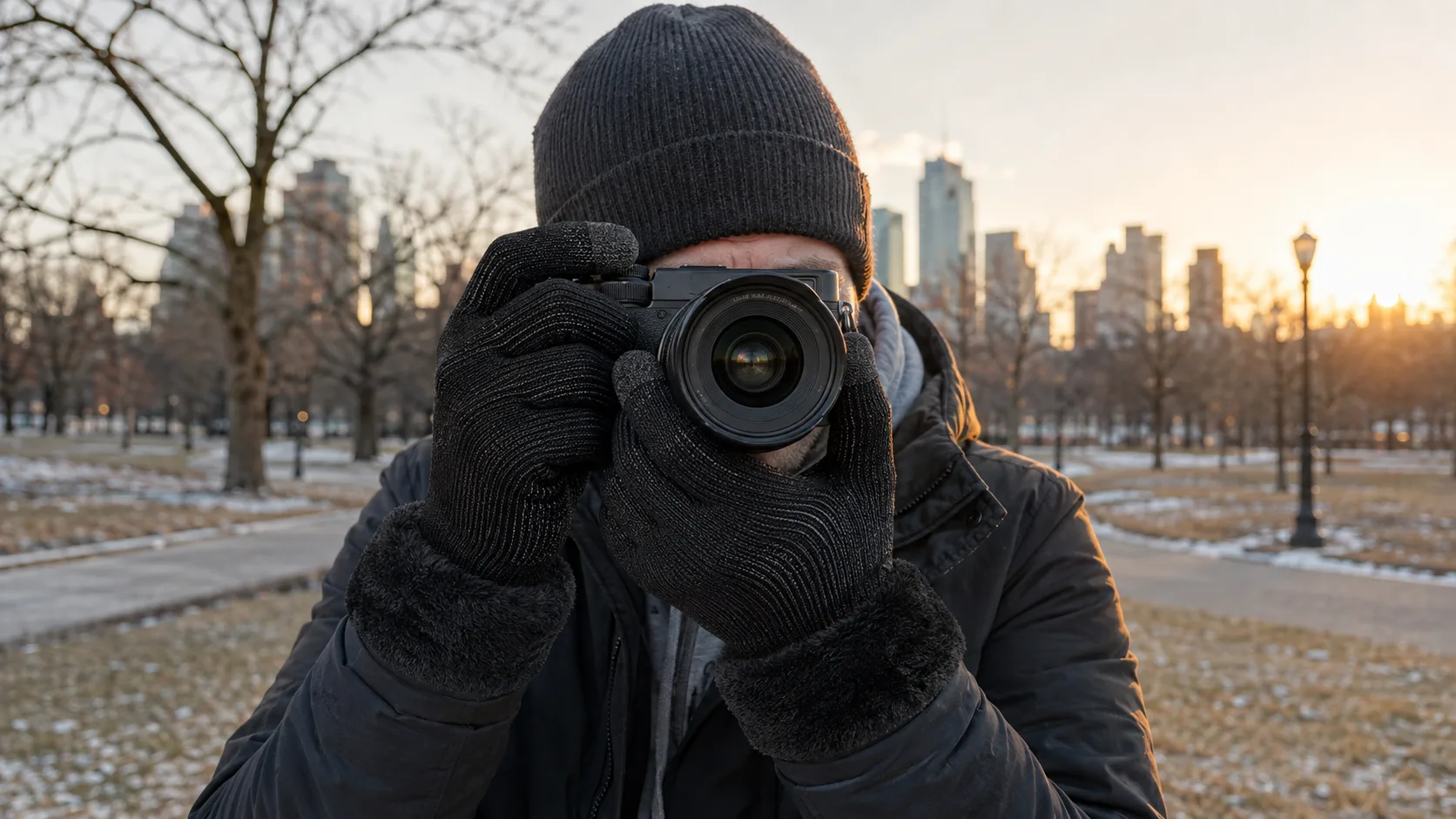
Editorial disclosure: The CozyGalar Amazon link is brand-owned and commercial. The B&H, THE HEAT COMPANY, and Haukland links are unpaid third-party links; CozyGalar earns no commission from them. We did not personally test these four products for this article. Independent observations are attributed to the publisher that made them. Original AI-assisted images illustrate decisions and do not replicate exact third-party models or prove performance.
Which winter photography gloves should you buy?
Start with the session—not the marketing label. A ten-minute neighborhood walk, an hour beside a tripod, and wet snowfall demand different compromises. This shortlist normalizes the live buying evidence so you can act without pretending one glove wins everywhere.
| Best for | Exact product | Live buying evidence | Material drawback |
|---|---|---|---|
| Brief, dry city walks on a budget | CozyGalar Men’s Winter Gloves | $11.99; In Stock; 4.4/5 from 1,192 Amazon ratings | Not a dedicated camera glove; not verified waterproof, windproof, or suitable for extreme cold |
| Direct dial and button access under $40 | Freehands Men’s Stretch Thinsulate Gloves, XL | $39.95; In Stock; 631 B&H reviews; aggregate star score not exposed | Linked listing is XL; thumb and index are exposed when folded back; retailer marks touchscreen compatibility “No” |
| Fast mitten coverage between shots | THE HEAT COMPANY HEAT 2 Softshell | $86.25; ready to ship today; 289 brand-site comments/reviews | Fingerless operation exposes skin; an independent reviewer reported snow entering an open flipper |
| A layered system for longer static sessions | Haukland 3-in-1 Winter Gloves for Photographers | €79.99 sale; 4.6/5 from 9 brand-site reviews; low stock in remaining sizes | Some sizes sold out; US storefront displayed EUR; temperature and resistance statements are brand claims, not independent results |
Fast fallback: If your size is missing or weather changes, do not force the shortlist. Use a full-finger glove you already own for a dry control test, add a warm outer mitt for waiting, or postpone the shoot when cold, wind, or wetness outruns your setup.
Run this five-minute camera-control test first
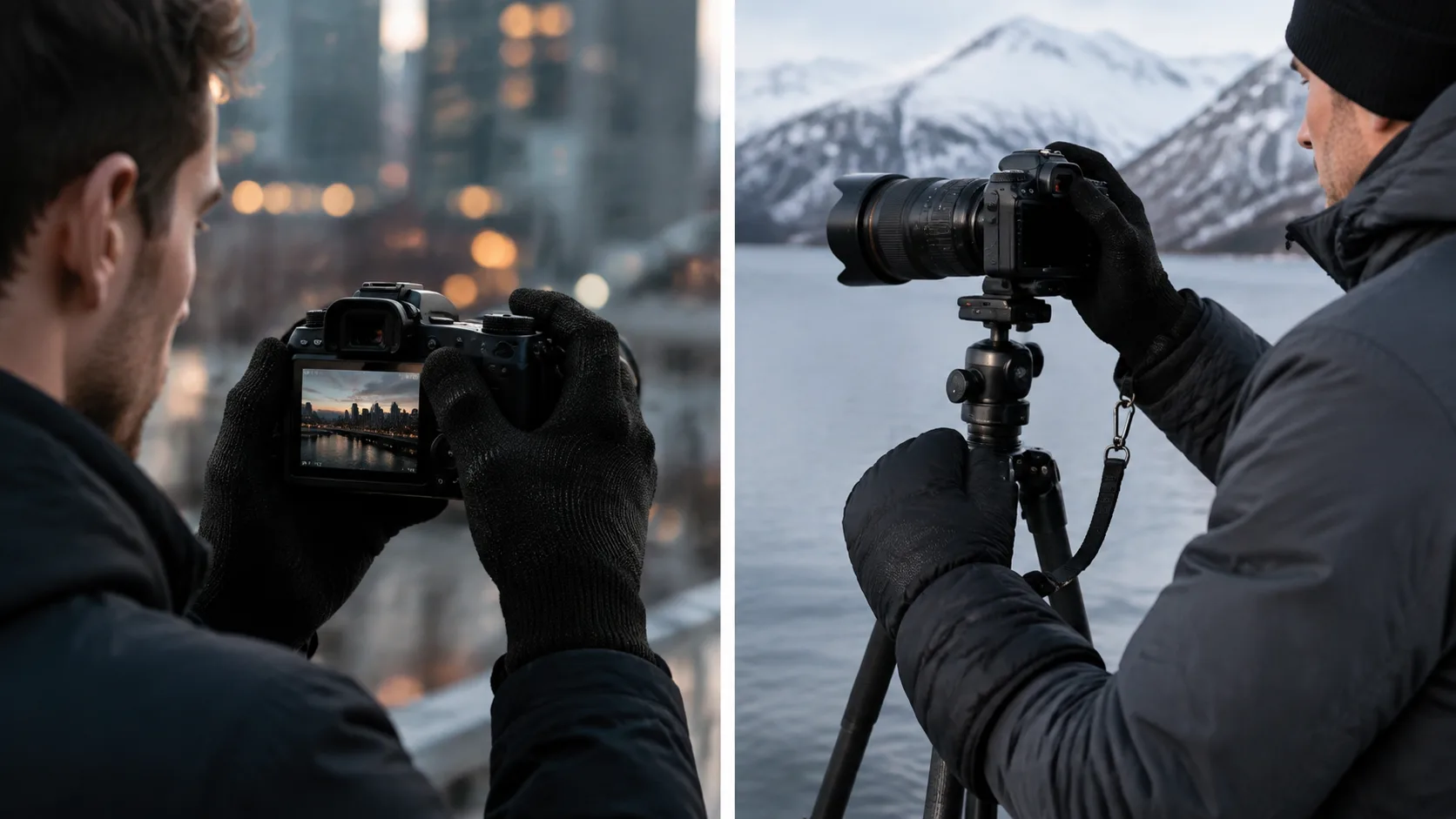
“Dexterous” and “touchscreen compatible” are incomplete promises. Your camera body, grip size, button spacing, phone protector, glove fit, and hand temperature all change the result. Test the exact setup indoors, then repeat outside close to shelter.
- Half-press and release the shutter ten times. You should feel the focus point without firing accidental frames.
- Move both command dials. Change aperture, shutter speed, ISO, and exposure compensation without looking down longer than usual.
- Use the small controls. Try the joystick, rear buttons, lens release, memory-card door, battery door, tripod plate, and lens cap.
- Operate the phone you carry. Unlock it, open the camera or map, and zoom. A conductive fingertip may work on one screen and fail on another; do not treat compatibility as guaranteed.
- Repeat after several minutes outside. If cold hands make you clumsy, the glove-system decision has failed even if the warm indoor test passed.
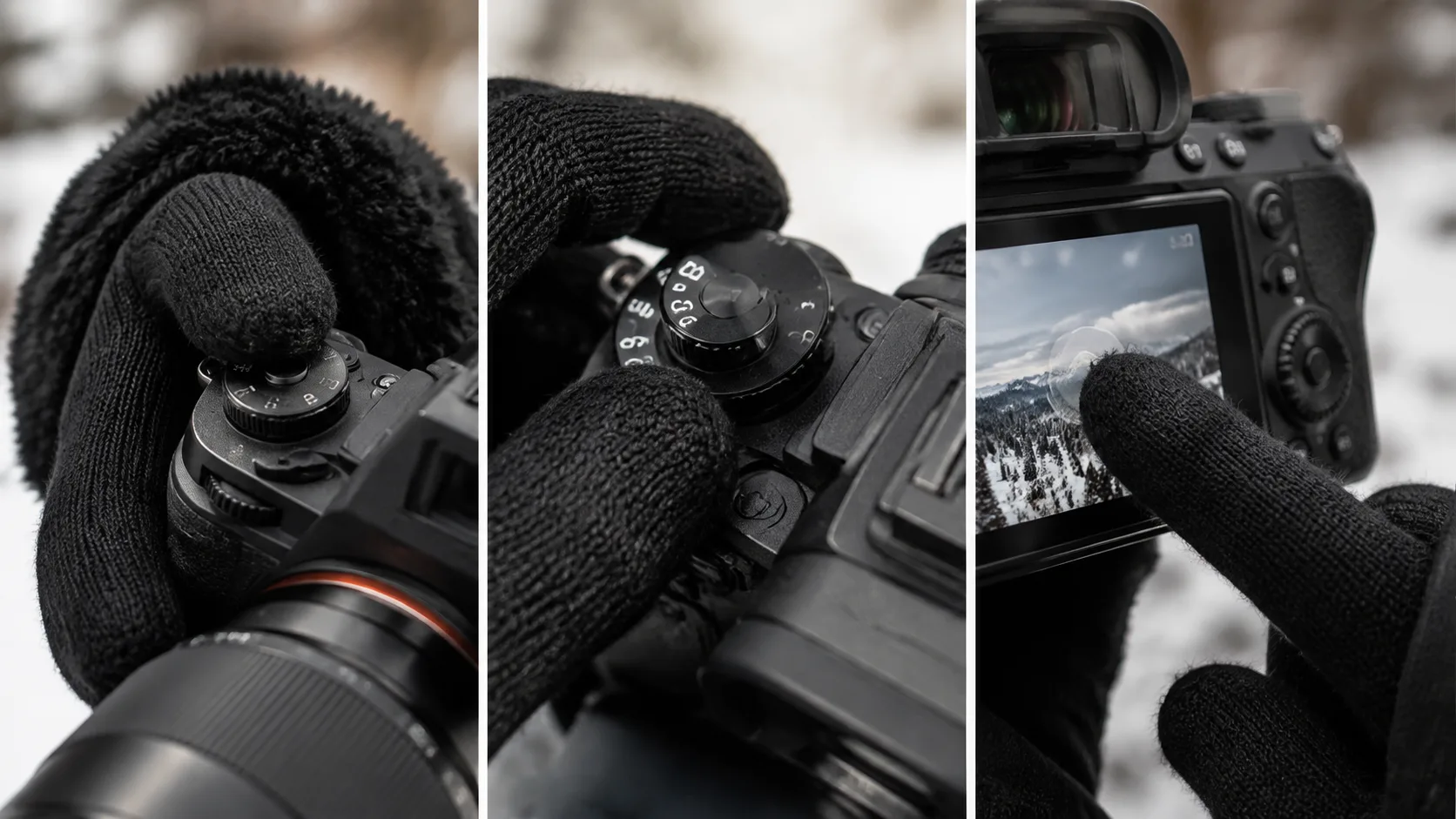
Choose by precipitation, wind, and time—not temperature alone
Weather apps supply an air temperature, but hands experience a system. Wind accelerates heat loss from exposed skin. Wetness also increases cold-stress risk. The National Weather Service explains that wind chill describes heat loss from exposed skin, and OSHA identifies wind, dampness, improper clothing, and exhaustion as cold-stress factors.
Exposure time is the missing variable in many glove roundups. A thin glove can feel fine while walking and still fail during forty motionless minutes waiting for light. Foldback fingers give direct control, but every open shot exchanges coverage for dexterity. A weather-resistant glove back does not protect the exposed fingertips at the opening.
| Session | Start with | Escalate when | Do not ignore |
|---|---|---|---|
| Short, dry urban walk near shelter | Full-finger knit glove that passes your control test | You stop walking, wind rises, or fingers cool | Knit is not a rain or extreme-cold solution |
| Dry-cold handheld shoot | Foldback thumb/index or thin liner plus warm pocket | Open-finger time grows or you wait between frames | Use leashes/pockets so folded pieces are not lost |
| Long static tripod session | Layered glove plus insulated outer mitt | Numbness, pain, clumsiness, or persistent shivering appears | Take warm, dry breaks; the photograph is not worth an injury |
| Wet snow, rain, or slush | Purpose-built water-protective system that still fits the controls | Any inner layer becomes damp | Carry a dry spare and protect gear; open finger ports admit water |
Safety boundary: This article is shopping and workflow guidance, not medical, emergency, occupational, or local-authority advice. Move to warmth and dryness if you develop numbness, pain, loss of coordination, confusion, or persistent shivering; use official guidance and professional help when needed.
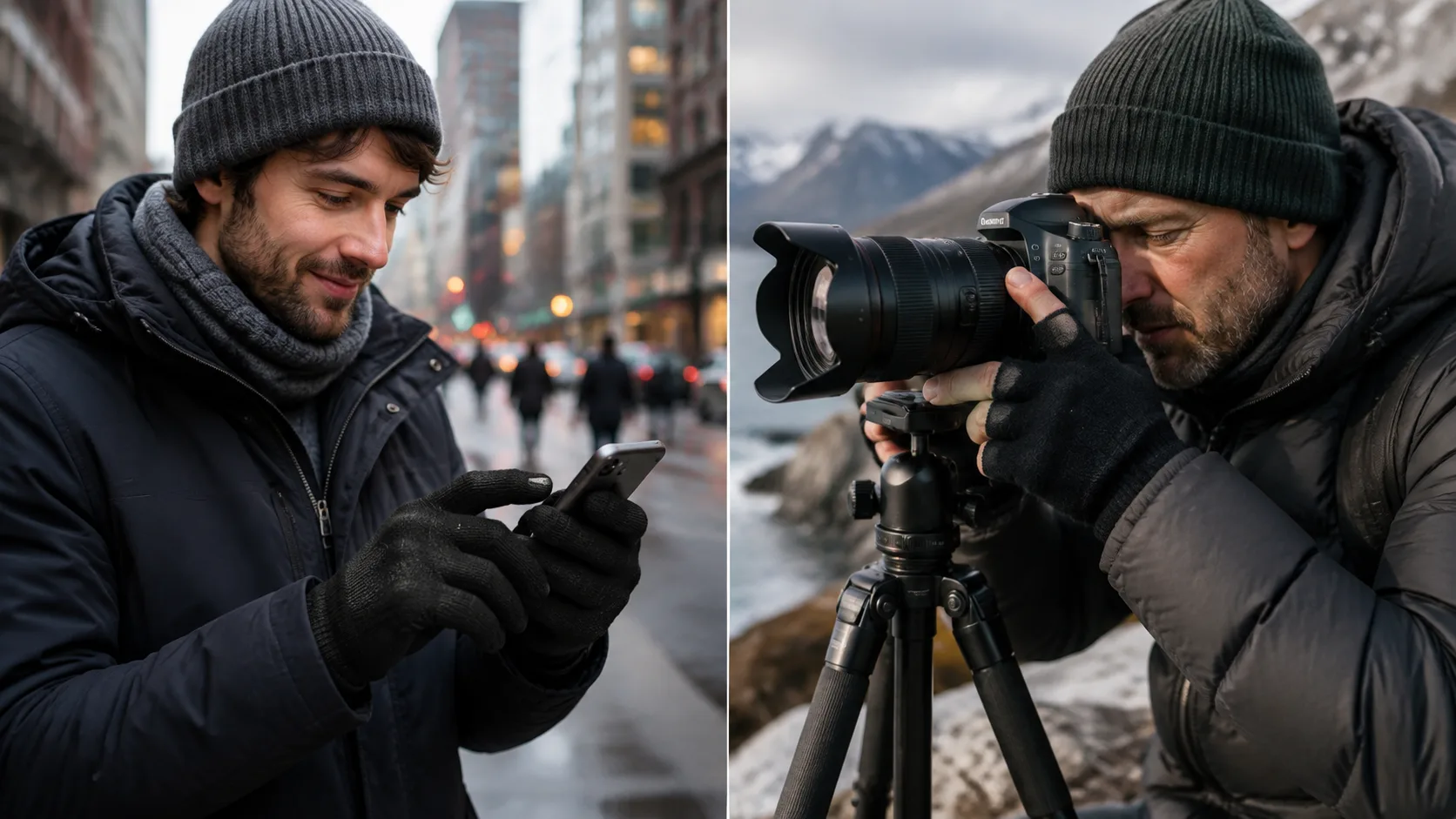
Who should—and should not—buy each pick?
CozyGalar: for brief, dry everyday photo walks
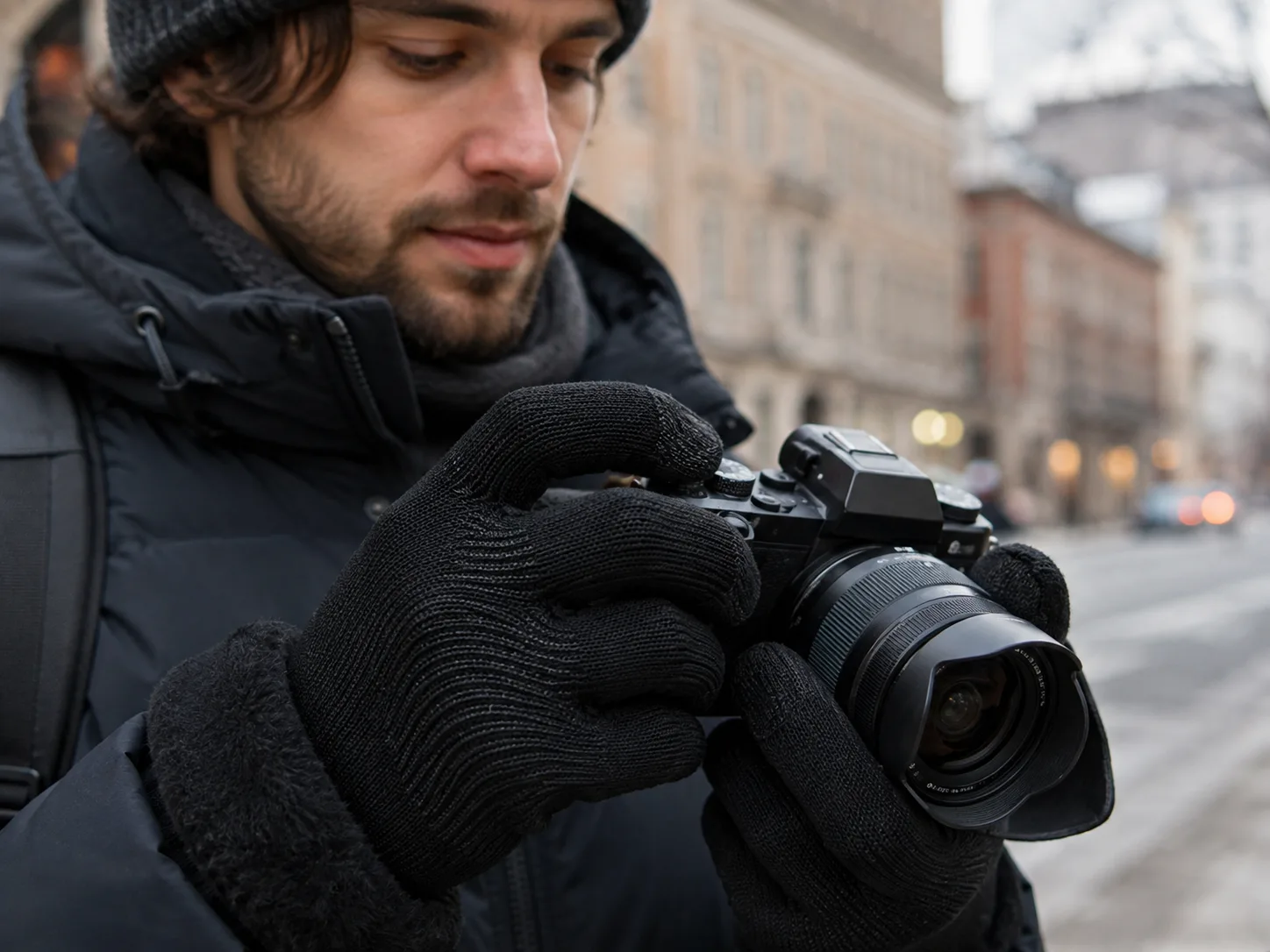
Buy if: your route is near a warm car, café, or home; you want full-finger coverage; your own camera and phone pass the five-minute test; and $11.99 fits the use better than a specialist purchase. The live Amazon page showed In Stock, 4.4/5, and 1,192 ratings on the check date.
Skip if: you expect rain, wet snow, strong wind, extended stationary shooting, extreme cold, safety-rated work, or a guaranteed touchscreen response. CozyGalar is a black wool-blend knit glove with fleece lining, conductive fingertips, and textured grip—not a technical photography shell. Its verified composition is 65% polyester, 20% merino wool, 10% elastane, and 5% conductive fabric.
Drawback: full fingers preserve coverage but reduce direct contact with small controls. Fit matters: excess fabric at the fingertip can make a usable camera feel imprecise. See how winter gloves should fit for warmth, grip, and touchscreen use.
Freehands Stretch Thinsulate: for direct controls under $40
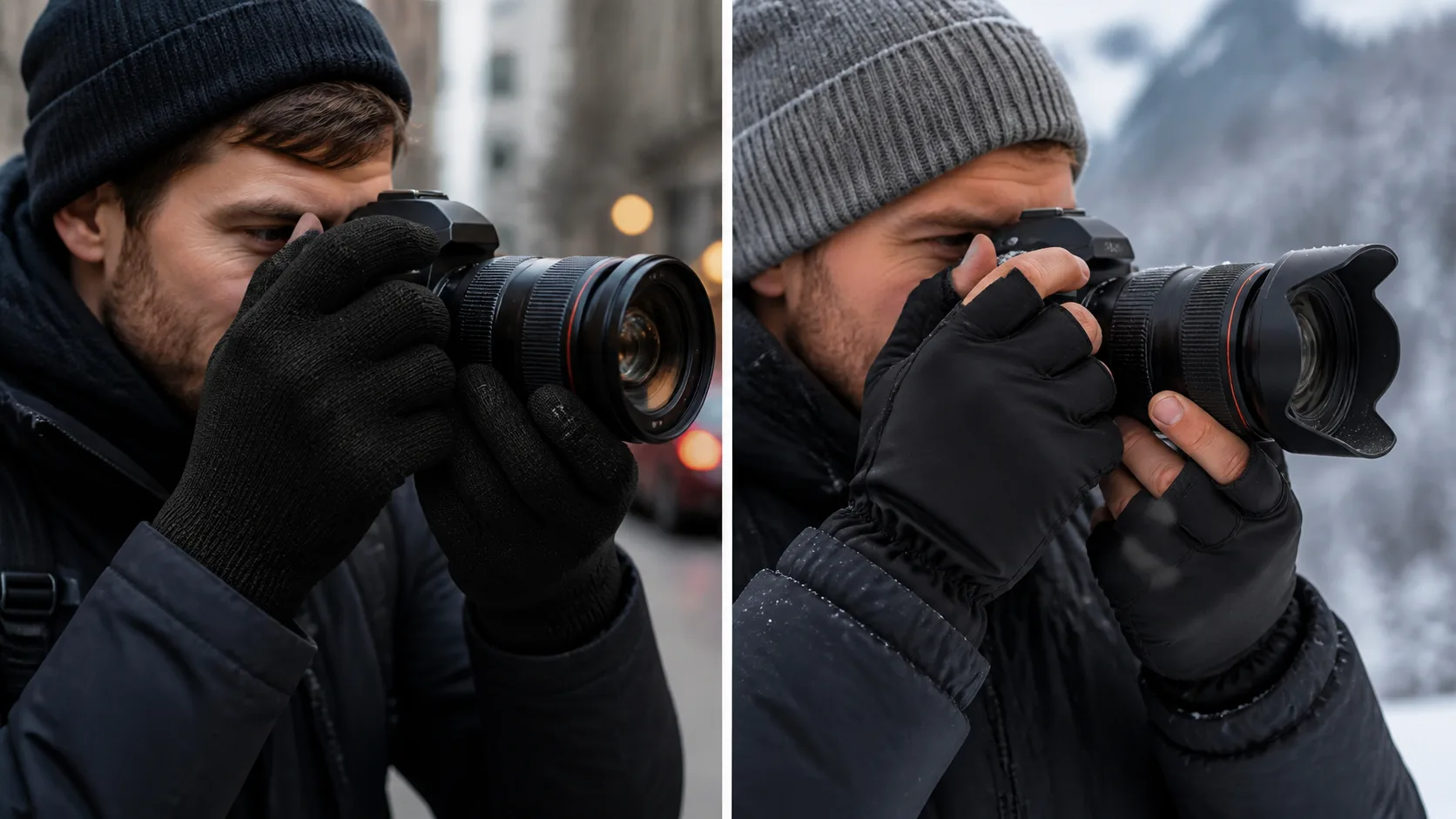
Buy if: you specifically need the thumb and index finger exposed for buttons, dials, and a shutter half-press. B&H listed the black XL model at $39.95, In Stock, with 631 reviews. The retailer describes magnetic foldback thumb/index openings, silicone grip, Thinsulate insulation, and a waterproof/windproof backing.
Skip if: XL is not your size, you need normal touchscreen use through the fabric, or exposing fingertips in wind or precipitation is unacceptable. B&H explicitly marked touchscreen compatibility “No.” The page did not expose an aggregate star rating in the accessible product data, so we report the retailer review count instead of inventing a score.
Drawback: the back-of-hand specification does not seal the operating opening. Direct camera control comes from uncovering skin.
HEAT 2 Softshell: for fast cover-and-shoot transitions
Buy if: you want fingerless control while working and a mitten cover you can close between sequences. THE HEAT COMPANY showed $86.25, “ready to ship today,” and 289 brand-site comments/reviews on the check date.
Skip if: you need sealed wet-snow protection while the cover is open, dislike exposed fingers, or want independent aggregate test evidence. Shutter Muse’s hands-on guide reported that snow can enter an open flipper; that is one attributed editorial observation, not a universal verdict.
Drawback: the convertible architecture solves access by opening coverage. That makes operating rhythm part of warmth: uncover, adjust, shoot, recover.
Haukland 3-in-1: for a warmer layered system
Buy if: you prefer a purpose-built inner-and-outer arrangement and accept more pieces to manage. Haukland’s brand page displayed a €79.99 sale price, 4.6/5 from nine brand-site reviews, and low stock in the remaining sizes.
Skip if: your size is sold out, you need a US-dollar checkout before comparing total cost, or nine brand-site reviews are too little evidence for your decision. The page’s temperature and water/wind-resistance language is manufacturer evidence; we do not present it as independent certification.
Drawback: layers add warmth options and complexity. You need a secure place for the outer glove and covers while handling a camera, cards, batteries, and tripod hardware.
How should photography gloves fit and layer?
A close fit helps control, but compressing insulation or restricting circulation can make hands colder. Check the maker’s size chart, then make a fist, spread the fingers, pinch a lens cap, and use every critical camera control. The glove should not pull hard across the knuckles or leave a long empty pocket beyond the fingertip.
For longer sessions, think in jobs:
- Control layer: thin enough for the camera and dry enough to keep.
- Warmth layer: an outer mitt or glove for waiting, walking, and wind exposure.
- Storage: leash, tether, or deep pocket that keeps removed pieces out of snow.
- Recovery: dry spare, warm vehicle or shelter, and planned breaks.
A liner is not automatically warmer if it makes the outer glove tight. Our guide to when glove liners actually help explains the fit tradeoff. If your hands remain cold, use the troubleshooting sequence in why hands can still feel cold inside winter gloves.
Frequently asked questions
Are fingerless photography gloves warm enough?
They may be workable during short control sequences, but exposed fingers lose the protection the glove was meant to provide. A convertible cover reduces exposure between shots; it does not erase exposure while open. Wind, wetness, temperature, time, circulation, and individual tolerance all matter.
Do touchscreen gloves work on camera screens?
Sometimes. Capacitive screens, protectors, contact area, conductive-fiber placement, glove fit, and moisture change performance. Test the exact camera and phone. Physical dials and customizable buttons can reduce screen dependence, but only if you configure and practice before the shoot.
Are knit gloves good for snow photography?
For a brief, dry scene with no precipitation, a fitted knit glove may be enough. Knit should not be assumed waterproof. If snow is wet, you handle snow-covered gear, or the session is prolonged, choose a purpose-built protective system and a dry spare. Read the honest wet-weather limits of knit gloves.
Can one pair cover every winter photography trip?
Usually not without large compromises. The most flexible setup is often a control glove plus a warmer outer layer, but that only works when fit, storage, and operating rhythm are tested. For winter travel, also keep visibility, warmth, power, and communication gear organized; our winter car emergency-kit checklist is a practical starting point for road-based shoots.
Need a simple glove for a brief, dry photo walk?
CozyGalar is the budget full-finger choice in this guide. Check the current Amazon page only if its everyday-knit limits match your weather and session.
Sources and methodology
- OSHA: Cold Stress
- National Weather Service: Understanding Wind Chill
- Tombol Photo: Best Winter Gloves for Photographers
- Shutter Muse: Photography Glove Guide
- B&H Explora: Winter Gloves for Photographers
- B&H: Freehands Men’s Stretch Thinsulate Gloves, XL
- THE HEAT COMPANY: HEAT 2 Softshell
- Haukland: 3-in-1 Winter Gloves for Photographers
We inspected the complete 25-post CozyGalar inventory, tested 16 topic candidates across multiple Amasty retail-blog directions, used OpenSEO for current US keyword metrics and live SERPs, and read specialist, retailer, brand, and official-safety pages. We separated current purchase facts from editorial experience and brand claims. No first-hand product test or industry consensus is implied.