


Winter windshield care
How Do You Remove Ice From a Windshield Safely?
Start the vehicle’s approved defrost setting, brush away loose snow, wait for the ice bond to soften, and use a plastic scraper—then clear every surface you need for visibility before driving.
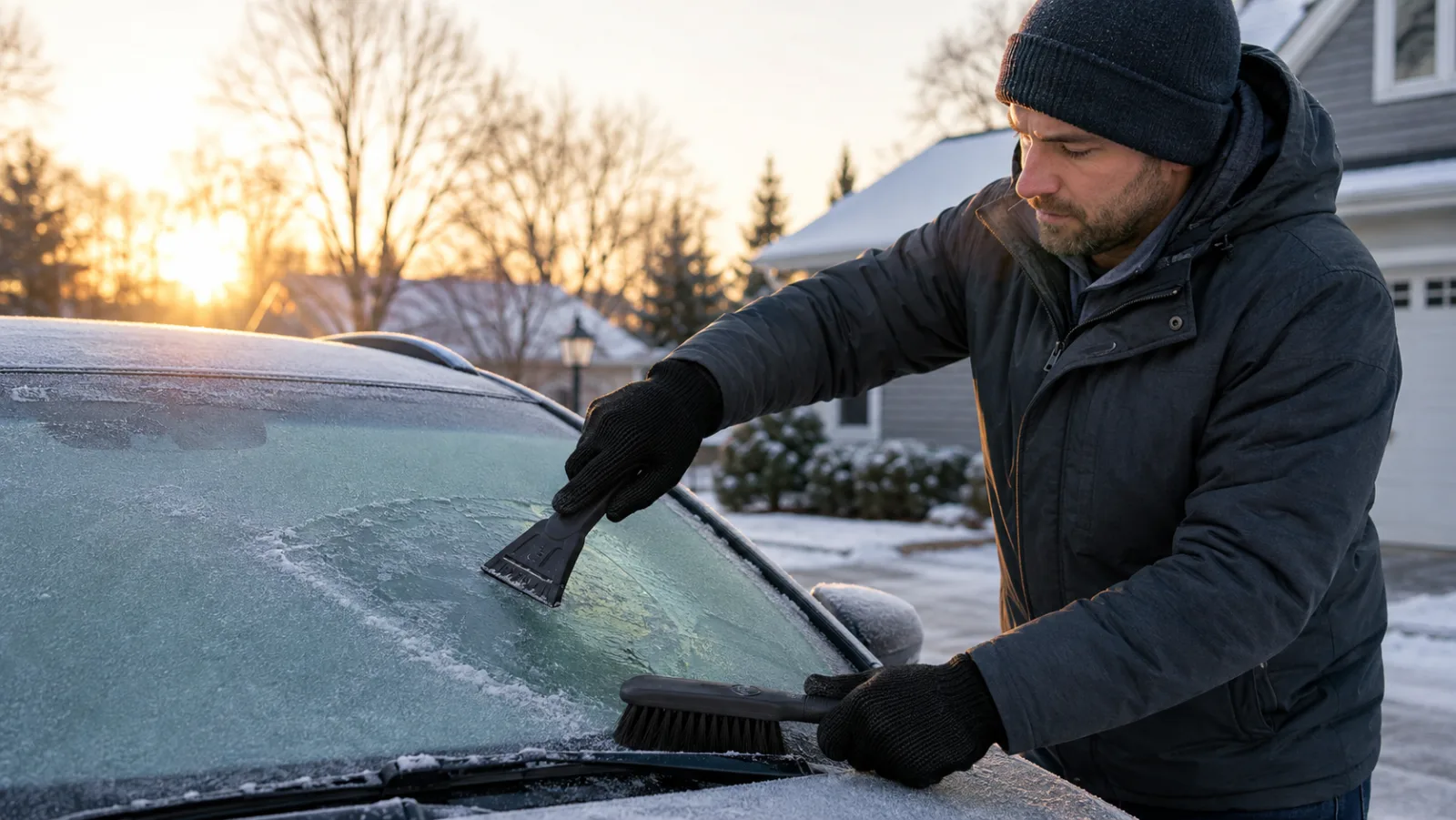
Safety note: This is general winter-driving guidance, not a substitute for your owner’s manual, current local rules, glass-repair advice, or a professional diagnosis. Never run a vehicle in an enclosed garage. If the windshield is cracked, the wipers are frozen, or the defroster does not work, stop and use vehicle-specific help.
Editorial disclosure: CozyGalar sells the knit gloves linked below and may benefit from purchases. We earn no commission from the public-safety or editorial sources cited here. The original AI-assisted images illustrate technique; they are not evidence of a product or vehicle test.
What is the safest quick way to remove windshield ice?
Work on heat and mechanical removal at the same time. That shortens the wait without turning the windshield into an experiment.
- Keep the vehicle parked outdoors. Start it only where exhaust can disperse safely. Select the front-defrost setting specified in the owner’s manual; climate-control behavior varies by vehicle.
- Clear loose snow first. Use a soft automotive snow brush on the roof, hood, lights, windows, cameras, and forward sensors. Avoid dragging gritty snow across paint.
- Free the scraper path. Do not switch on wipers that are frozen to the glass. Let the defroster work until the ice changes from a hard bonded sheet to a surface that releases under light scraper pressure.
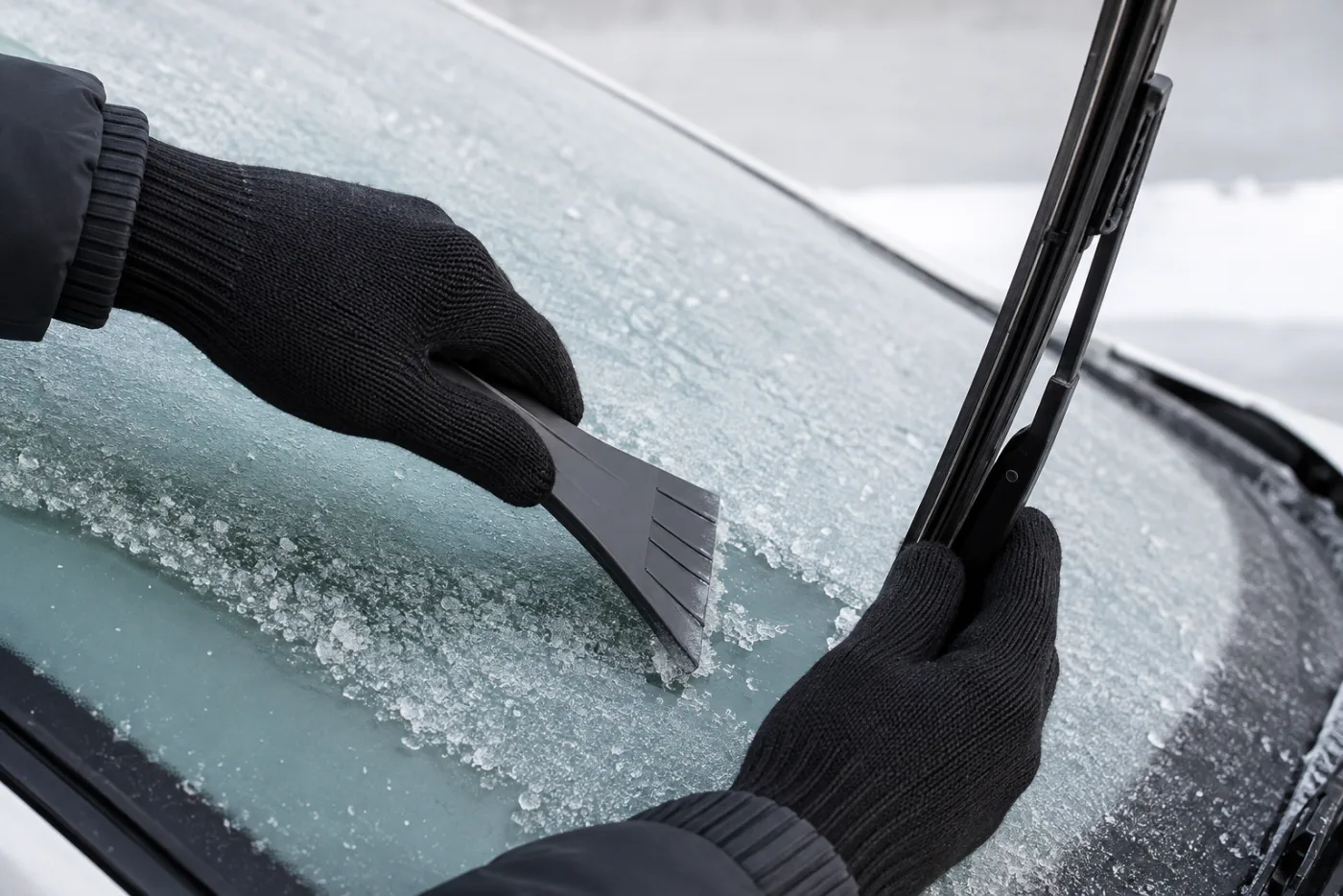
- Scrape with plastic. Use overlapping, controlled strokes. Work around the wiper rubber rather than across it.
- Finish the visibility check. Remove residue from every window and mirror you need, plus lights, cameras, and sensors. Confirm the wipers move normally before driving.
NHTSA advises drivers to keep defrosters and wipers working, use winter washer fluid, and carry a broom and ice scraper. Its winter-driving material also says to clear snow, ice, or dirt from windows, lights, cameras, and other sensors before departure.
Can hot water, a credit card, or the wipers remove ice faster?
They can create a second problem. AAA warns against hot water because a sharp temperature change can crack glass, and against metal scrapers because they can scratch the windshield or damage blades. A card is not designed as an ice tool and can break, leave a poor grip, or put your hand close to sharp ice.
Do not ask the wiper motor and rubber edges to punch through a frozen sheet. A February 2025 GM technical bulletin hosted by NHTSA tells technicians that wipers should not be used to wear through frost, snow, or ice, and warns against pulling a frozen blade off the glass. Other vehicles may use different service positions, so treat the manufacturer’s manual—not a generic social-media hack—as the final instruction.
| Method | Default verdict | Why | Better move |
|---|---|---|---|
| Vehicle defroster | Use as directed | Warms the glass gradually | Combine with brushing and plastic scraping |
| Plastic automotive scraper | Use carefully | Purpose-built edge and grip | Use light, overlapping strokes away from wiper rubber |
| Hot or boiling water | Avoid | Thermal shock can damage glass; runoff can refreeze | Use gradual defrosting |
| Metal tool | Avoid | Can scratch glass and cut blades | Use a plastic scraper |
| Frozen wipers | Do not operate or pull | Can tear rubber or strain components | Thaw and follow the vehicle manual |
| Household chemical mix | Not a universal default | Compatibility, concentration, paint, seals, and refreezing vary | Use a labeled automotive deicer approved for the vehicle |
How do you scrape without damaging the wipers?
First, identify where the blade is bonded to the glass. Do not yank it free. Some vehicles let you place the arms in a service position; others can be damaged if you lift or move them incorrectly. Follow the manual.
Keep the scraper’s working edge on the glass and move parallel to nearby blade rubber, not across it. The GM bulletin explains that excessive scraper contact can cut or tear wiper rubber. After the ice releases, remove packed ice from blade hinges gently, then test the wipers only when the glass is wet and the blades move freely. Replace a blade that is split, bent, or leaving an unsafe unwiped area.
What should you do if you have no ice scraper?
Choose patience over an improvised sharp edge. Run the approved defrost setting and wait. A labeled automotive-glass deicer may help if the product and your vehicle instructions permit it. Once the ice softens, use a soft brush or rubber squeegee for loose material. Do not drive with a small “peephole” cleared in the glass.
A no-scraper morning is also a kit failure. Put a real plastic scraper and soft brush in the cabin afterward, where a frozen trunk cannot make them inaccessible. Our winter car emergency-kit checklist shows how to organize visibility, mobility, warmth, and communication gear.
Is rubbing alcohol or commercial deicer safe on a windshield?
Alcohol lowers water’s freezing point, which is why an alcohol-containing liquid can help melt frost. A mechanical-engineering explanation published by PBS NewsHour describes that mechanism. But “it melts ice” does not prove that every homemade concentration is right for every windshield, coating, paint finish, wiper, temperature, or storage bottle.
For a repeatable default, choose a commercial automotive-glass deicer whose label matches the temperature and use case, follow its directions, and check the vehicle manual. Avoid overspray, keep chemicals away from children and pets, and do not mix products. If glass has a crack, an aftermarket coating, a camera area, or a special heating element, ask the vehicle or glass manufacturer before applying a chemical.
How much snow and ice must be cleared before driving?
Enough to restore full, reliable outward visibility and the normal operation of the vehicle’s safety equipment—not merely a patch in front of the steering wheel. Clear the windshield, side and rear glass, mirrors, headlights, taillights, backup camera, and forward sensors. Remove loose roof snow that could slide onto your windshield or blow onto another road user.
Local laws differ, so check the rules where you drive. Even where a specific snow-removal statute is not cited, obscured glass, lights, or sensors creates an avoidable hazard. If weather or visibility is still poor, NHTSA recommends considering whether nonessential travel should be postponed.
How can you prevent ice on the windshield overnight?
Covered parking is the cleanest option. When that is unavailable, use a purpose-built windshield cover on clean glass, secure it according to its instructions, and remove it carefully before operating the wipers. A dirty cover that moves in the wind can abrade paint or glass edges.
- Check the forecast and park under cover when practical.
- Fill the reservoir with winter washer fluid that meets the expected temperature range.
- Test the front and rear defrosters before the first freeze.
- Inspect wiper rubber and replace worn blades.
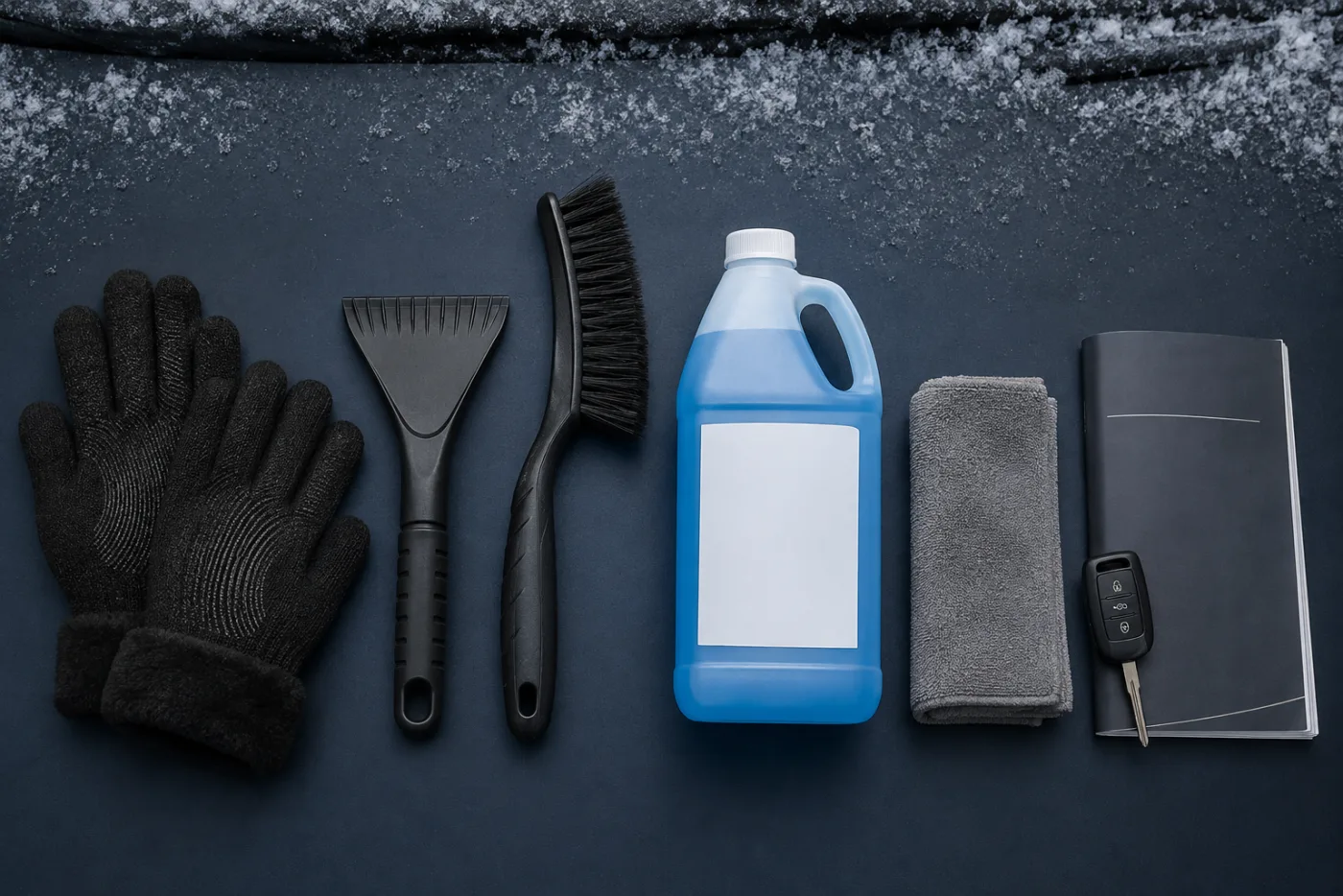
- Keep the scraper, brush, and dry gloves in the cabin.
- Use a windshield cover only as its maker and your vehicle manual allow.
- Do not leave the engine running in an enclosed space or rely on unattended idling where it is unsafe or prohibited.
For driving after the car is clear, see our guide to warmth, grip, and dexterity in winter driving gloves. Put the phone away before moving; touchscreen access is for parked use.
Are CozyGalar gloves the right tool for windshield scraping?
They can suit brief, ordinary, dry cold-weather tasks when the fit and warmth work for you. CozyGalar’s black gloves are fleece lined and use a 50% Merino Wool, 5% Conductive Fiber, 45% Polyester blend. Textured palms can help maintain grip on a scraper handle, and compatible touchscreen fingertips can help while the vehicle is safely parked.
The boundary matters: the gloves are not verified waterproof, windproof, safety-rated, or suitable for extreme cold. Wet knit gloves can become the wrong tool. For heavy wet snow, prolonged exposure, broken glass, chemicals, or severe conditions, use purpose-built protective handwear and follow the task or product instructions. Read what knit gloves can and cannot do in rain or snow.
If ordinary dry scraping and parked phone use match your routine, check current CozyGalar sizes and availability on Amazon. This is a brand-owned commercial link; it does not turn the safety guidance above into product-test evidence.
What is the simplest routine to remember?
Defrost, brush, scrape, inspect. Use the vehicle’s approved controls, remove loose snow, scrape only with the right tool after the bond softens, and inspect all visibility surfaces and safety equipment before moving. If a shortcut asks you to shock the glass, force the wipers, improvise a blade, or guess about a chemical, skip it.
Sources and methodology
- National Highway Traffic Safety Administration: Winter Weather Driving Tips
- NHTSA winter-driving checklist PDF
- General Motors technical bulletin on wiper handling, hosted by NHTSA
- AAA: How to Deice Your Car’s Windshield
- PBS NewsHour/The Conversation: windshield frost and de-icing explained
We used OpenSEO for live US keyword metrics, related-query discovery, ranked-keyword and SERP checks; read five ranking pages; inspected all 24 live CozyGalar posts; and checked product claims against the brand brief. The topic adapts Amasty’s problem-solving, myth-check, checklist, and product-use directions without copying its language. Original AI-assisted imagery uses brand-owned glove references and is not test evidence.
Pingback: How to Defog a Windshield in Winter: 5 Safe Steps - CozyGalar