

MEN’S WINTER GLOVE FIT GUIDE
A useful winter glove holds close to the hand without squeezing it. You need enough fingertip space for insulation and movement, but little enough loose fabric to keep your phone, keys, steering wheel, and leash under control.
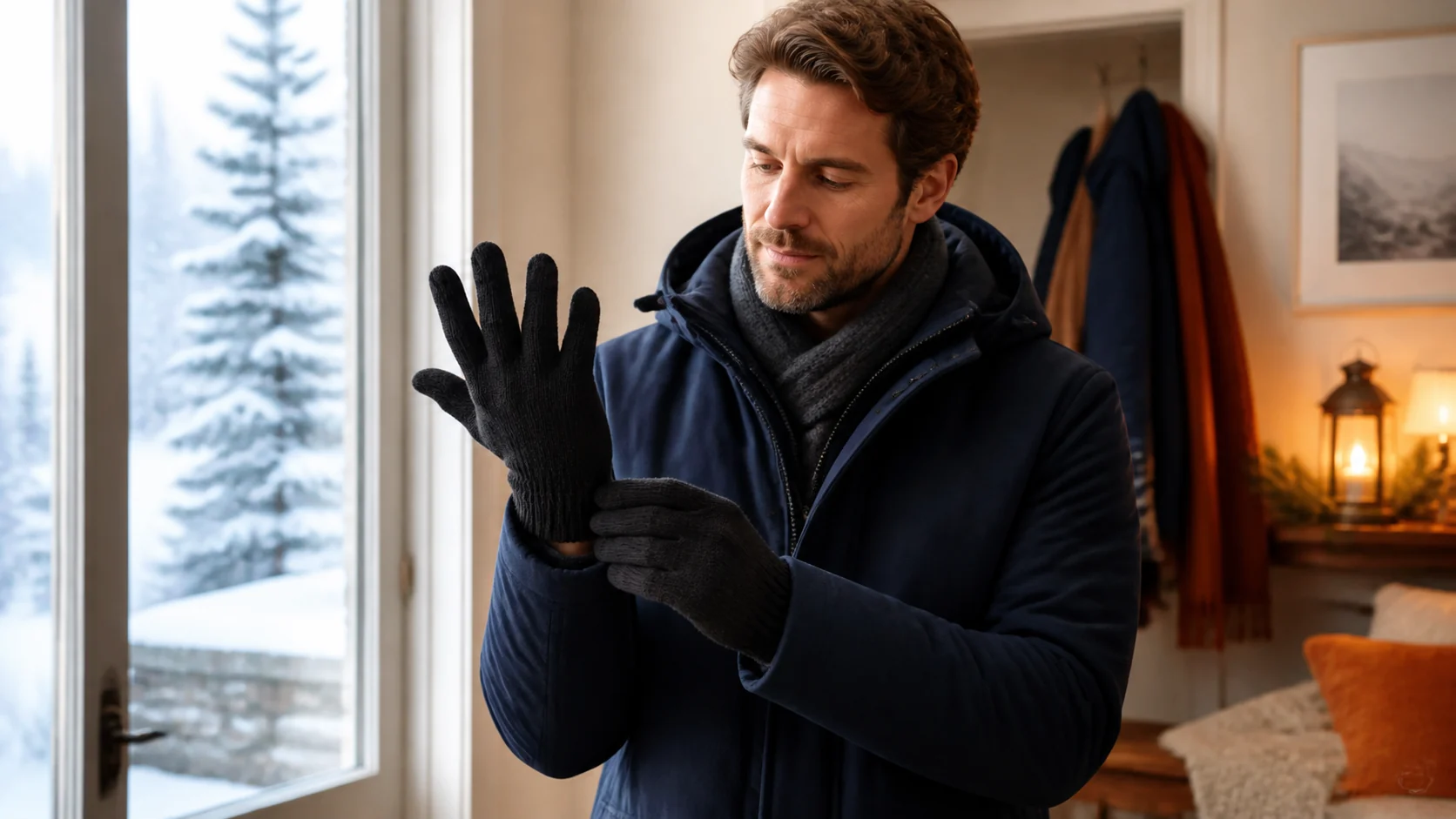
Men’s winter gloves should feel close around the palm and fingers without pressure at the knuckles, seams, or wrist. Your fingertips should reach near the ends while still moving freely. If the glove strains when you make a fist, it is too small. If fabric folds over the fingertip or shifts around the palm, it is too large.
Google results for “warm gloves for men” lean toward product lists and brand collections. That helps you find options, but it leaves a practical question unresolved: the same glove can feel warm, clumsy, or useless on a phone depending on fit. Measuring before you order reduces that risk. A five-minute movement test after delivery catches the problems a size chart cannot show.
Should winter gloves be tight or loose?
A winter glove should be snug enough to follow your hand and loose enough to preserve circulation. Tight fabric can press the fingers together, flatten insulation, and create strain when you close your hand. Arc’teryx advises against a fit that restricts blood flow because circulation supports warmth.
Extra room has limits. A large pocket of loose fabric lets the hand slide inside the glove. You then grip harder to control a steering wheel or leash, while folded material at the fingertip gets between the conductive area and the screen. The practical target sits between pressure and movement.
CozyGalar insight: warmth and control share the same fit
A small amount of room can support insulation. Loose fingertips reduce precision. Choose the fit around the job you do most often, then make sure it still passes the circulation test.
How do you measure your hand for winter gloves?
Measure the dominant hand unless the brand tells you otherwise. Use a flexible tape and keep the hand flat and relaxed. Do not pull the tape tight enough to indent the skin.
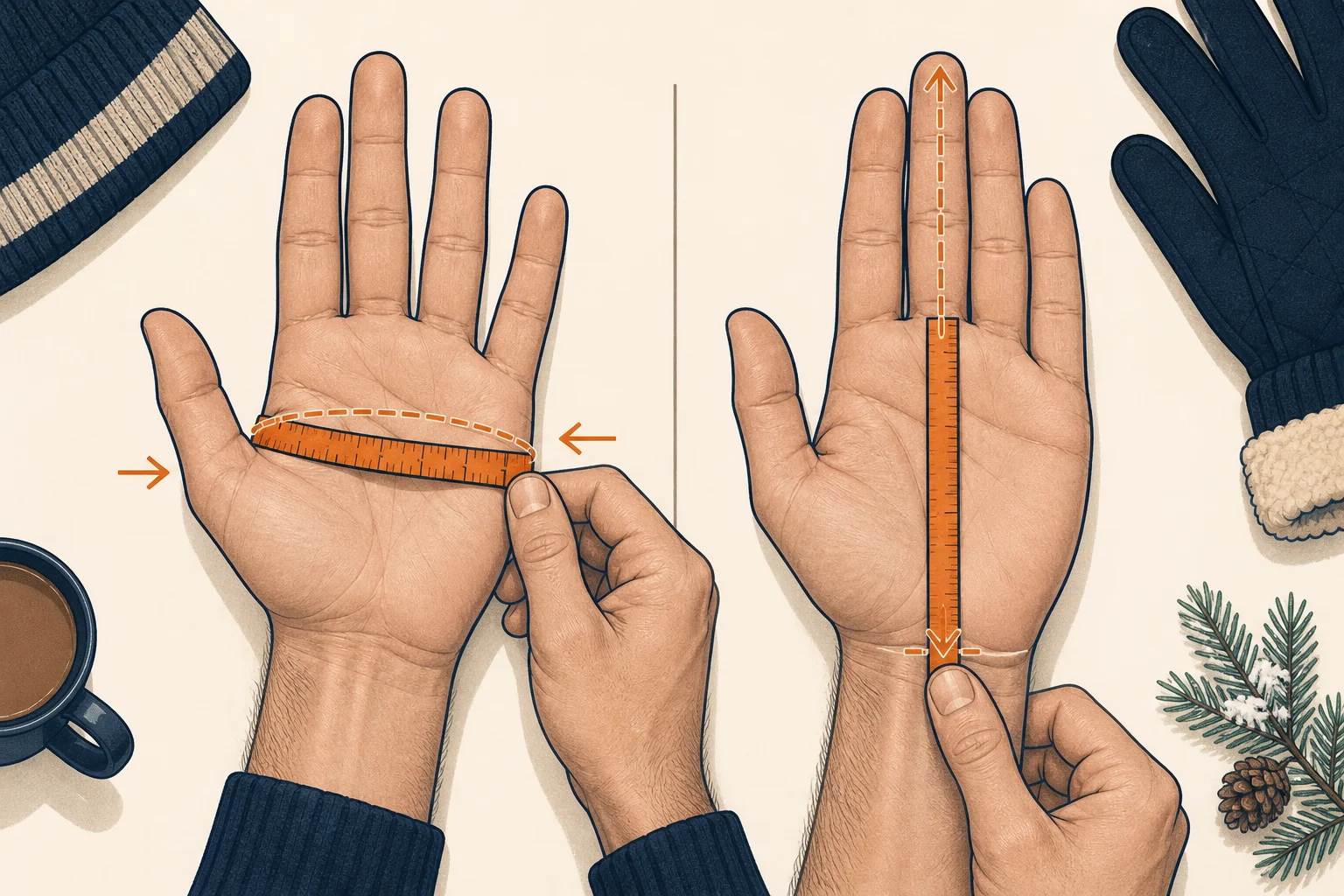
- Wrap the tape around the widest part of the palm, below the knuckles and above the thumb. Nike uses this circumference method in its glove sizing instructions.
- Measure from the base of the palm or wrist crease to the tip of the middle finger. Follow the exact start point shown by the brand’s chart.
- Measure both hands if one feels larger. Use the larger result rather than expecting a smaller glove to stretch into comfort.
- Compare each measurement with the same brand’s chart. A medium from one brand may not match a medium from another.
The Nike hand-measurement guide shows the circumference position. REI’s snow glove guide recommends using both circumference and length, then checking the maker’s chart.
How much room should be left at the fingertips?
REI gives roughly one quarter inch as a snow-glove reference. Treat that number as a starting point, not a universal rule. Thin knit gloves often sit closer to the fingertip than bulky insulated snow gloves. Long cuffs, liner systems, and shaped finger construction also change the feel.
Press the fingertip material flat. Your finger should sit close enough to control the end of the glove, with no hard contact against the seam. If you can fold a flap of empty fabric over the tip, the size or finger shape is probably wrong. If your nail presses into the end when you make a fist, try the next size.
What if length and circumference suggest different sizes?
Choose the size required by the larger measurement when the brand provides separate length and circumference rows. A wide palm in a short size creates pressure across the knuckles. Long fingers in a narrow size reach the seams before the hand can close.
This rule can produce extra space in one area, especially for hands with long fingers and a narrow palm. Look for a different glove pattern if the compromise leaves major bunching. Online shoppers often treat size as the only variable, while finger proportions and palm shape explain many poor fits.
How does glove fit affect touchscreen use and grip?
Capacitive touchscreen material works best when the conductive fingertip stays in contact with your finger and the screen. Loose fabric can slide away from the finger or land on the screen at an angle. A thick screen protector, moisture, phone sensitivity settings, and wear can also change the result, so fit is one variable rather than the only cause.
Grip creates a similar test. Hold a smooth object, turn a key, and pinch a zipper pull. You should not need to curl the fingers harder to stop the glove from sliding. Readers troubleshooting screen response can use our touchscreen glove selection guide after checking fit.
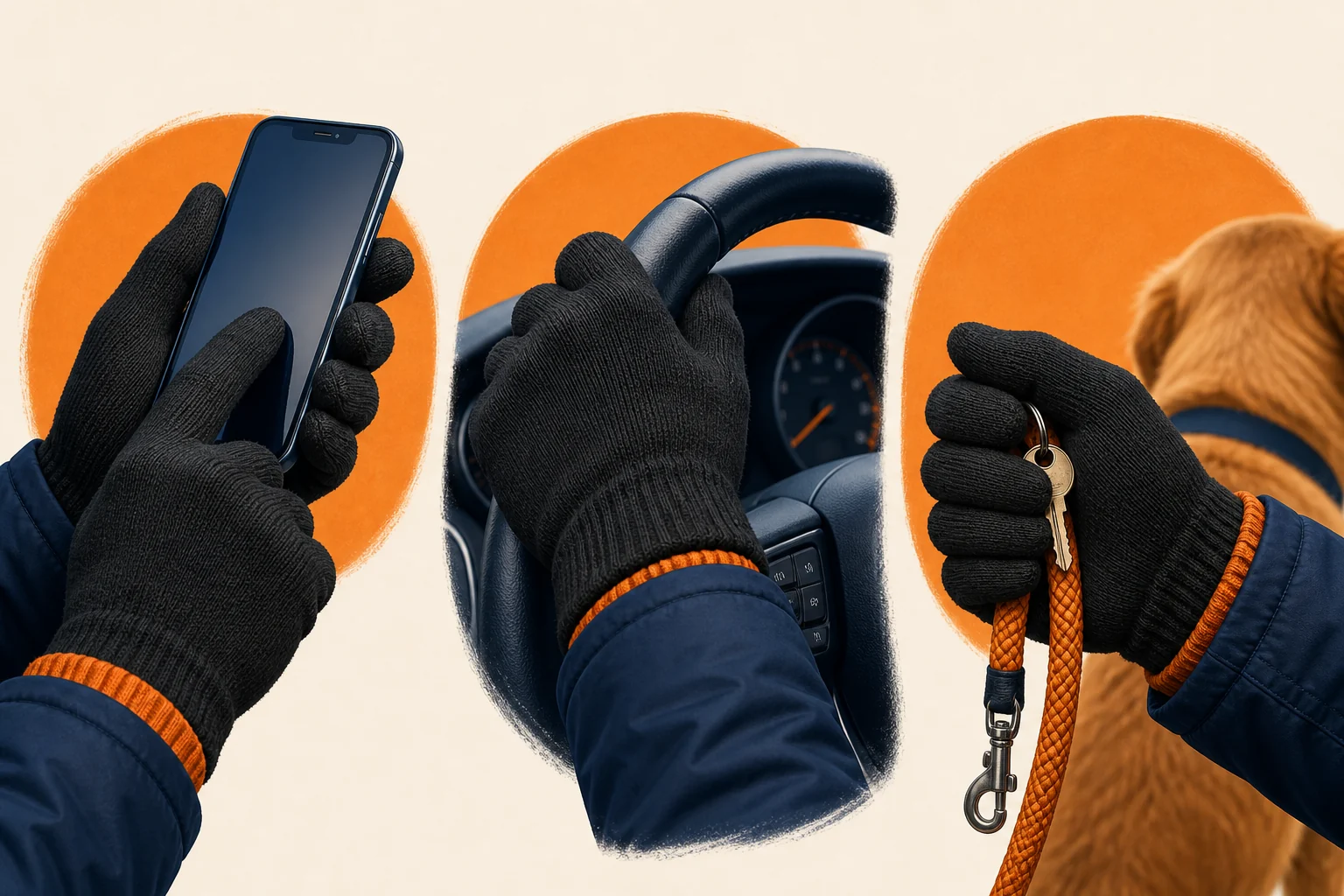
Should fit change for driving, dog walking, commuting, or snow use?
Driving and phone use reward a closer fit because small hand movements need to reach the glove surface. Try a full steering motion, operate a turn-signal stalk, and pick up a coin before keeping the pair. Our winter driving glove guide covers grip and control in more detail.
Dog walking adds leash tension, keys, and cleanup bags. Make a fist around the leash handle and check for pressure across the back of the hand. Everyday commuting needs enough cuff coverage to meet the coat sleeve without creating a bulky ridge under it.
Snow shoveling, skiing, wet work, and prolonged exposure need more than good sizing. Match the glove’s insulation and weather protection to the conditions. CozyGalar’s knit wool-blend gloves are positioned for cool-to-cold everyday routines. They are not verified as waterproof, ski-grade, or rated for extreme cold.
Should you size up for a glove liner?
Size up only when the outer glove is designed to accept a liner or the brand recommends it. A liner placed inside a close-fitting glove can compress both layers and restrict movement. Bring the intended liner to the fitting, then repeat the fist and circulation checks.
Layering works best when the outer glove keeps the liner in place without squeezing it. If you need frequent phone access, check whether the liner has its own conductive fingertip because removing the outer glove may expose the liner as your working layer.
How can you test glove fit after delivery?
- Wear both gloves indoors for ten minutes. Watch for numbness, tingling, pressure marks, or cold fingertips.
- Open and close the hand ten times. The palm should not pull tight and the fingers should return to a neutral position.
- Tap and swipe on your phone. Check each conductive fingertip the product claims to support.
- Hold keys, a mug handle, a leash, or a steering-wheel-shaped object. Look for fabric sliding around the palm.
- Put on your winter coat. Make sure the glove cuff and sleeve overlap without exposing the wrist.
If the glove passes these tests but your hands still feel cold outdoors, fit may not be the main cause. Activity level, dampness, wind exposure, and insulation all matter. Our guide to cold hands inside winter gloves helps isolate those factors.
One verified CozyGalar purchaser, Lindyloowho, wrote: “Great gloves. Very warm and comfortable, great fit.” This describes one customer’s experience and does not guarantee the same result for every hand shape.
Looking for an everyday men’s knit glove?
CozyGalar uses a wool-blend knit, fleece lining, conductive fingertips, and a textured grip for driving, commuting, dog walking, and everyday cold-weather routines. Check the current size options and listing details before ordering.
Disclosure: CozyGalar sells this product on Amazon. This is a direct product link, not a third-party affiliate recommendation.
When are everyday knit gloves the wrong tool?
Choose purpose-built protective gloves for prolonged wet exposure, severe cold, snow sports, industrial work, or tasks that require certified cut, impact, or chemical protection. A comfortable everyday knit glove cannot replace equipment designed and tested for those hazards.
For ordinary errands, the right size should disappear into the task. Your fingers move, the cuff stays put, and you stop adjusting the glove. Measure both dimensions, follow the maker’s chart, and test the movements that fill your winter day.
Sources and research notes
- REI: Snow Gloves and Mittens, How to Choose
- Nike: How to Measure Your Hand to Find Your Glove Size
- Arc’teryx: How to Select Ski Gloves and Mittens
Search evidence: OpenSEO US keyword research and live SERPs checked August 9, 2026. Marketplace evidence: SellerSprite Amazon US, July 2026. Search volume, rankings, and product availability can change. We did not laboratory-test every glove mentioned by the sources.
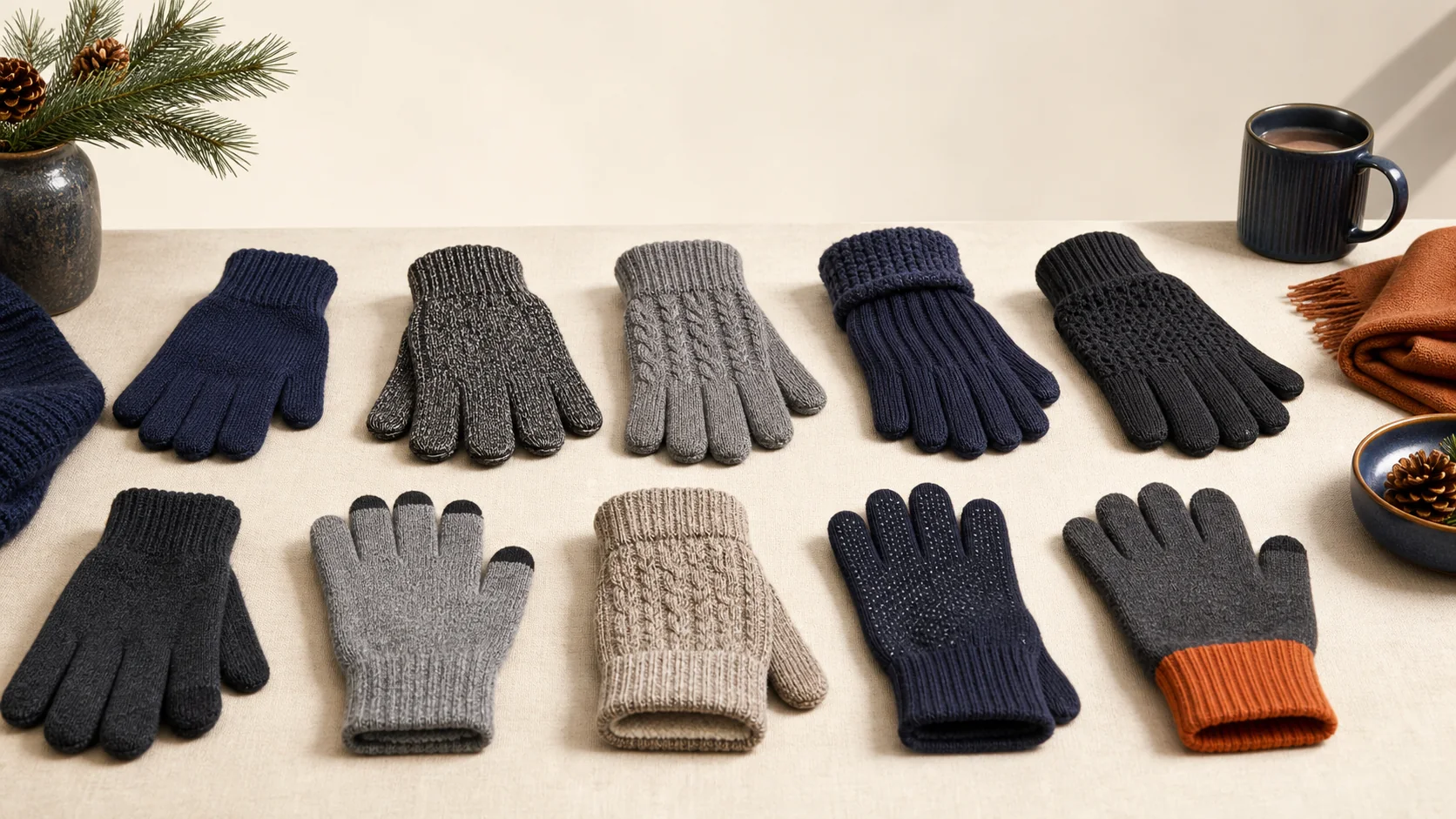
Image rights: all three illustrations were generated for CozyGalar for this article. They depict generic winter-glove use and do not claim to show the exact CozyGalar product.
Pingback: Are Heated Gloves Worth It? A Practical 2026 Guide
Pingback: Why Do My Hands Sweat in Winter Gloves and Then Feel Cold? - CozyGalar
Pingback: Best Gloves for Shoveling Snow: A Practical 2026 Guide
Pingback: Gloves vs. Mittens: Which Is Warmer—and Which Is Better for Everyday Winter? - CozyGalar
Pingback: Winter Gloves as a Gift for Men: A Practical Guide - CozyGalar