

Are Knit Gloves Waterproof? What to Know Before Rain or Snow
A knit glove can feel warm, flexible, and comfortable without being ready for wet weather. Here is how to tell ordinary knitwear from membrane-lined waterproof construction—and how to choose for the conditions you actually face.
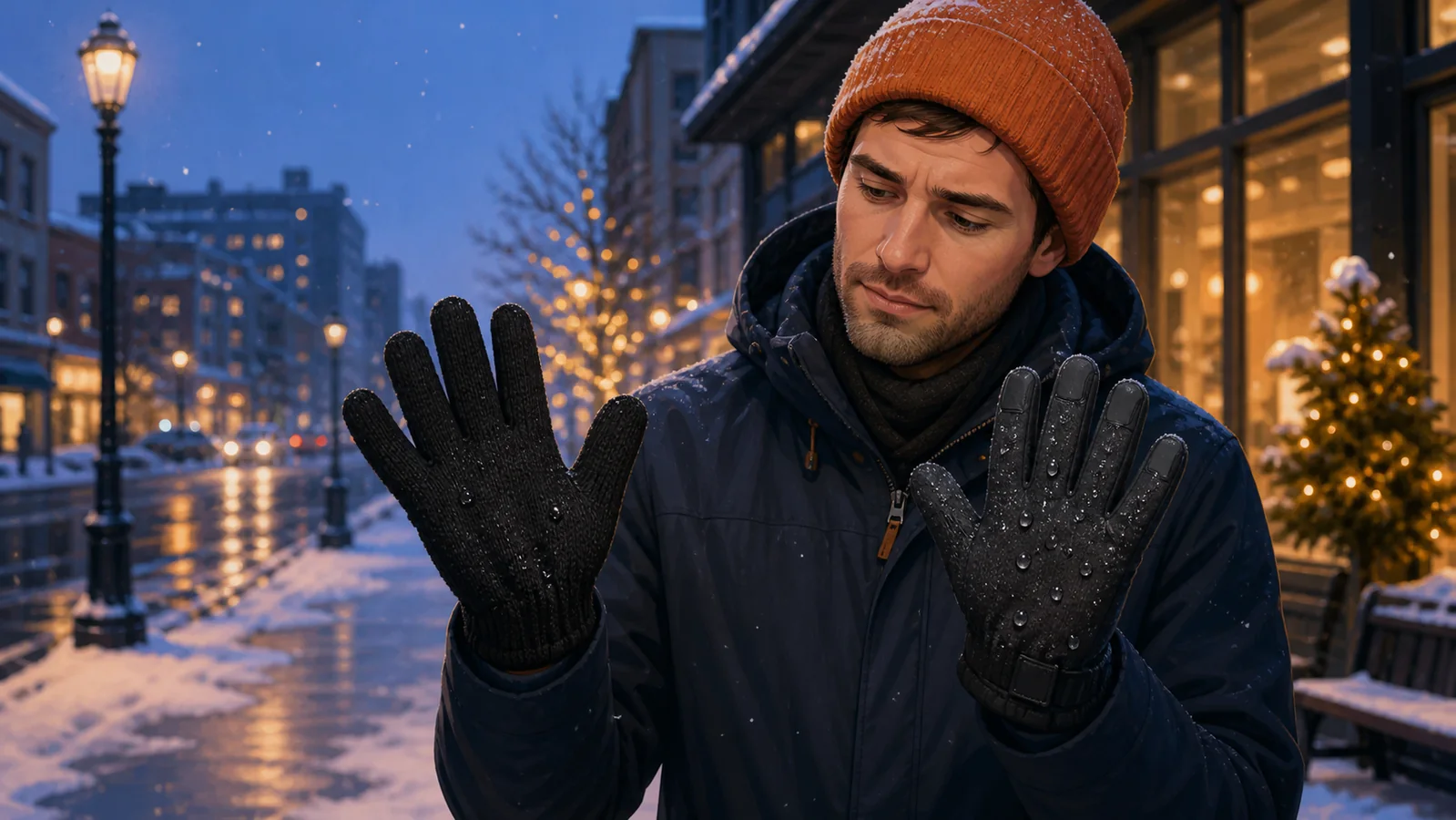
No—ordinary knit gloves are not automatically waterproof. Their interlocking loops leave pathways through which rain, melted snow, and slush can reach the lining and your skin. A glove that looks knitted can be waterproof, but only when its construction adds a continuous barrier—usually a waterproof/breathable membrane—between the outer knit and the inner lining.
That distinction matters because “knit,” “wool,” “winter,” “water-resistant,” and “waterproof” describe different things. Knit describes how a fabric is made. Wool describes a fiber. Winter describes an intended season. None of those words, by itself, proves that a glove can keep liquid water out.
The most useful buying question is therefore not “Is knit warm?” It is: How much liquid water will reach my hands, for how long, and what will I be doing while it happens?
Are ordinary knit gloves waterproof?
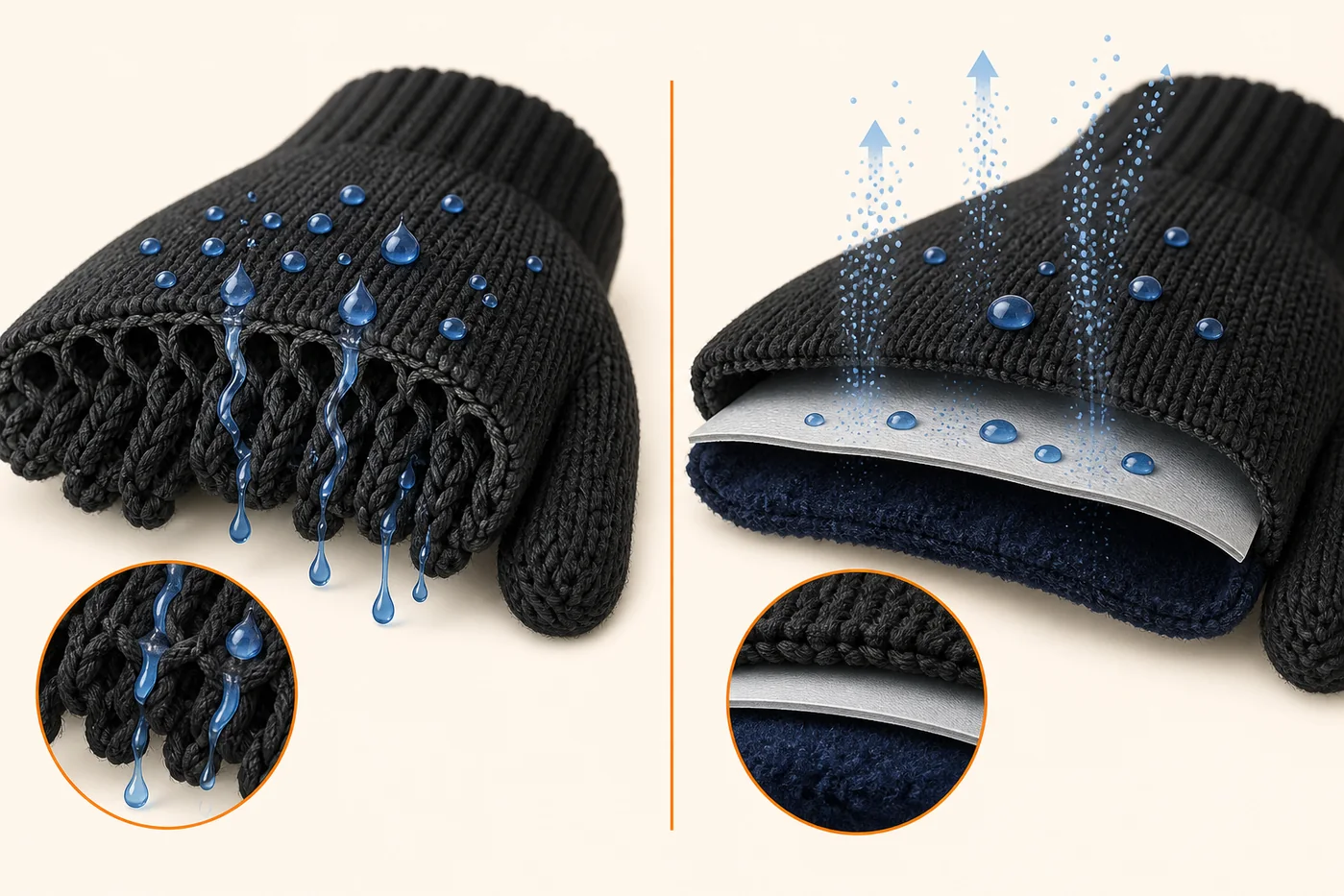
A basic knitted glove stretches because yarn loops move against one another. That structure is comfortable and dexterous, but it is not a sealed wall. Hold a typical knit glove up to a bright light and you may see tiny spaces in the fabric. Those spaces can admit wind-driven droplets and melted snow. The cuff is another route: water can run inside from the wrist even when the palm fabric sheds a few drops.
Dense knitting, synthetic fibers, a brushed surface, or natural wool scales may slow the first contact with moisture. They can buy time in a flurry or during a short walk. They do not turn an unlined open knit into a verified waterproof glove.
This is why a product page that only says “warm knit,” “winter wool,” or “snow gloves” has not yet answered the waterproof question. Look for the actual barrier and construction.
How can a glove look knitted and still be waterproof?
Because appearance and internal construction are separate. Some technical gloves use a wear-resistant knit exterior for stretch and dexterity, bond a waterproof/breathable membrane underneath it, and add a moisture-managing inner lining. The knit can become wet on the surface while the membrane continues to block water from reaching the hand.
That is the same broad principle used in waterproof outerwear. REI’s explanation of waterproof/breathable construction distinguishes the face fabric from the membrane or coating beneath it. A durable water-repellent finish, commonly called DWR, helps droplets bead on the face. The underlying membrane is the continuous water barrier.
Live US search results for “waterproof knit gloves” repeatedly showed this three-part formula. Showers Pass, for example, discloses a knit exterior, a body-mapped waterproof/breathable membrane, and a merino lining. The important lesson is not that every three-layer glove performs identically. It is that the waterproof claim comes from the hidden barrier—not from the knitted appearance.
The construction test
If a “waterproof knit glove” listing never identifies a membrane, waterproof insert, coating, bonded layers, test value, or comparable barrier, treat the claim cautiously. A lifestyle photo of snow on the glove is not construction evidence.
What do waterproof, water-resistant, and water-repellent mean?
These words are often blurred in shopping copy, but they set different expectations.
| Term | What it usually means | Reasonable use | Main limitation |
|---|---|---|---|
| Water-repellent | The surface encourages droplets to bead and roll away, often through a finish such as DWR. | A brief flurry, a few drops, short incidental exposure. | The finish can wear off; it is not a sealed barrier. |
| Water-resistant | The overall material or construction slows water penetration for a limited exposure. | Light snow, brief drizzle, damp objects, depending on the glove. | Duration and pressure matter; water can eventually enter. |
| Waterproof | A continuous barrier is designed to stop liquid water under stated conditions. | Steady wet snow, rain, slush, or prolonged wet contact when the design and cuff suit the task. | Breathability, seams, cuff entry, wear, and care still affect real use. |
“Waterproof” is not magic or permanent. Water may enter through a short cuff. Abrasion can damage a membrane. Poor fit can pull bonded layers out of position. Sweat can make the interior feel damp even when rain has not crossed the barrier. A soaked face fabric can also feel cold and clammy while the membrane underneath remains intact.
For that reason, compare both the claim and the complete design: barrier, seams or bonding, cuff length, palm durability, intended activity, and care instructions.
Are wool gloves waterproof—and does wool stay warm when wet?
Wool deserves a precise answer. Woolmark explains that the outer cuticle of a wool fiber has hydrophobic characteristics that can resist light surface moisture, while the fiber’s inner structure can absorb moisture vapor. Woolmark also states that the wool fiber overall should not simply be called water-repellent.
In practical terms, a wool or wool-blend glove may manage humidity and remain more comfortable than a soaked cotton glove, but that does not make the glove waterproof. Once liquid water moves through the knit, the glove can become heavier, colder at the surface, slower to dry, and less comfortable.
There are specialized exceptions. Woolmark’s OPTIM technology uses engineered fibers and a tight woven construction to create water-resistant wool fabrics. That exception proves the construction rule: special processing and fabric engineering create the resistance. The word “wool” alone does not.
When are ordinary knit gloves enough?
Ordinary knit gloves are often the better tool when your main needs are everyday warmth, dexterity, grip, and touchscreen access—and the forecast is mostly dry.
- Dry commute: walking from a car or train to an office, holding keys, and using a phone.
- Driving: where a flexible palm and manageable bulk matter more than a weather membrane.
- Short dog walks in dry cold: especially on cleared sidewalks with powdery rather than melting snow.
- Everyday errands: moving between heated buildings, a vehicle, and brief outdoor exposure.
- Layering: a thin knit liner under a roomier waterproof shell, provided the combination does not restrict circulation.
Breathability matters here. REI’s snow-glove guidance notes that the more moisture a glove keeps out, the less easily sweat may escape. During an active walk, a fully waterproof glove can feel clammy if the weather never required that barrier. The goal is not maximum waterproofing in every situation; it is enough protection without unnecessary bulk or trapped moisture.
If you are still cold in a dry-weather glove, do not assume waterproofing is the missing feature. Check fit, circulation, activity level, insulation, and whether your core is warm. Our guide to why hands stay cold inside winter gloves walks through those causes.
When should you choose a waterproof membrane glove?
Move to a membrane glove or a waterproof outer shell when liquid water is predictable rather than incidental.
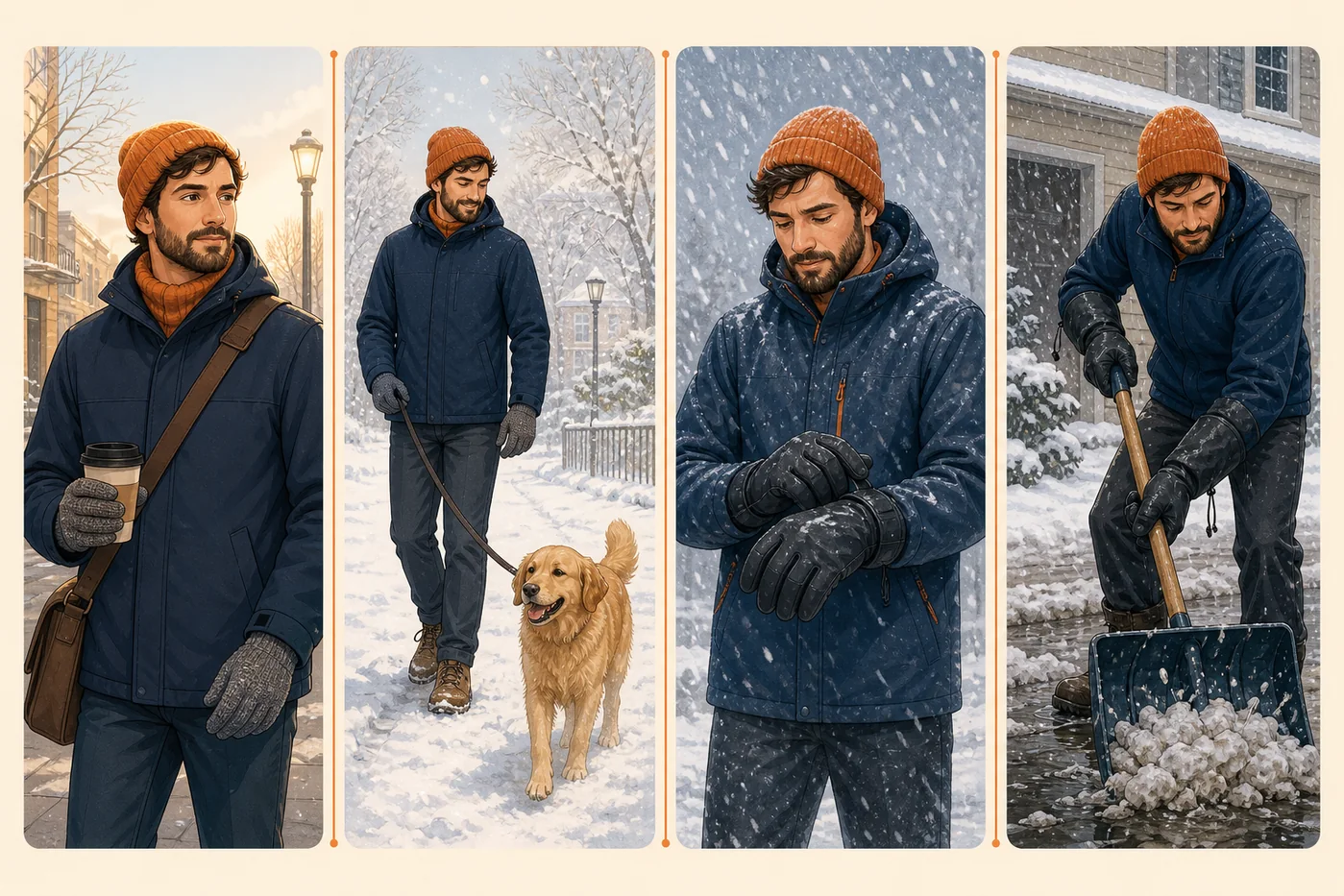
| Scenario | Better starting point | Why |
|---|---|---|
| Cold, dry commute | Breathable knit or fleece-lined everyday glove | Dexterity and easy temperature regulation usually matter most. |
| Short walk in dry, powdery snow | Knit glove may be enough if you are not handling snow | Exposure is brief and liquid water is limited. |
| Steady wet snow or rain | Waterproof/breathable membrane glove | Melting precipitation can pass through ordinary knit quickly. |
| Snowball making, scraping a wet car, or handling slush | Waterproof glove with durable palm and suitable cuff | Contact pressure and abrasion increase water entry and wear. |
| Snow clearing | Waterproof shell or gauntlet appropriate to the tool and task | Long exposure, wet cuffs, abrasion, and safety matter more than touchscreen dexterity. |
| High-output running in light precipitation | Highly breathable water-resistant glove, if conditions allow | Sweat management may outweigh maximum waterproofing. |
Also consider what happens at the wrist. A technically waterproof palm cannot stop water that runs into a loose, short cuff. For long wet exposure, jacket overlap and cuff adjustment can matter as much as the membrane name.
Can waterproofing spray make knit gloves waterproof?
Usually no. A compatible spray may make the outer fibers repel droplets for a while, but it does not close every opening in an open knit, seal the cuff, or create a continuous internal membrane. Calling that result “waterproof” would overpromise.
There are three additional cautions:
- Compatibility: treatments intended for leather or technical shells may not be suitable for wool blends, conductive fingertips, adhesives, or soft linings.
- Touchscreen performance: residue on conductive fingertip areas may change how reliably the glove contacts a screen.
- Care instructions: an aftermarket treatment can conflict with the manufacturer’s washing or warranty guidance.
If the manufacturer explicitly approves a treatment, use it for the limited purpose stated—usually restoring water beading, not manufacturing a waterproof barrier at home. Otherwise, keep the knit glove for dry use and add a purpose-built waterproof shell for wet conditions.
How can you verify a waterproof claim before buying?
Use this eight-point check rather than relying on the main image:
- Barrier: Does the listing identify a membrane, waterproof insert, coating, or bonded layer?
- Coverage: Does that barrier cover the fingers, palm, back of hand, and cuff—or only part of the glove?
- Construction: Are seams sealed, or are layers bonded in a way designed to prevent leaks?
- Cuff: Is it long and adjustable enough for the expected rain, wet snow, or slush?
- Breathability: Is the intended activity low-output commuting or high-output running?
- Durability: Can the palm handle shovels, wet leashes, bike grips, or the surfaces you touch?
- Care: Are cleaning, drying, and DWR-renewal instructions specific?
- Limitations: Does the brand define the temperature or weather use honestly instead of promising every winter activity?
Then read reviews by scenario, not just star average. A cycling commuter in steady rain, a driver in dry cold, and a person shoveling slush are testing different problems. Look for recurring reports about water entry location, cuff leakage, liner movement, fit, membrane durability, drying time, and sweat—not a single dramatic anecdote.
What should you do when knit gloves get wet?
Remove them before prolonged wet exposure chills your hands. Gently press out excess water without twisting the fabric, reshape the fingers, and dry according to the care label. Avoid radiators, high dryer heat, or open flames unless the manufacturer expressly permits heat drying; excess heat can shrink fibers, deform synthetics, weaken adhesives, or damage conductive areas.
Do not put on a still-damp pair for a long cold outing. Carrying a dry spare is often more reliable than expecting one everyday glove to handle an entire changing-weather day. For touchscreen styles, follow our guide to washing touchscreen gloves without damaging them.
Are CozyGalar wool-blend gloves waterproof?
No. CozyGalar’s fleece-lined wool-blend touchscreen gloves are not sold as waterproof. They are designed for everyday cool-to-cold routines such as commuting, driving, dog walking, and errands, with a soft lining, conductive fingertips, and a textured grip. They are not a substitute for membrane gloves during steady rain, wet snow, slush handling, skiing, or prolonged severe-weather exposure.
That boundary is useful. If your winter day is mostly dry and you value a flexible everyday glove, the CozyGalar use case may fit. If wet weather is central to the job, choose a verified waterproof construction instead. For a more specific routine, see our winter dog-walking glove guide or winter driving glove guide.
The bottom line: buy for exposure, not appearance
Ordinary knit gloves can be an excellent choice for dry commuting, driving, brief dog walks, and everyday errands. They are not automatically waterproof. When rain, melting snow, or slush becomes predictable, look beyond the cozy knit surface for a disclosed continuous membrane, complete coverage, an appropriate cuff, and construction suited to the activity.
The shortest reliable rule is this: soft knit for mostly dry daily dexterity; verified membrane or waterproof shell for sustained wet exposure. That rule is more useful than assuming every wool glove repels rain—or paying for maximum waterproofing on a dry day when breathability and movement matter more.
Frequently asked questions
Does snow go through knit gloves?
Dry powder may sit on the surface briefly, but body heat and handling can melt it. The resulting water can pass through ordinary knit. Wet snow and slush demand a waterproof barrier much sooner.
Are fleece-lined knit gloves waterproof?
Not unless the construction also includes a disclosed waterproof membrane, coating, or insert. Fleece adds comfort and insulation; it is not proof of a liquid-water barrier.
Are merino wool gloves good in rain?
Merino can manage moisture vapor and light surface moisture, but ordinary merino knit gloves should not be treated as rain gloves. Use a waterproof shell or membrane glove for sustained rain.
Why do waterproof gloves sometimes feel wet inside?
Sweat may accumulate faster than vapor can escape, especially during active use. Water can also enter at the cuff, and a saturated outer fabric can feel cold even when the internal membrane is still blocking rain.
Is water-resistant enough for dog walking?
It can be enough for a short walk in light precipitation if you are not handling wet snow. For a long walk in steady rain, a membrane glove and a cuff that works with your jacket are safer choices.
Sources and methodology
This guide compares live US search-result patterns with construction and material evidence. Product pages were used to map disclosed constructions, not as independent proof that every real-world pair performs identically.
Pingback: Why Do My Hands Sweat in Winter Gloves and Then Feel Cold? - CozyGalar
Pingback: What Are the Best Gloves for Shoveling Snow? - CozyGalar
Pingback: How to Organize Winter Hats and Gloves | CozyGalar - CozyGalar