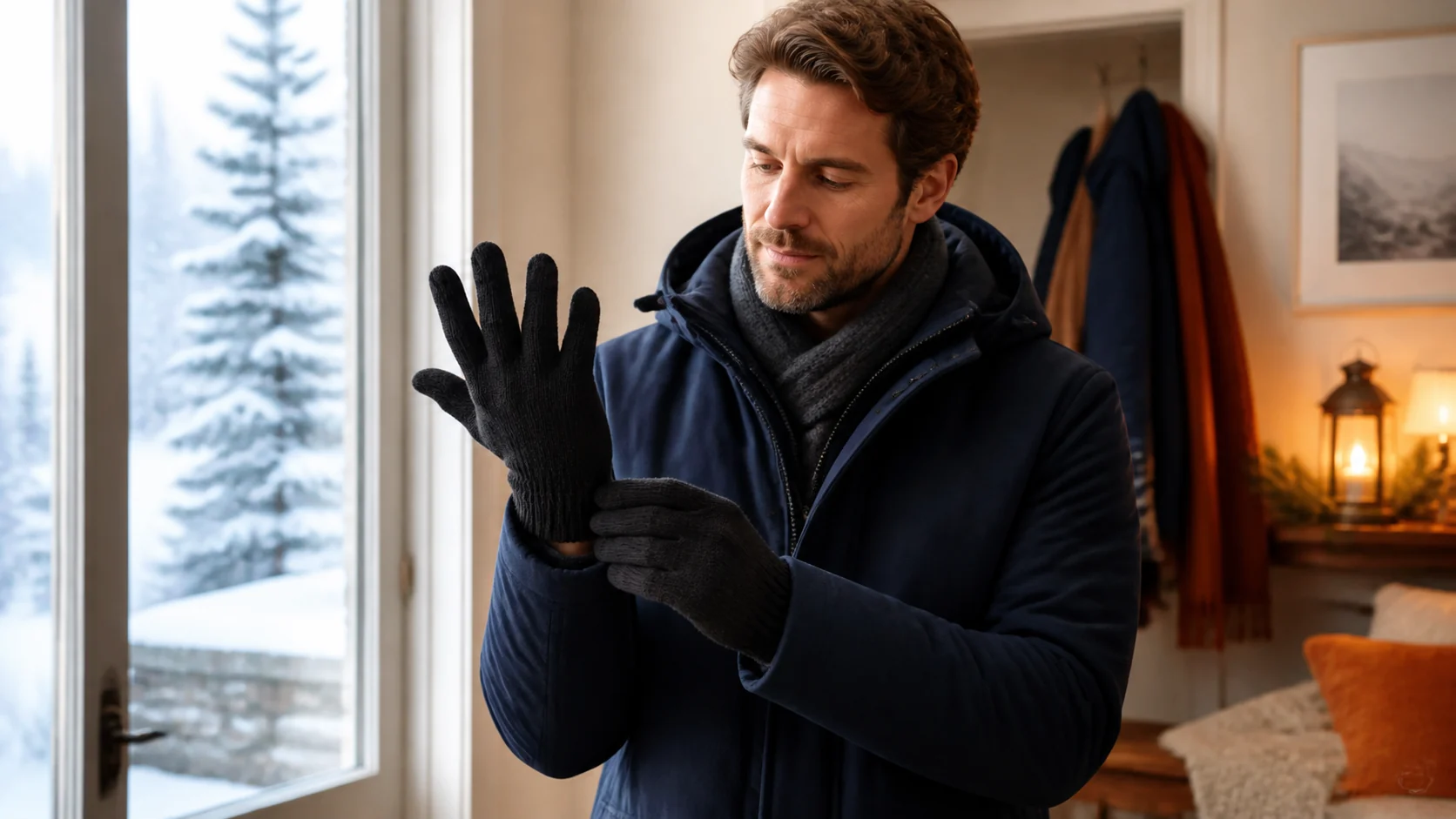


Winter running glove guide
What Are the Best Gloves for Winter Running?
The best winter running gloves are close-fitting and breathable enough for your hardest miles, with wind protection matched to the route. For variable conditions, a convertible mitt or packable overmitt is often more useful than one thick pair. Choose for the coldest low-output moment—then plan how you will vent heat once you are moving.
Editorial disclosure: CozyGalar sells the product linked in this article and may benefit from purchases. We did not laboratory-test the gloves discussed here and do not assign universal temperature ratings. Conditions, circulation, pace, fit, moisture, and personal cold tolerance can change the result.
What type of winter running glove fits your conditions?
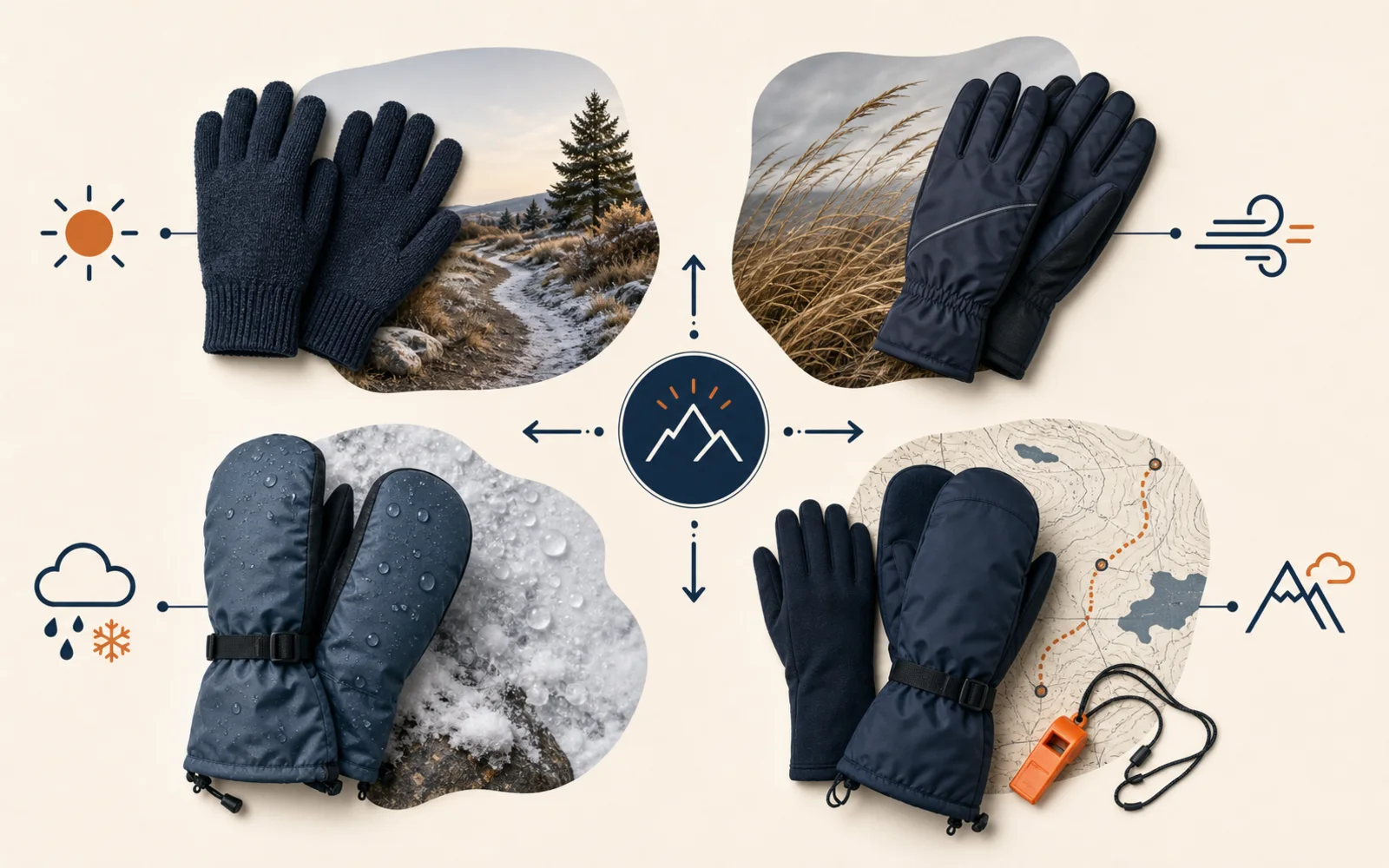
| Run condition | Best starting setup | Why it works | Main limitation |
|---|---|---|---|
| Dry, calm, high-output run | Lightweight close-fitting glove | Prioritizes breathability, watch access, and dexterity | May lose warmth quickly during stops |
| Cold or exposed to steady wind | Wind-resistant glove or convertible glove-mitt | Protects the back of the hand while preserving a venting option | Can become clammy if insulation is too heavy |
| Wet snow or cold rain | Purpose-built weather-protective glove or overmitt | Reduces outside moisture and wind exposure | Weather membranes can trade breathability for protection |
| Long, variable, or remote route | Movement glove plus dry spare or packable overmitt | Adds a second handwear state for sweat, cooldown, delay, or weather change | The layers must fit together without compression |
| Short, dry, ordinary cool-to-cold run | Warm knit glove if fit and sweat level work for you | Simple, affordable, and comfortable for lower-risk use | Not a substitute for verified wind, rain, visibility, or severe-cold protection |
This table is a starting point, not a temperature chart. Air temperature matters, but so do wind, precipitation, sun, pace, duration, route exposure, circulation, and how long you might be forced to stop. Any product that promises one precise temperature boundary without accounting for those variables deserves skepticism.
Why are running gloves different from everyday winter gloves?
Running changes the problem because your heat output does not stay constant. You can feel cold while waiting for GPS, warm rapidly during the first mile, sweat on a climb, and cool again at a traffic light or after finishing. A glove that feels wonderfully warm at the trailhead may become damp halfway through. A thin glove that is perfect at tempo pace may feel inadequate during a walk break.
Running also demands repetitive hand movement, relaxed wrist motion, access to a watch, and enough grip for a phone, leash, light, or soft flask. Extra fabric at the fingertips can make those tasks frustrating. Tight insulation is not better, either: compression reduces the still air that helps retain warmth and may feel restrictive.
Should runners choose gloves or convertible mittens?
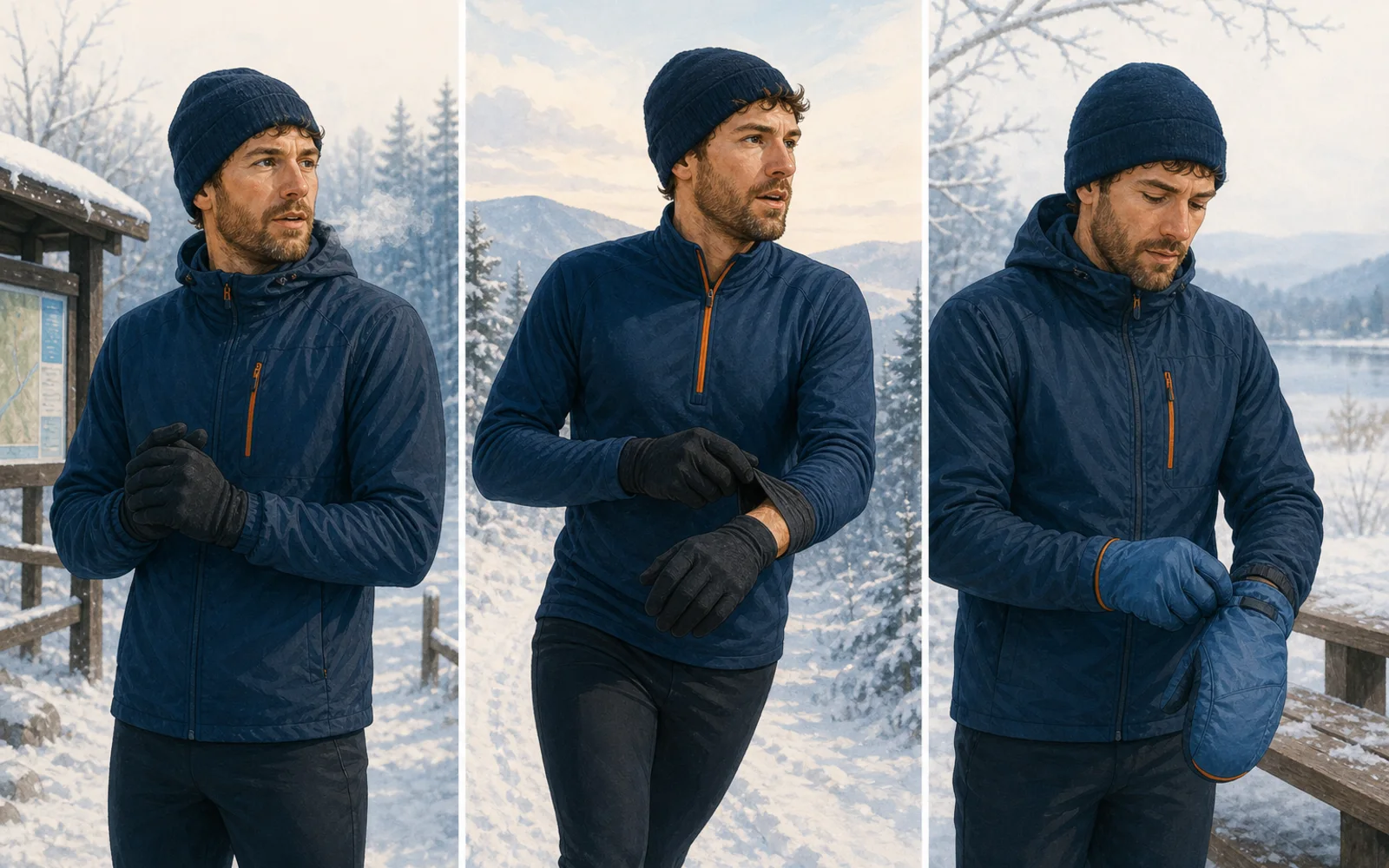
Gloves give each finger independent movement, so they are usually better for watches, zippers, phones, keys, and a natural running posture. Mittens let the fingers share warmth and reduce exposed surface area, but they sacrifice fine control. A convertible glove-mitt combines the two: use the glove while warm, then pull a shell or insulated hood over the fingers when wind rises or effort falls.
That makes a convertible mitt more than a warmer glove. It is a control mechanism. Instead of trying to predict one perfect insulation level before leaving home, you can change how much of the hand is exposed during the run. Look for a hood that stows securely, does not flap, and can be deployed without taking the base glove off.
If you routinely remove a mitten to use your device, test the entire sequence outside: uncover, tap or swipe, recover, and secure the hood. A feature only helps if you can operate it with cold hands and without dropping anything.
How much insulation do you need for a winter run?
Use the least insulation that keeps your hands comfortable across the whole outing, with a backup for the colder phases. That sounds vague because personal responses vary widely. One runner may have warm hands at an easy pace while another needs a mitten in the same weather. Rather than copying somebody else’s temperature cutoff, build a personal log.
- Record air temperature, wind, precipitation, route, duration, and workout intensity.
- Note whether your hands felt cold at the start, comfortable in motion, sweaty, or cold after stopping.
- Change only one variable on the next similar run: a lighter glove, a wind shell, a looser cuff, or a spare layer.
- Stop the experiment if numbness, persistent pain, or loss of function develops.
Whole-body clothing matters, too. If your torso is underdressed, the body may reduce blood flow to the hands. If you overdress, perspiration can accumulate and later accelerate cooling. The American College of Sports Medicine’s cold-weather exercise guidance recommends a system that manages moisture, insulation, and wind or water exposure rather than relying on one heavy layer.
Does wind protection matter more than waterproofing?
For many dry winter runs, wind protection matters first—especially across the back of the hand. The National Weather Service explains that wind increases heat loss from exposed skin. A runner also moves through the air, so the hand experiences airflow even when the weather report shows only a light breeze. That last point is a practical inference, not a laboratory measurement, but it explains why a thin wind-resistant panel can feel more useful than extra fleece on an exposed route.
Waterproofing becomes more important in cold rain, wet snow, slush contact, or a long route where soaked gloves cannot be replaced. But waterproof and breathable are not synonyms. A membrane that blocks outside water can also slow moisture leaving the glove. On a hard run, that tradeoff may leave the lining damp from perspiration.
- Dry and calm: prioritize fit, breathability, and enough warmth for stops.
- Dry and windy: add a wind-resistant back or convertible shell.
- Wet and cold: use verified weather protection, not an ordinary knit glove.
- Remote or long: add redundancy, even when the forecast looks friendly.
Our guide to whether knit gloves are waterproof explains why dense-looking knit fabric still should not be treated as a rain barrier.
How do you prevent sweaty gloves from making your hands colder?
Adjust early. Once the lining is soaked, opening a cuff cannot instantly dry it. Start slightly cool rather than hot, loosen the cuff or expose the wrist as you warm, and switch to the glove-only state of a convertible design before sweat accumulates. If safe, briefly remove one glove at a time rather than exposing both hands while stopped.
The American Heart Association notes that dampness from perspiration can magnify cold-weather heat loss. ACSM likewise warns that overdressing can build sweat and increase cooling after exercise. The goal is not maximum warmth at every second; it is a stable, manageable microclimate from start to finish.
If sweaty hands are a recurring issue, see our guide to why hands sweat in winter gloves. A separate liner can help in some systems, but it is useful only if the outer glove still fits without squeezing; our glove-liner guide covers that tradeoff.
How should winter running gloves fit, and which features matter?
A running glove should follow the shape of the hand without pulling the fingers straight, compressing insulation, or leaving loose fingertip fabric. The cuff should overlap the sleeve during normal arm swing. Make a relaxed fist, flex the wrist as though checking a watch, and try every control you expect to use.
Prioritize features in this order for your specific route:
- Weather match: verified wind or water protection when conditions require it.
- Fit and circulation: enough room to move without empty fingertips or tight seams.
- Moisture control: a breathable lining, adjustable cuff, or convertible state.
- Visibility: reflective details for low-light roadside running; carry proper lights rather than relying on glove trim alone.
- Device access: touchscreen fingertips or a convertible opening that works with your actual phone and watch.
- Grip: useful for a phone, leash, light, or bottle, but not a substitute for close fit.
Touchscreen material is convenient, not guaranteed. Screen protectors, moisture, cold batteries, contact area, and fit can all affect response. Test it before the run. Reliable access can shorten a navigation or communication stop, but it should never outrank weather protection on a severe route. For measurement details, use our winter glove fit guide.
Should you carry a spare pair or packable overmitt?
Carry one when the consequence of a wet or inadequate glove is greater than the small weight penalty. That includes long runs, trail runs far from shelter, routes with exposed ridges, uncertain precipitation, planned walk breaks, and outings where an injury could turn movement into waiting.
Keep the backup in a small waterproof bag and somewhere reachable. Before relying on it, confirm that it slides over the base glove, the cuff closes around your sleeve, and you can still manage essential gear. A spare that is wet, buried, or too tight is not meaningful redundancy.
Are CozyGalar gloves suitable for winter running?
They can be a reasonable option for some short, dry, ordinary cool-to-cold runs, provided the fit, warmth, and sweat level work for the individual runner. CozyGalar gloves use a blend of 50% Merino Wool, 5% Conductive Fiber, 45% Polyester. They are fleece-lined, have touchscreen-compatible fingertips and textured grip, and come in sizes S through XL.
The boundary matters: these are not presented as dedicated running gloves, and we do not claim that they are waterproof, windproof, reflective, safety-rated, or suitable for severe cold. Choose purpose-built running handwear with verified weather protection for wet conditions, strong wind, remote routes, or prolonged low temperatures. Touchscreen response can vary by device and fit.
For care, hand wash cold, air dry, and do not bleach or tumble dry. If that honest use case matches your routine, check current CozyGalar sizes on Amazon. For harsher conditions, compare our extreme-cold glove guide instead.
What should you do if your fingers become numb or painful?
Do not treat numbness, persistent pain, pale or waxy skin, or loss of normal hand function as a product-comparison problem. End the exposure, seek shelter, replace wet layers, and get appropriate medical help. The CDC’s frostbite guidance says not to rub or massage a frostbitten area; avoid heating pads, heat lamps, stoves, fireplaces, and radiators on affected tissue.
Also pay attention to whole-body signs such as uncontrolled shivering, confusion, slurred speech, unusual drowsiness, or fumbling. A route can become dangerous when an injury or navigation problem stops the heat production that made thin gloves feel adequate. Check current weather and wind chill before leaving, tell someone your route on remote outings, and carry more protection than you expect to use.
What is the simplest way to choose?
Start with four questions: Will it be dry? How exposed is the route to wind? How hard will you run? What happens if you must stop? Choose a light, close-fitting glove for dry high-output miles; add a wind-resistant or convertible layer for exposure; use verified weather protection for wet conditions; and carry a dry spare or overmitt when the route is long, variable, or remote.
The best winter running glove is therefore not necessarily the warmest model or the winner of somebody else’s temperature test. It is the setup that stays dry enough while you move, protects you when effort falls, fits without compression, and has a backup plan for the route’s most serious failure point.
Sources and methodology
- National Weather Service: Understanding Wind Chill
- American College of Sports Medicine: Exercising in the Cold
- American College of Sports Medicine: Exercising Caution in Cold Temperatures
- American Heart Association: How to Stay Active in Cold Weather
- CDC: Preventing Frostbite
We researched the topic with OpenSEO in the US English market, reviewed the live search results and six current competitor guides, checked CozyGalar’s published inventory for overlap, and separated primary-source safety guidance from editorial synthesis. We did not claim personal product testing, copy competitor recommendations, or assign unsupported temperature ratings.