

Ice-fishing glove buying guide
What Are the Best Gloves for Ice Fishing?
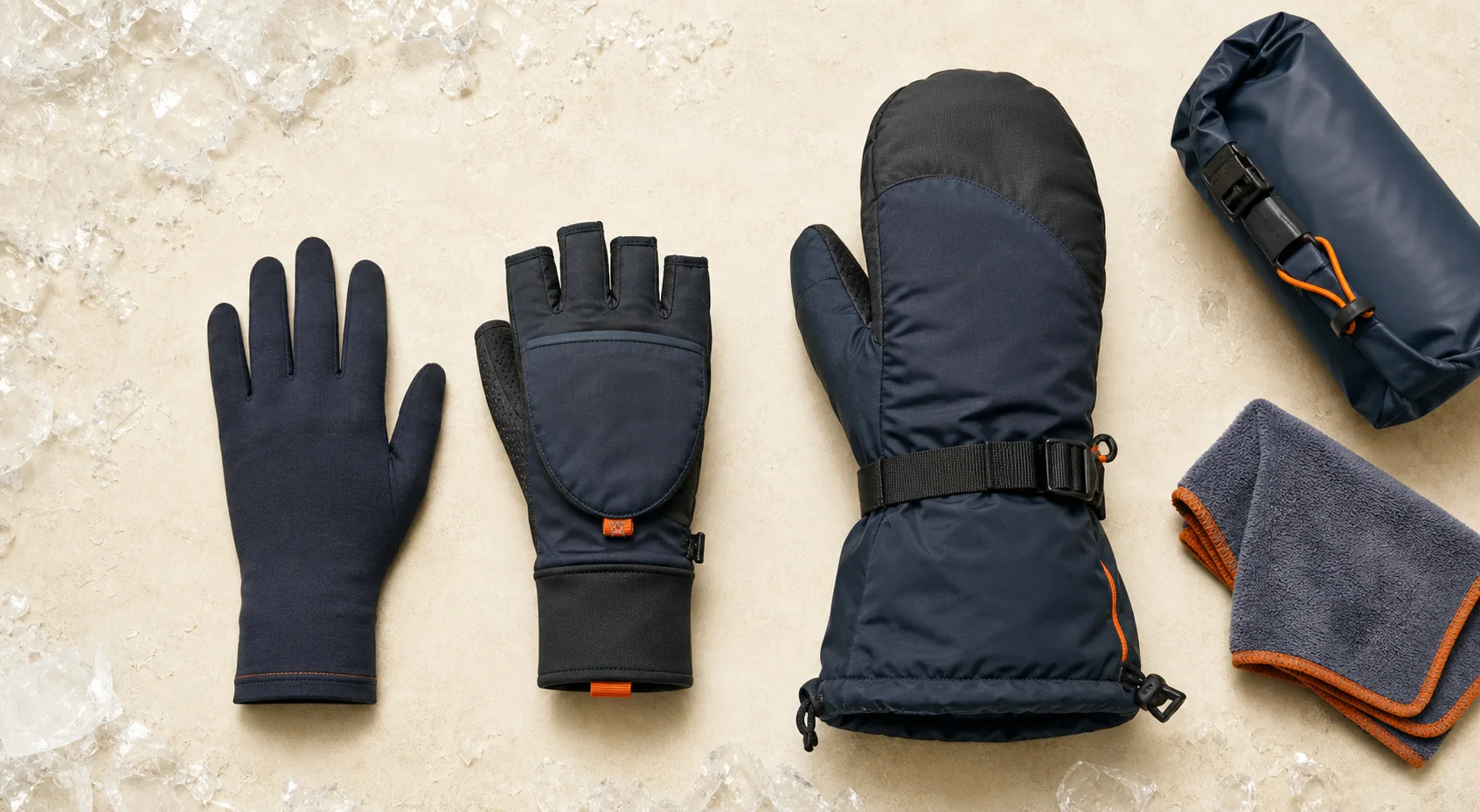
The best ice-fishing hand protection is usually a system, not one pair: a waterproof insulated glove or mitten for travel, setup, and wet work; a convertible glove for fishing; a close-fitting dry liner for fine tasks; and a sealed backup. Our strongest all-around outer-glove starting point is the Striker Attack, while the Striker Tundra favors maximum passive warmth.
Editorial disclosure: CozyGalar does not receive a commission from the third-party product links in this guide. Prices and availability were rechecked on September 13, 2026 and can change. We did not personally laboratory-test every glove. Recommendations compare verified current specifications, task fit, independent editorial coverage, and recurring customer concerns. Manufacturer waterproof and warmth language is not a temperature guarantee.
What are the best ice-fishing gloves right now?
| Best for | Product | Verified construction | Price checked | Main limitation |
|---|---|---|---|---|
| Best all-around outer glove | Striker Attack | 150 g 3M Thinsulate; Hipora insert; 300D shell; synthetic-suede palm | $89.99 | Five separate fingers lose heat faster than a mitt |
| Static warmth | Striker Tundra Mitt | 200 g Thermadex; Hipora insert; leather palm; warmer pocket | $89.99 | Less fine control; only M, 2XL, and 3XL showed available when checked |
| Frequent rigging | Striker Crossover Flip Mitt | 150 g back / 100 g palm; flip mitt, thumb, and liner | $99.99 | Openings can admit cold and moisture; M, 2XL, and 3XL showed available |
| Wet fish and gear handling | Glacier Ice Bay | 2 mm TechLine neoprene; fleece lining; glued/blind-stitched seams | $47.99 | Low breathability can trap sweat |
| Warm convertible alternative | Fish Monkey Stealth Sherpa | 200 g back / 100 g palm Thinsulate; 380 g Sherpa; Dry-Tec membrane | $69.95 | Bulk, sizing, and opening leakage reported by some owners |
This is not a claim that one product is objectively warmest or best for every angler. Temperature, wind, water exposure, activity level, shelter heat, circulation, fit, and how often you expose your fingers all change the outcome. We excluded sold-out Fish Monkey Yeti models rather than sending readers to unavailable products.
Why is a three-glove system better than one universal pair?
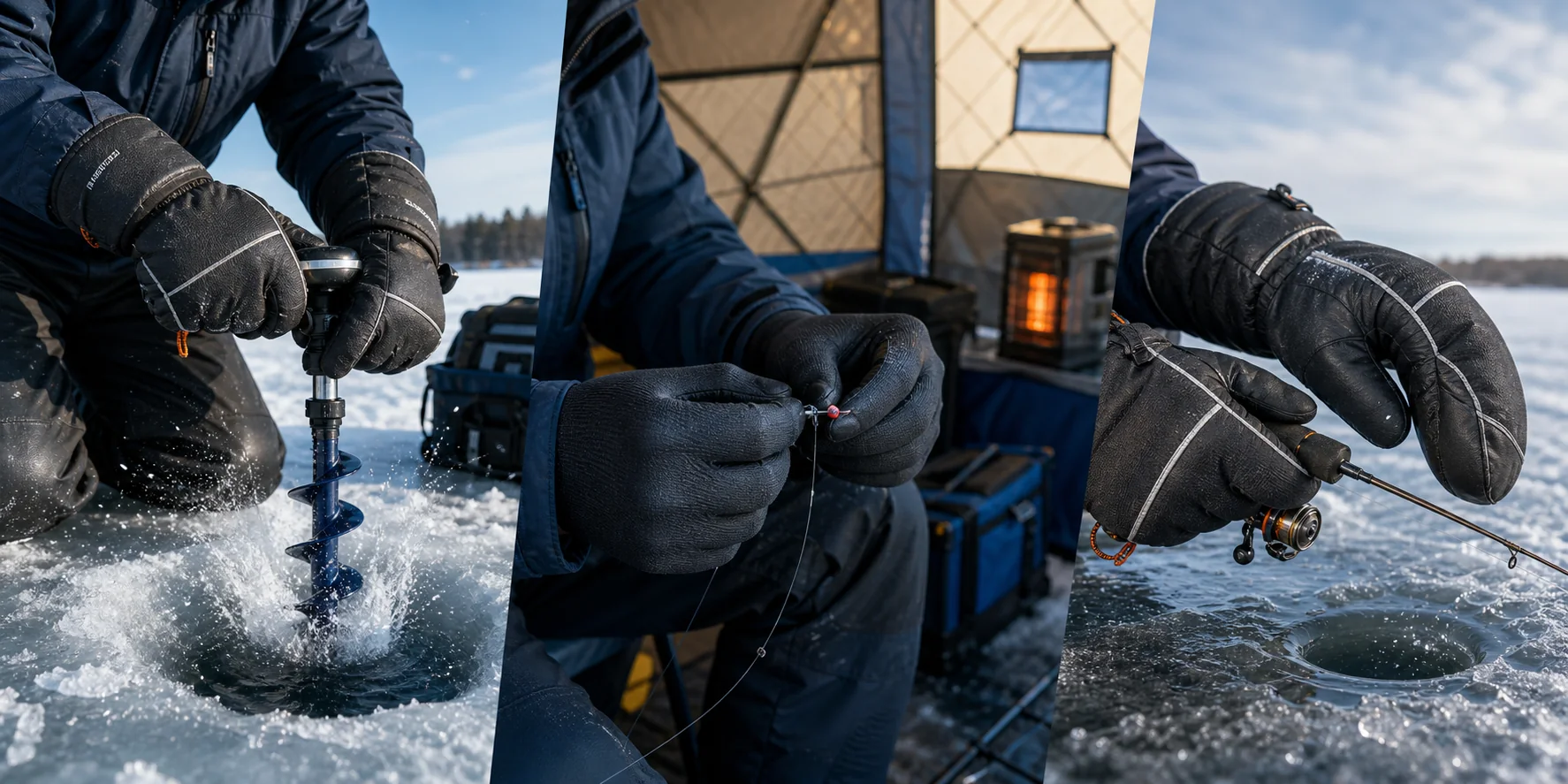
Ice fishing forces the same hands through incompatible jobs. You may tow gear across open ice, drill holes, scoop slush, tie a tiny knot, rebait a hook, hold a wet fish, and then sit nearly still. The glove that seals water and wind during setup is usually too bulky for a small jig. The glove that makes knots easy often lacks enough weather protection for the ride out.
A practical system assigns each layer a job:
- Waterproof insulated outer glove or mitten: travel, drilling, slush, wind, and static waiting.
- Convertible glove: active jigging and short fine-motor tasks without removing the entire glove.
- Close-fitting dry liner: brief hook, knot, electronics, and zipper work; not a stand-alone severe-cold glove.
- Dry backup: sealed separately with a small towel so one splash or sweaty liner does not end the day.
Which ice-fishing gloves are best by use case?
1. Best all-around outer glove: Striker Attack
The Attack is the most balanced starting point for anglers who want five-finger control without giving up a purpose-built winter shell. Striker lists 150 grams of 3M Thinsulate, a waterproof/breathable Hipora insert, 300D shell fabric, a synthetic-suede palm, and a close-fitting neoprene cuff. The official page also describes it as immersion proof; treat that as a manufacturer claim, not an independent certification result.
Why it stands out: it avoids the full bulk of a mitt while retaining an insulated technical shell. That makes it better suited to drilling, carrying equipment, and ordinary rod handling than a maximum-warmth mitten.
Limitation: every finger remains surrounded by cold material, so it cannot match the structural warmth advantage of a mitten during long inactive periods. The short neoprene cuff also has to mate cleanly with your jacket sleeve; a gap becomes a wind and snow channel. Check current Striker Attack sizes.
2. Best for low-activity warmth: Striker Tundra Mitt
The Tundra groups fingers together, uses 200 grams of Thermadex insulation, and adds a Hipora waterproof/breathable insert, leather palm, gauntlet cuff, and zippered hand-warmer pocket. The gauntlet can overlap a jacket sleeve more reliably than a short cuff when windblown snow is the main concern.
Why it stands out: shared finger space and a warmer pocket make it the most logical passive-warmth option in this group. It suits anglers who sit outside a shelter, run cold, or want a heavy outer mitt over a thin liner.
Limitation: a mitten is clumsy for knots, electronics, and small lure changes. Keep a liner on underneath, and use the mitt as the outer layer rather than repeatedly exposing bare fingers. On September 13, only M, 2XL, and 3XL showed available, so confirm your size before depending on it for a trip. View current Tundra Mitt availability.
3. Best for frequent rigging: Striker Crossover Flip Mitt
The Crossover uses a flip-back mitt, flip thumb, and internal finger design with 150 grams of insulation on the back and 100 grams on the palm. This architecture lets an angler expose fingertips for a knot, then cover them without removing the whole glove.
Why it stands out: it shortens the transition between warmth and dexterity. That matters for lure changes, bait, hook removal, and phone use—tasks that make full gauntlets frustrating.
Limitation: every opening is also a possible leak. Wind can enter, wet line can touch the inner fabric, and a damp flip panel may fold directly against insulation. Close the cover immediately after the task and keep a towel within reach. On September 13, M, 2XL, and 3XL showed available. Check the Crossover Flip Mitt.
4. Best for direct wet handling: Glacier Ice Bay
The Ice Bay uses 2 mm TechLine neoprene, fleece lining, glued and blind-stitched seams, and a seamless sharkskin-textured palm. Glacier describes it as 100% waterproof. Its construction is better aligned with wet fish, slush, and gear handling than an absorbent knit glove.
Why it stands out: neoprene and sealed seam construction address external water directly, while the textured palm supports grip. At $47.99 when checked, it is also the least expensive dedicated ice-fishing option in this group.
Limitation: neoprene breathes poorly. Independent editorial coverage and common user experience both flag sweat buildup; once moisture is inside, taking the glove off in cold air can chill the hand quickly. Use it for wet tasks, not automatically as the only glove for an entire high-output day. See Glacier Ice Bay details.
5. Best warm convertible alternative: Fish Monkey Stealth Sherpa Dry-Tec
Fish Monkey lists 200 grams of Thinsulate on the back of the hand, 100 grams on the palm, a 380-gram Sherpa lining, Dry-Tec waterproof/breathable membrane, DWR treatment, flip index finger and thumb, and a PU leather palm. The construction targets warmth while keeping two critical digits accessible.
Why it stands out: the index-and-thumb opening is more restrained than a fully fingerless convertible design, and the heavy Sherpa lining makes this a strong option for anglers who want warmth with occasional lure access.
Limitation: the product page includes individual owner reports of tight sizing, bulk, and cold or wet entry through the openings. Those reviews are not controlled tests, but they reveal the real design tradeoff: convertible access can compromise sealing. Measure carefully and test the opening with your actual line and lures while the glove is still returnable. Check current Stealth Sherpa stock.
Are mittens warmer than gloves for ice fishing?
Usually, yes. The National Weather Service notes that mittens are generally warmer than gloves because fingers share heat. That advantage is most noticeable while sitting still or traveling in wind.
The penalty is control. A mitten cannot independently position each finger around a reel, hook, zipper, or electronic control. For many anglers, the best compromise is a thin liner under an insulated mitt. Remove only the outer mitt for the shortest possible task, then replace it before the liner becomes wet or your fingertips go numb.
Our broader gloves-versus-mittens comparison explains why design and activity still matter. A wet, poorly fitted mitten can be colder than a dry, correctly fitted glove.
Does waterproof material make the whole glove waterproof?
No. A glove is an assembly, not a fabric swatch. Water can pass through seams, finger openings, damaged coatings, an unsealed cuff, or the interface between glove and jacket. A waterproof membrane can also be overwhelmed if water pours through a convertible opening or wicks down a wet sleeve.
Before buying, check four separate points:
- Material: membrane, coated shell, leather treatment, or neoprene.
- Seams: taped, glued, blind-stitched, or simply sewn.
- Openings: flip fingers, thumb ports, zippers, and warmer pockets.
- Cuff interface: gauntlet over the sleeve or short cuff under it, without a gap.
For a material-level explanation, see Are Knit Gloves Waterproof? Knit everyday gloves should not be substituted for purpose-built wet-work protection.
Are neoprene gloves good for ice fishing?
They are good for specific wet tasks, not automatically for every hour of the trip. Neoprene resists external water, provides some insulation when damp, and creates a close, grippy fit. That makes it useful for fish handling, slush, bait, and gear cleanup.
The drawback is low breathability. During drilling, hauling, or a warm shelter session, sweat can accumulate inside. When activity stops—or when you remove the glove for a knot—that moisture accelerates cooling. A better strategy is to use neoprene for wet exposure, wipe hands and gear, then change back to a dry breathable liner and insulated outer glove.
If your hands routinely become clammy, our guide to sweaty hands in winter gloves explains how excess insulation and poor vapor escape can make cold hands worse.
How should ice-fishing gloves fit?
They should leave a small amount of fingertip space without loose folds, close securely at the wrist, and allow a relaxed fist without compressing insulation. Too-tight gloves flatten insulation and may restrict circulation. Too-loose gloves reduce grip, make small controls vague, and can let cold air pump through the cuff.
- Measure both hand circumference and hand length; use the larger hand.
- Compare measurements with the current brand chart rather than assuming one universal size.
- Try the exact liner you plan to use. Do not automatically size up if the brand already allows liner room.
- Close the glove with your actual jacket sleeve and check for an exposed channel.
- Make a fist, hold a rod, turn a reel, operate a zipper, and tie a large practice knot.
- Keep tags attached until the dexterity and cuff tests pass.
A liner that slides inside the shell or pulls out with your hand is not merely annoying; it slows the transition back to warmth. See our guide, Do Glove Liners Actually Keep Your Hands Warmer?, before adding layers.
What should an ice angler carry as a dry-hand backup?
- One complete dry glove or mitt pair in a sealed bag.
- One spare close-fitting liner pair.
- A small absorbent towel for hands, line, and glove openings.
- Chemical hand warmers if compatible with the glove’s pocket and instructions.
- A simple way to keep removed mitts off wet ice—wrist leashes or a dry shelf.
- A plan to stop, warm up, and leave before dexterity becomes unsafe.
Do not store the backup in the same unsealed compartment as wet gloves. A “spare” that has absorbed slush or condensation is not a backup. On multi-day trips, open shells and liners fully and dry them according to the manufacturer’s care instructions; avoid high heat unless the label explicitly allows it.
When are cold fingers a safety warning rather than a glove problem?
Pain, persistent redness, loss of dexterity, or numbness should end the experiment with your gear. The CDC’s frostbite guidance lists numbness and white or grayish-yellow, firm, or waxy skin as warning signs. Move to shelter, replace wet clothing, and seek medical help for suspected frostbite. Do not rub the area or apply intense direct heat; use warm—not hot—water only when refreezing is not possible and medical guidance supports it.
Falling through ice adds cold-water immersion risk beyond ordinary glove selection. Follow local ice-safety guidance, fish with appropriate rescue equipment and partners, and treat immersion as an emergency. The National Weather Service cold-water guidance emphasizes getting help and warming the person gradually.
Should CozyGalar knit gloves be used as primary ice-fishing gloves?
No. CozyGalar’s wool-blend, fleece-lined touchscreen gloves are made for everyday commuting, driving, dog walking, grip, and phone access. They are not verified waterproof, windproof, immersion-proof, or rated for extreme cold. Presenting them as an ice-fishing outer glove would ignore the wet-exposure part of the search intent.
They may be useful for dry, sheltered travel or ordinary errands before and after the trip, but anglers should choose purpose-built protection on the ice. If that everyday use matches your needs, you can see CozyGalar sizes on Amazon. This is a brand-owned shopping link; CozyGalar does not claim a commission on its own product link.
What is the bottom line?
Start with the task most likely to make your hands fail. Choose the Striker Attack for a balanced five-finger outer glove, the Tundra Mitt for static warmth, the Crossover Flip Mitt for frequent fine work, the Glacier Ice Bay for direct wet handling, or the Fish Monkey Stealth Sherpa for a warm convertible design. Then add a dry liner, towel, and sealed backup.
The strongest system is not necessarily the thickest. It is the one that keeps water out, lets sweat escape or be managed, preserves enough dexterity to fish safely, and gives you a dry fallback when the first pair becomes wet.
Sources and methodology
- National Weather Service: Cold Weather Safety
- CDC: Preventing Frostbite
- National Weather Service: Cold Water Hazards and Safety
- Current official product pages from Striker, Glacier Outdoor, and Fish Monkey, linked in each recommendation.
We compared current product construction, insulation placement, weather protection, openings, cuff design, price, stock signals, independent editorial coverage, and recurring customer limitations. We did not assign laboratory warmth scores, conduct immersion testing, or claim first-hand product use.