


Everyday winter handwear guide
Gloves vs. Mittens: Which Is Warmer—and Which Is Better for Everyday Winter?
Mittens usually retain more heat. Gloves usually give you more control. The right answer changes with the task, weather, fit, and how often you would have to expose your hands.
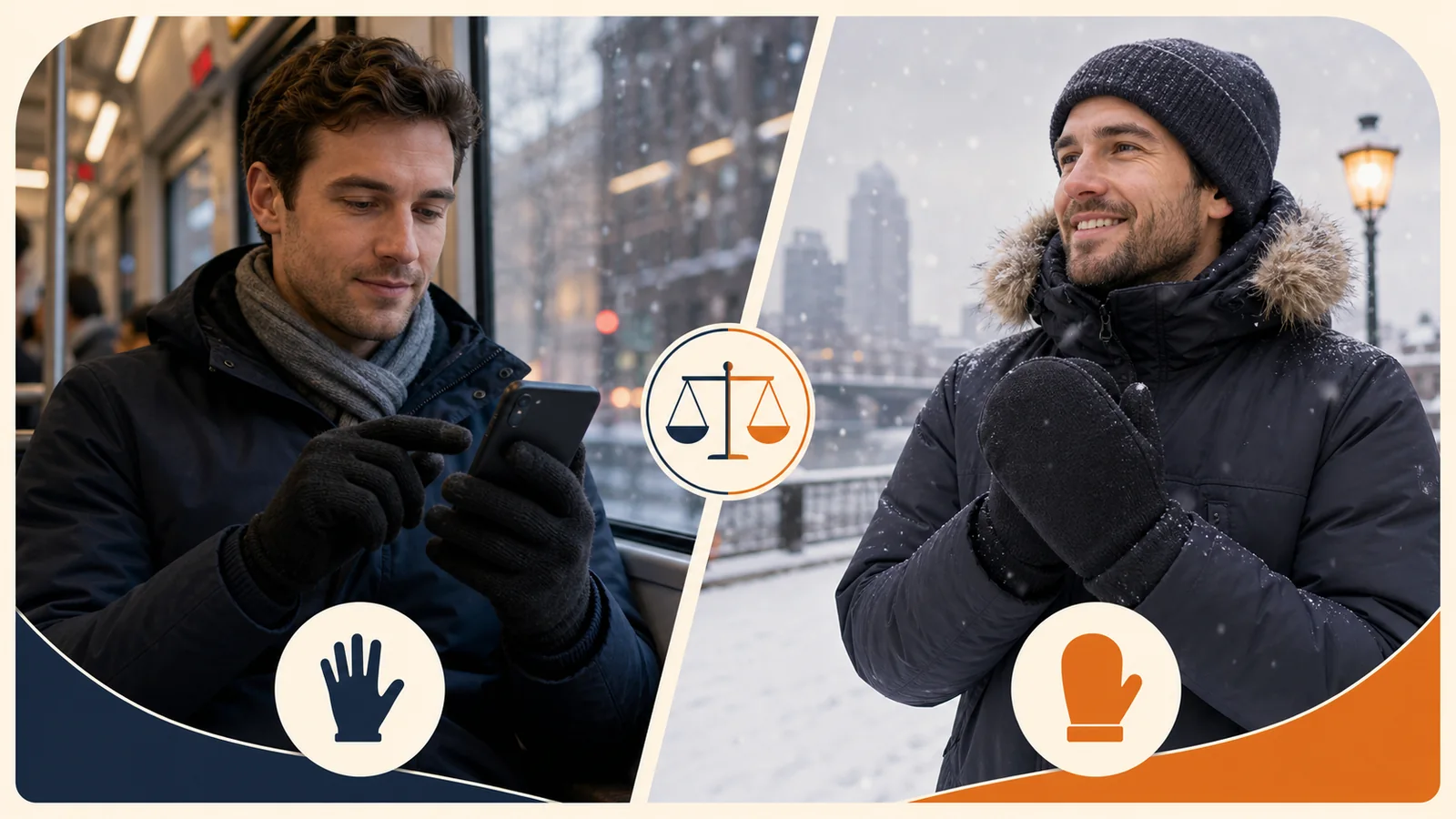
The usual one-line answer—“mittens are warmer, gloves are more dexterous”—is correct but incomplete. It assumes both choices use similar materials, fit correctly, stay dry, and remain on your hands. Real winter routines break those assumptions. A mitten that comes off every time you need a key or phone can lose its theoretical advantage. A thin glove that works beautifully in the car may be inadequate while you stand still at a football game.
This guide separates maximum warmth from useful warmth. It uses current US search research, outdoor buying guidance, and practical task analysis to help you choose for commuting, driving, dog walking, errands, snow clearing, outdoor events, and occasional winter recreation.
Why are mittens usually warmer than gloves?
A five-finger glove divides the hand into separate fabric chambers. Each finger must warm its own small pocket of air, and each chamber adds surface area and seams through which heat can move. A mitten puts four fingers together. Those fingers share warmth inside one larger chamber, and the simpler shape generally has fewer seams.
REI’s current buying guide therefore describes mittens as the warmest overall option when compared with gloves made from similar materials. Free the Powder makes the important qualification explicit: properly fitted mittens tend to be warmer than properly fitted gloves built with the same outer material and liner. That qualification matters. A loose, damp bargain mitten is not automatically warmer than a well-fitted insulated glove.
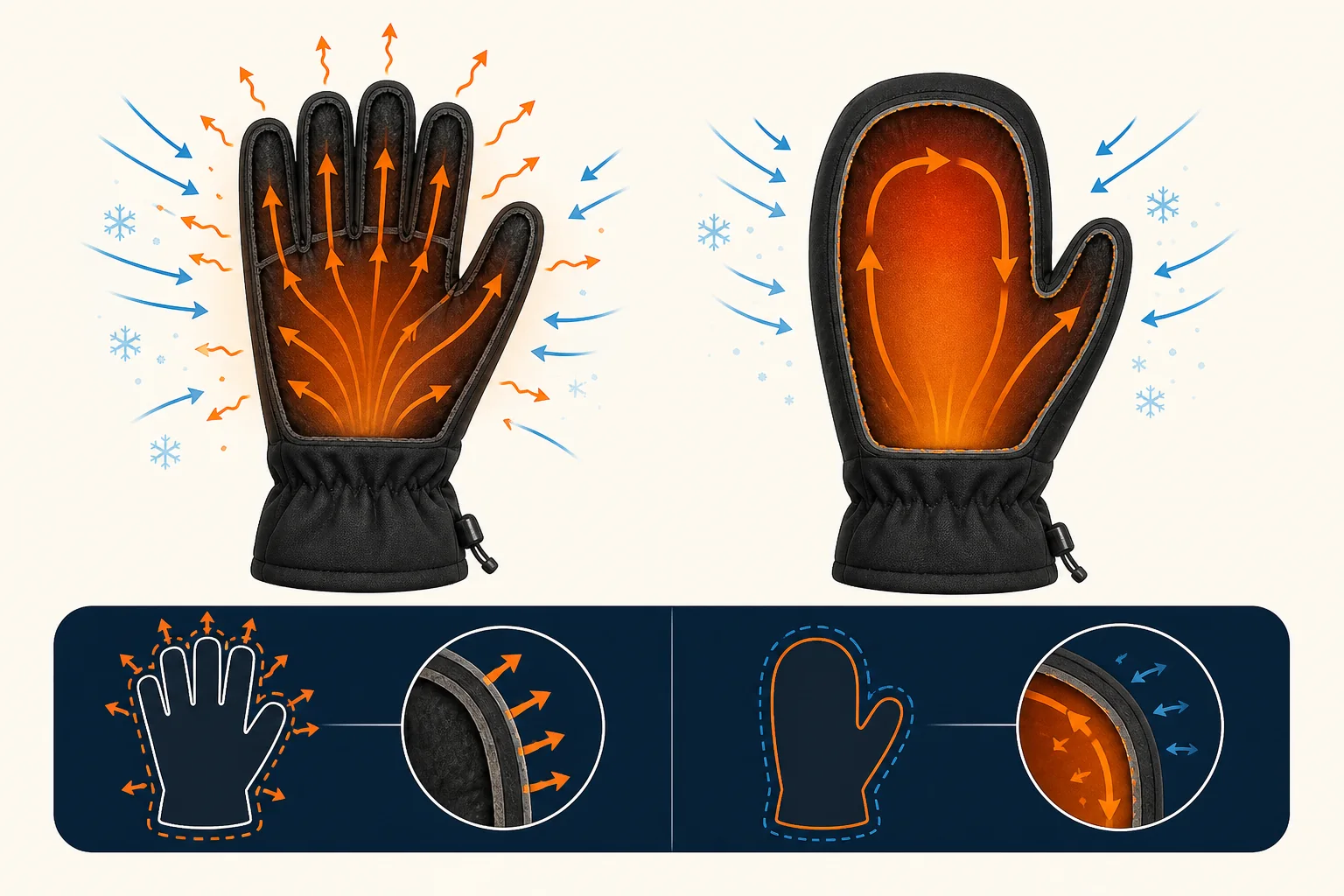
There is another benefit: a mitten can allow the fingers to curl together or move against one another. That movement may feel comforting during stationary exposure. But it comes at the cost of independent finger control. The warmer shape is not automatically the more useful shape.
If you remove a mitten six times during a commute to unlock a door, use a transit card, adjust a bag, and check directions, bare-skin exposure can erase part of its insulation advantage. Useful warmth is the warmth you retain while actually completing the task.
When are gloves better than mittens?
Gloves are usually better whenever success depends on separate finger movement, a precise grip, or frequent interaction with equipment. That includes steering, operating controls, opening zippers, handling keys, clipping a dog leash, holding a coffee cup securely, and making large taps or swipes on a touchscreen.
The North Face’s winter-sports guidance separates the same tradeoff into dexterity, grip, warmth, and touchscreen compatibility. Gloves generally lead on the first two; mittens lead on raw heat retention. That does not mean every glove grips well. Palm texture, finger length, insulation bulk, and fit can make two five-finger models perform very differently.
Driving and commuting
Driving rewards a secure palm and predictable finger movement. Thick mittens can make it harder to feel switches or keep a controlled hold on the wheel. A fitted glove with a textured palm is usually the better starting category. If the car is already warm, maximum outdoor insulation is unnecessary and may become sweaty.
For public transit, consider the full sequence: walking to the stop, handling a fare card, holding a rail, using a phone, and possibly waiting outdoors. Gloves often win because they reduce the number of removals. Our deeper guide to winter driving gloves for men explains why grip, bulk, and cuff fit matter more than a vague “warmest” claim.
Dog walking and errands
A leash, waste-bag roll, phone, keys, and treats create repeated small tasks. Gloves are usually more practical for a short or moderate walk. Mittens become attractive when the outing is long, the dog needs little handling, and the temperature is severe enough that warmth dominates precision. A hybrid system—thin gloves under roomy shell mittens—can cover both phases.
How do activity and sweat change the answer?
Warmth is not only about adding insulation. Your activity level determines how much heat and moisture your body produces. During a slow walk or stationary event, you may need more insulation because your hands generate little heat. During running, snow shoveling, or a steep hike, heavy mittens can trap too much warmth and moisture.
Free the Powder warns that an over-insulated mitten may become less comfortable if it makes your hands sweat. Stio likewise treats breathability and moisture management as part of the glove-versus-mitten decision. Once the lining feels clammy, conductive heat loss and evaporative cooling can make the hand feel colder when activity slows.
This produces a moisture crossover:
- Low output + long exposure: mittens have the stronger case.
- High output + frequent hand use: breathable gloves usually make more sense.
- Stop-and-go activity: removable layers or two pairs are easier to regulate than one very thick pair.
Choose for the dominant part of the outing. If 45 minutes are active and five minutes are stationary, a breathable glove plus pocket hand warmer may regulate better than a heavy mitten worn for the full hour.
What matters more: wind, wet snow, or temperature?
Air temperature alone cannot describe how the handwear will perform. Wind strips away the warm boundary layer around fabric. Wet snow or rain can saturate an unsuitable knit. Sweat can wet the inside even when the outside stays dry. Duration then magnifies every weakness.
For dry city cold and short errands, a knit or fleece-lined glove may be enough. For prolonged exposure to strong wind, look for a wind-blocking shell. For contact with wet snow, a waterproof or appropriately water-resistant outer layer matters more than whether the interior is divided into fingers. REI notes that waterproofness and breathability must be balanced because hands can also get wet from the inside.
Neither “glove” nor “mitten” is a weather rating. A thin fashion mitten can be colder than an insulated technical glove. A bulky ski glove can be warmer than a casual mitten. Compare materials, insulation, shell, cuff, fit, and intended use before you compare shapes.
Use official wind-chill guidance for exposure planning. The US National Weather Service explains that wind chill describes how cold exposed skin feels and publishes frostbite-risk guidance. If conditions are severe, handwear is only one part of a safe clothing and shelter plan.
How does fit change warmth and dexterity?
A tight glove or mitten can compress insulation and create pressure across the palm or fingers. Tight cuffs, watchbands, or bunched layers can also feel restrictive. A very loose fit forces your hand to warm excess air and makes grip and touchscreen control less precise.
REI recommends checking for roughly a quarter inch of space beyond the fingertip and sizing up if the palm or top of the hand feels tight when you squeeze the hand. Brand sizing varies, so measure both hand circumference and length and use the specific chart rather than relying on your usual letter size.
Fit problems often masquerade as insulation problems. Before replacing a glove with a mitten, run the checks in our guide to how men’s winter gloves should fit. If your fingers go cold quickly, also work through the fit, moisture, wind, and core-warmth checks in why hands stay cold inside winter gloves.
Are glove liners, split-finger mitts, or over-mittens better?
Hybrid systems solve the problem that one shape rarely excels at every task. Three options deserve attention:
Thin liner gloves under shell mittens
This is the most flexible system. Wear both layers while standing still or in wind. Remove only the outer mitten for a zipper, phone, camera, or leash task, so the skin stays covered. The outer mitten must have enough room; a cramped two-layer system can defeat the purpose.
SellerSprite’s July 2026 US snapshot recorded about 3,130 searches for “glove liners,” compared with 1,346 for “warm gloves for men.” That does not prove that liners are universally better, but it confirms active marketplace interest in layered handwear even during the summer off-season.
Split-finger or lobster mitts
These separate the thumb and often the index finger while grouping the remaining fingers. They sit between a glove and full mitten: more control than a mitten, usually more shared warmth than a five-finger glove. They can work well for cycling, skiing, or anyone who wants a trigger finger free, but they still feel unfamiliar for some everyday tasks.
Convertible mittens
A fold-back flap exposes the fingers when needed. They are convenient for short bursts of fine work but create extra seams and can leave fingertips exposed longer than expected. They are strongest in dry conditions where fast access matters more than continuous weather sealing.
Which is better for your specific winter routine?
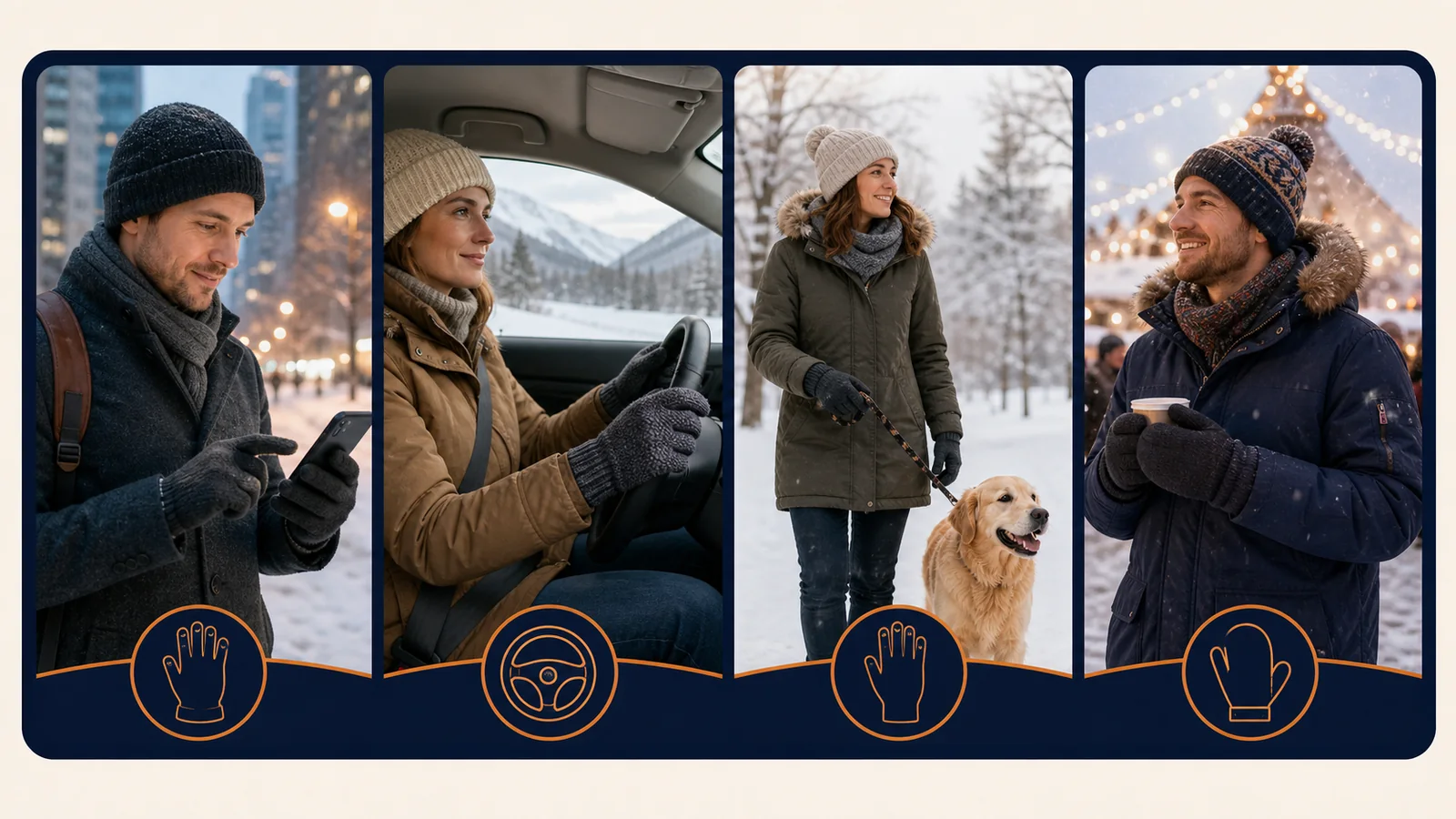
| Scenario | Best starting point | Why | Watch for |
|---|---|---|---|
| Driving a cold car | Fitted five-finger glove | Grip and control matter more than maximum insulation | Bulky palms, slippery fabric, long fingertips |
| 20–45 minute commute | Touchscreen-capable glove | Handles phone, card, keys, and rails without removal | Wind exposure and waiting time |
| Dog walking | Flexible glove; add over-mitten for severe cold | Leash and cleanup need finger control | Wet snow, long stationary pauses |
| Outdoor game or parade | Insulated mitten | Low movement and long exposure favor shared warmth | Phone use and sweating inside crowded pockets |
| Snow shoveling | Water-resistant breathable glove | Tool grip and high output favor dexterity | Wet snow entering cuffs |
| Skiing or snowboarding | Technical glove, mitten, or split-finger system | Weather protection and activity-specific grip decide | Do not substitute a casual knit glove |
| Winter running | Light breathable glove | Body generates heat; sweat control matters | Over-insulation |
| Extreme or remote cold | Purpose-built insulated mitten/system | Maximum passive warmth and redundancy matter | Safety plan, spare dry layer, weather rating |
What should you test before keeping a pair?
Do not judge handwear only by putting it on for ten seconds. Run a short indoor simulation while the return window is open:
- Fit test: make a fist, open the hand, and check for pressure across knuckles and palm.
- Key test: remove a key from a pocket and use a door lock.
- Phone test: wake the screen, tap a large button, swipe, and type a short phrase. “Touchscreen compatible” does not guarantee typing precision.
- Grip test: hold a mug, steering wheel, leash handle, or tool similar to your real task.
- Cuff test: wear the jacket you actually use. Check for exposed wrist gaps and bunching.
- Layer test: if using liners, confirm the outer layer does not squeeze the fingers.
The test that fails tells you what to change. If the mitten fails only on the phone, a liner-plus-mitten system may solve it. If the glove fails because the fingertips are long, change size or cut before adding more insulation.
Where does CozyGalar fit in this decision?
CozyGalar’s men’s winter glove is a five-finger, wool-blend knit glove with a fleece lining, conductive fingertips, and a textured palm. That design targets everyday cool-to-cold routines where flexibility, grip, and phone access matter: commuting, driving, errands, and short dog walks.
It is not a heated glove, waterproof shell, technical ski glove, or extreme-cold mitten. If your main need is standing still for hours, handling wet snow, or traveling in severe remote conditions, choose purpose-built handwear for that exposure—even when the better choice is another category or brand.
Want an everyday five-finger option?
If your priority is daily grip, fleece-lined comfort, and touchscreen access rather than maximum mitten warmth, review the current CozyGalar sizes and listing details on Amazon.
Check current size and price on Amazon
Shopping disclosure: CozyGalar sells this product on Amazon. This is not an affiliate-commission link. Amazon controls current price and availability.
What is the final gloves-versus-mittens rule?
Choose mittens when preserving heat matters more than manipulating objects. Choose gloves when you need to grip, steer, handle small items, or use a phone repeatedly. Choose a layered or split-finger system when the day alternates between active tasks and stationary cold.
The most useful question is not “Which one is warmest?” It is “Which one stays on my hands, stays dry, fits correctly, and lets me complete the routine?” A handwear system that answers all four will usually feel warmer in real life than a category winner chosen in isolation.
Frequently asked questions
Are mittens always warmer than gloves?
No. They are generally warmer when materials, insulation, fit, and dryness are comparable. A wet, thin, or poorly fitted mitten can be colder than a well-built glove.
Are gloves or mittens better for driving?
Gloves are usually better because independent fingers and a fitted palm improve control. Choose a non-slip palm and avoid excessive bulk.
Can I wear liner gloves under mittens?
Yes, if the mitten has enough room. The liner lets you remove the outer layer for short tasks without exposing bare skin. Stop if the combination feels tight.
Are mittens better for Raynaud’s?
Mittens may help some people because fingers share warmth, but Raynaud’s is a medical condition. Ask a qualified clinician about symptoms, triggers, and appropriate protection rather than relying on a general gear article.
Are knit gloves enough for snow?
They may suit dry, brief exposure, but casual knit gloves are not automatically windproof or waterproof. For wet snow or prolonged contact, use a weather-protective outer layer designed for those conditions.
What is warmer: thick gloves or thin mittens?
There is no universal answer because insulation, shell, fit, moisture, and construction differ. Compare products designed for the same activity and weather, not shape alone.
Sources and research notes
We did not laboratory-test gloves or mittens for this article. The guide synthesizes current US search data, outdoor buying guidance, manufacturer category education, and verified CozyGalar product facts. Search figures are dated snapshots and may change.

Pingback: Best Winter Gloves for Extreme Cold: 2026 Guide