


Winter dog-walking glove guide
What Are the Best Winter Gloves for Walking a Dog?
Choose gloves that balance everyday warmth, leash grip, fingertip control, and dexterity—then step up to more protective gear for wet snow, strong wind, or prolonged severe cold.
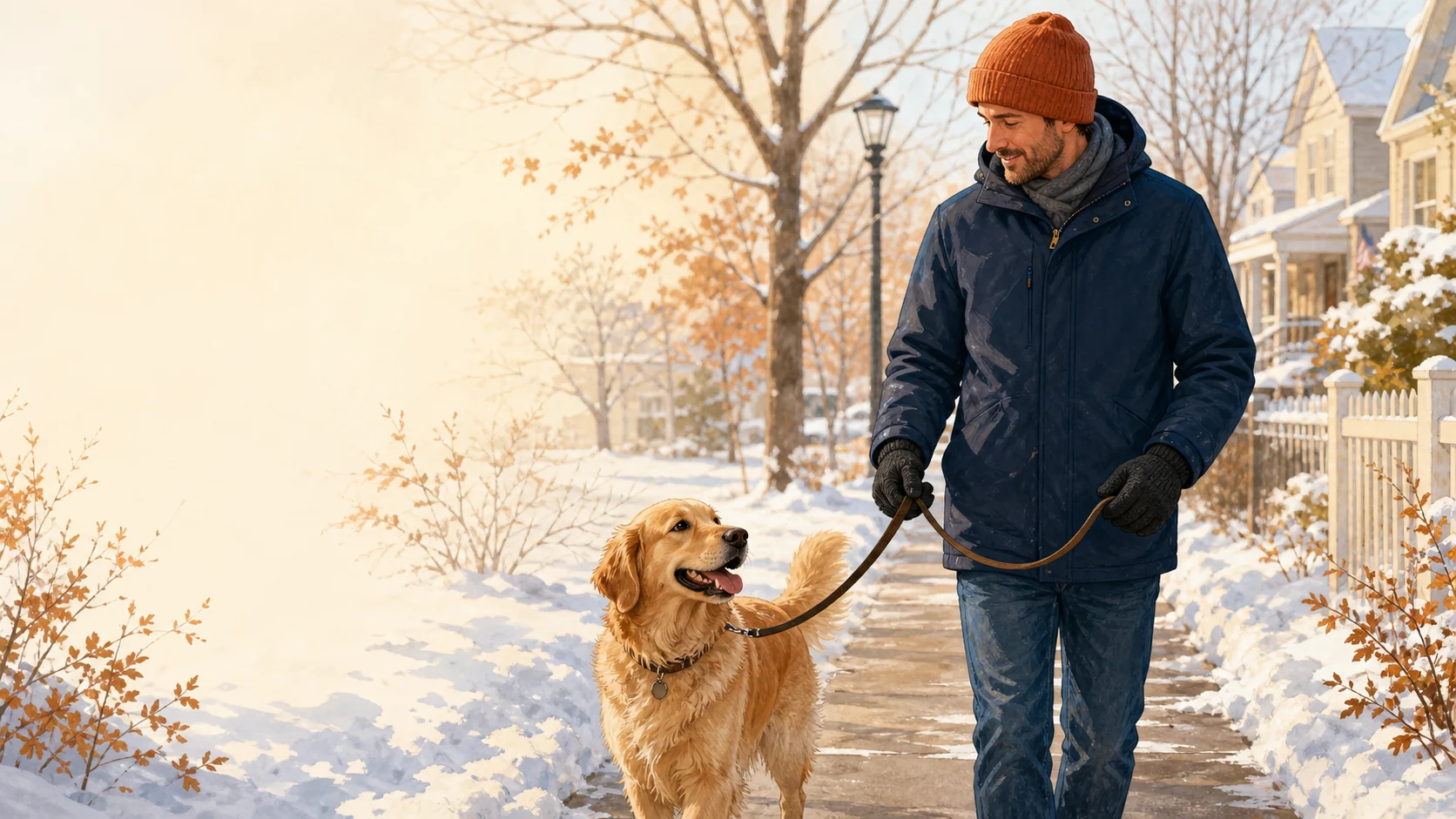
The best winter gloves for walking a dog keep your hands comfortably warm while preserving leash grip, fingertip control, and enough dexterity for waste bags, treats, keys, and brief phone checks. For ordinary dry neighborhood walks, a fitted fleece-lined knit glove with textured palms and touchscreen fingertips can be practical. Wet snow, strong wind, or prolonged severe cold calls for more protective gear.
A dog walk asks more of your hands than a simple trip from the car to the office. One minute you are holding a loop leash; the next you are separating the edge of a waste bag, reaching for a treat, unlocking a door, or checking your route. That changing task sequence is why the warmest or thickest glove is not automatically the most useful.
What features matter most in dog-walking gloves?
Start with five practical requirements: moderate warmth, reliable leash contact, fingertip dexterity, a secure fit, and honest weather protection. Rank them according to your dog, your route, and your local winter—not according to the longest feature list.
- Close your hand around the actual leash handle without bunching fabric in your palm.
- Open a dog-waste bag and pick up a key or treat.
- Tap and swipe your phone while standing still in a safe place.
- Check that the fingertips reach the end without loose fabric.
- Confirm the glove matches the forecast, especially precipitation and wind.
If a glove passes only the warmth test, it may still be frustrating on a real walk. If it passes only the dexterity test, it may be too light for the time you spend outside.
How much grip do you need for a dog leash?
You need enough surface traction to keep the leash from sliding through a relaxed, closed hand. A textured palm and fingers can help, but grip material does not replace good leash handling or awareness of icy footing.
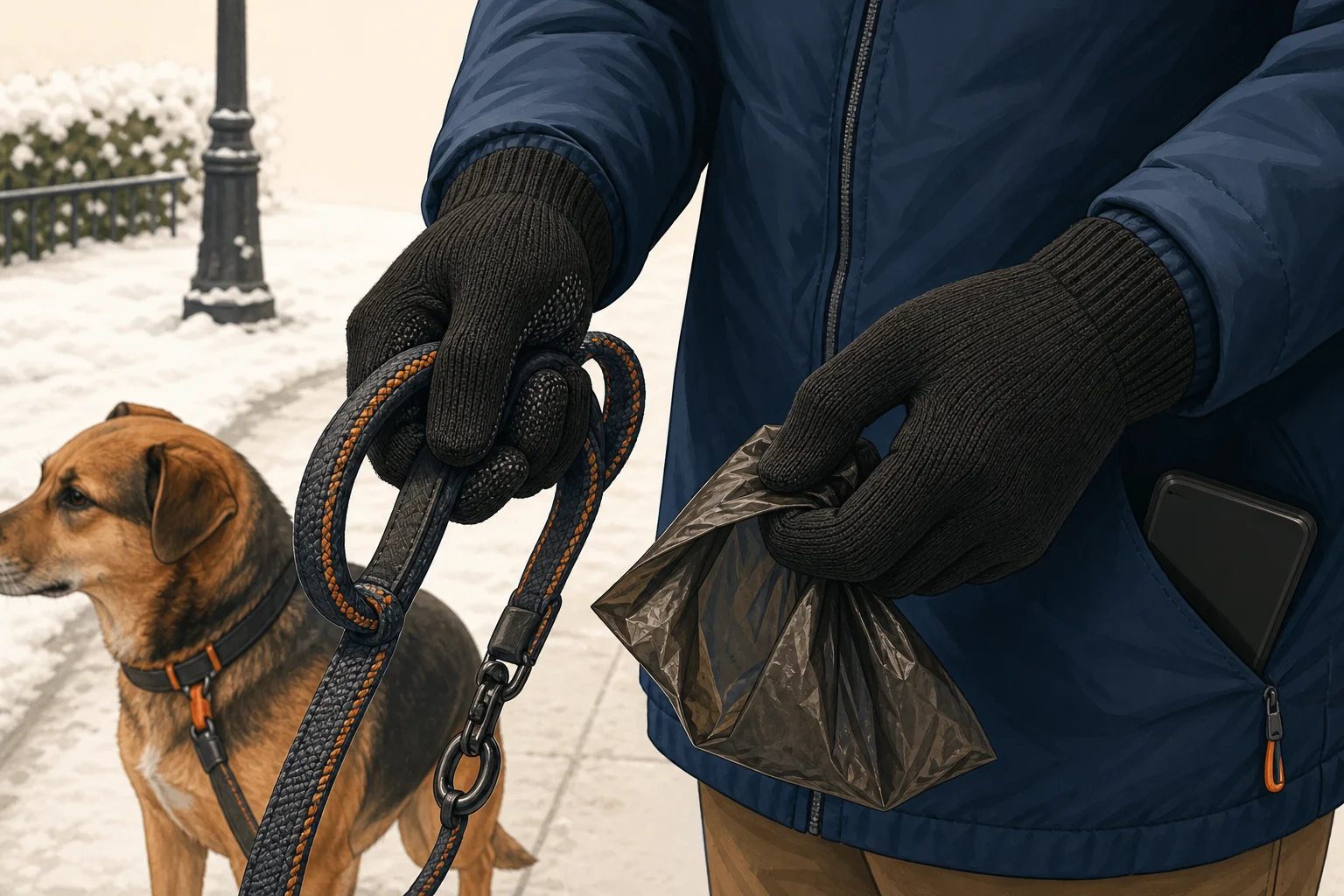
A useful dog-walking glove should handle both sustained leash contact and small fingertip tasks.
Use the actual leash as your test object because flat webbing, rope, leather, and retractable plastic handles feel different. Make a fist, change hands, and simulate shortening the lead. The glove should not twist around your hand or create a thick ridge in the palm.
For a strong dog or a route with frequent ice, equipment choice is only one part of control. Choose a leash system you can manage safely and avoid wrapping the leash around your fingers or wrist.
Should dog-walking gloves work with a touchscreen?
Touchscreen fingertips are useful for checking a route, responding to a dog-walking app, or making a brief call without exposing bare skin. They should be treated as a convenience—not a reason to look at a phone while crossing a street or while your dog needs your full attention.
Capacitive screens need clean, close contact between the conductive fingertip, your finger, and the screen. Fit, moisture, screen protectors, and device sensitivity can all affect the result. If phone response becomes inconsistent, work through the practical checks in our touchscreen glove troubleshooting guide. For pre-purchase details, see how to choose touchscreen gloves for cold weather.
How should winter dog-walking gloves fit?
Choose a close, comfortable fit with full finger movement and minimal empty space at the tips. A glove should not feel restrictive when you close your hand, but loose fingertip fabric can make bag edges, treats, and phone controls harder to manage.
Measure both hand width and finger length, then compare them with the brand’s size chart. If one measurement sits between sizes, decide whether your priority is closer fingertip control or room for a thin liner. Do not assume a letter size is identical across brands.
Are wool-blend knit gloves warm enough for dog walking?
They can be suitable for cool-to-cold everyday walks in dry conditions, especially when a fleece lining adds comfort and the knit remains flexible. The important question is not “Is wool warm?” but “Is this glove appropriate for today’s temperature, wind, moisture, activity level, and time outside?”
CozyGalar’s men’s gloves use a verified blend of 50% Merino Wool, 5% Conductive Fiber, 45% Polyester, with a fleece-lined interior, conductive fingertips, and textured grip areas. Those features align with ordinary dog-walking tasks. They do not make the gloves waterproof, windproof, ski-grade, or certified for extreme cold.
Individual verified purchasers have described the gloves as warm and comfortable, but customer observations cannot establish a universal temperature rating. Your circulation, pace, exposure time, and weather can change how any glove feels.
When should you choose a waterproof shell or mittens instead?
A thin touchscreen glove under a larger mitten can preserve some dexterity when you briefly remove the outer layer. Keep the outer protection dry and make sure the combined layers do not restrict circulation. If your hands become numb, painful, unusually pale, or difficult to move, go inside and warm up; this article is not medical advice.
What should you prepare before a winter dog walk?
Prepare small hand tasks before stepping outside. Separate one or two waste bags, place treats in an easy-open pouch, unlock your phone, and position keys in a predictable pocket. This reduces the time you spend fighting small objects in the cold.
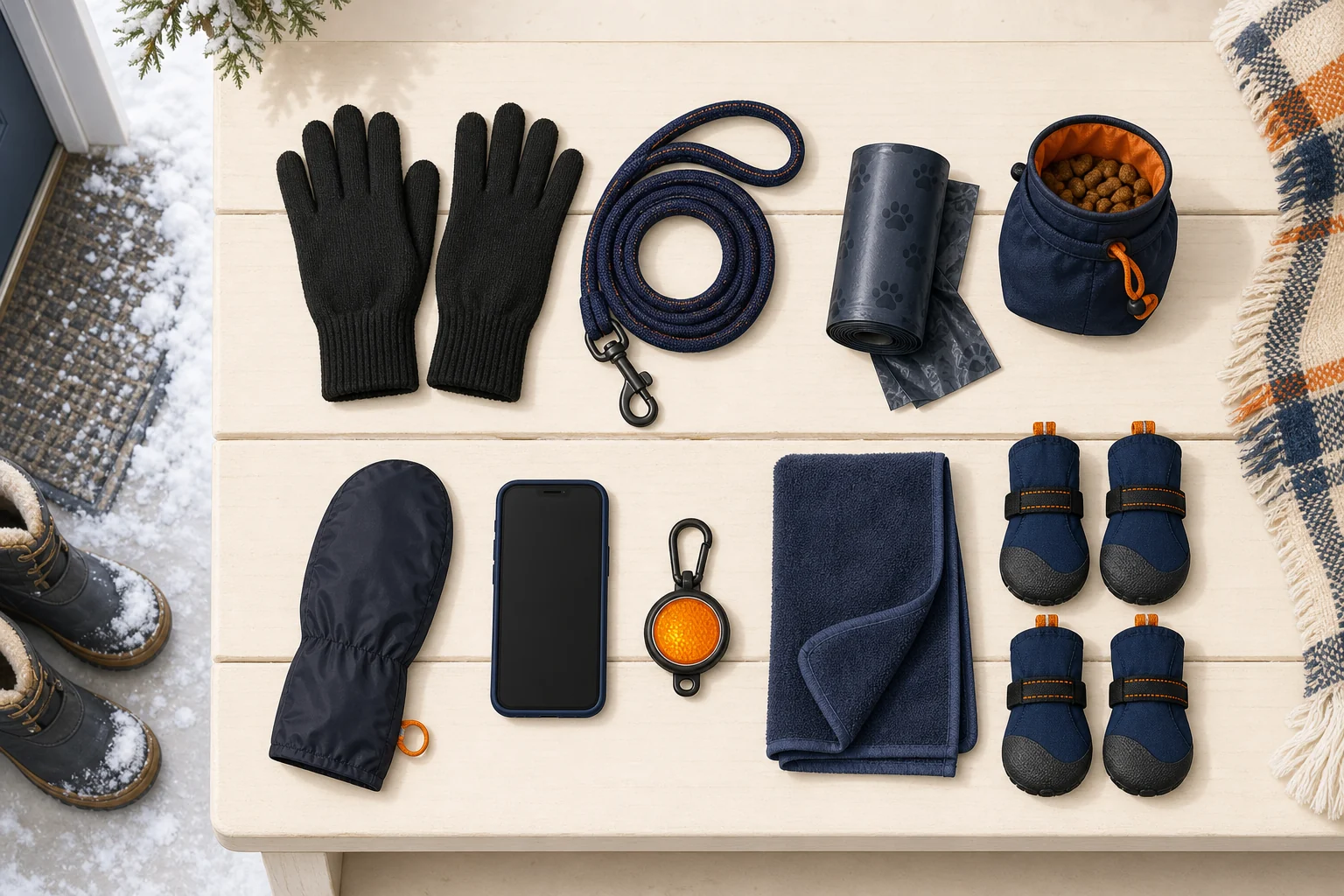
Set up the small items before the walk so you can keep your attention on the dog and the route.
The American Animal Hospital Association advises watching for signs that a dog is getting too cold and for hazards such as black ice, frozen water, and antifreeze. Cornell’s veterinary winter-safety guidance also emphasizes that dogs differ in cold tolerance. Monitor your dog rather than relying on a single temperature rule.
Looking for an everyday dry-weather option? CozyGalar wool-blend men’s gloves combine fleece-lined comfort, conductive fingertips, and textured grip for commuting, driving, dog walking, and other ordinary winter routines.
What is the simplest buying decision?
For ordinary dry winter walks, choose a glove that fits closely, grips your actual leash, and lets you handle a bag and phone without removal. For wet or severe weather, prioritize weatherproofing and insulation even if that means adding a shell or mitten. The best choice is the one that matches the whole walk—not just one feature.
You can compare the same warmth-versus-control tradeoff in our winter driving glove guide, where secure grip and dexterity matter for a different everyday routine.
Affiliate disclosure: CozyGalar may earn a commission from qualifying purchases made through the Amazon link, at no additional cost to you.
Source note: Product facts refer to CozyGalar ASIN B0DC65M7RD. Veterinary safety guidance is linked above. Generated illustrations are original editorial visuals and do not represent an exact product photograph.
Pingback: Why Do My Hands Sweat in Winter Gloves and Then Feel Cold? - CozyGalar