


Winter entryway organization
How Do You Organize Winter Hats and Gloves So They Stay Dry and Easy to Find?
Use three separate zones: one for dry daily gear, one where damp items can air out, and one for clean off-season storage. The right organizer depends on your space and household—not on buying the biggest bin.
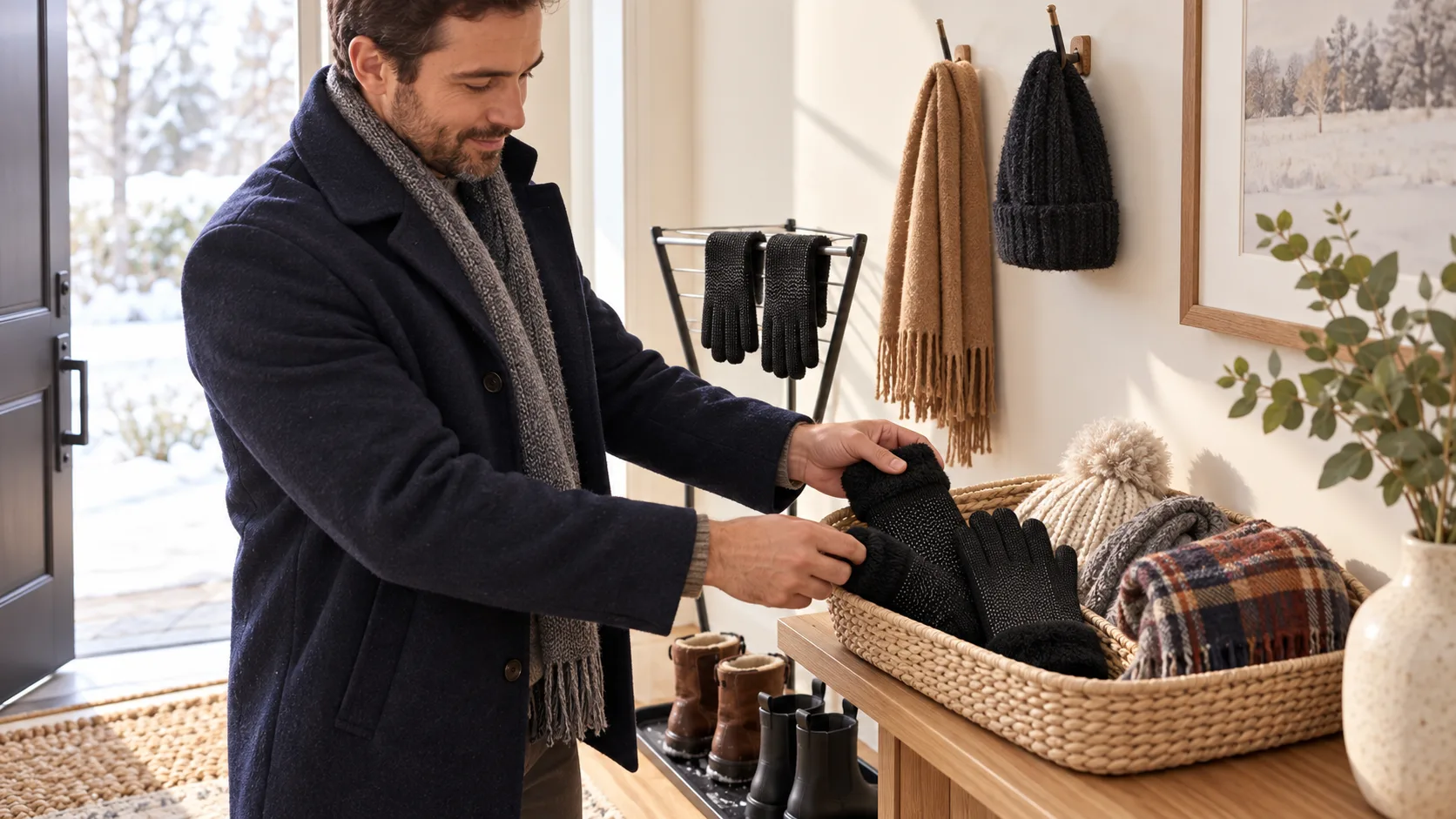
The simplest reliable system has three zones: return, dry, and store. Put fully dry, frequently worn hats and gloves in a shallow, visible return zone near the door. Send damp gear to an open drying zone. Move only clean, completely dry off-season pieces into protected storage. Then organize each zone by person or use.
- Gather every hat, glove, mitten, and scarf into one place.
- Match pairs; move singles to a temporary “find the mate” tray.
- Remove items that no longer fit, are damaged, or are never used.
- Choose one shallow return container near the door.
- Create a separate open drying spot with airflow.
- Place backup and specialty gear farther away.
What Is the Best System for Winter Hats, Gloves, and Scarves?
Organize by condition first, then by owner or activity. “Condition” means whether an item is dry and ready, damp and waiting to dry, or clean and out of season. This order matters because a perfectly labeled basket still fails if wet gloves disappear underneath dry hats.
The return zone handles tonight and tomorrow. The drying zone handles moisture. The off-season zone protects what you will not need for weeks or months. Once those jobs are separated, labels, hooks, pockets, and bins become simple tools instead of the whole strategy.
What Belongs in the Daily Return Zone?
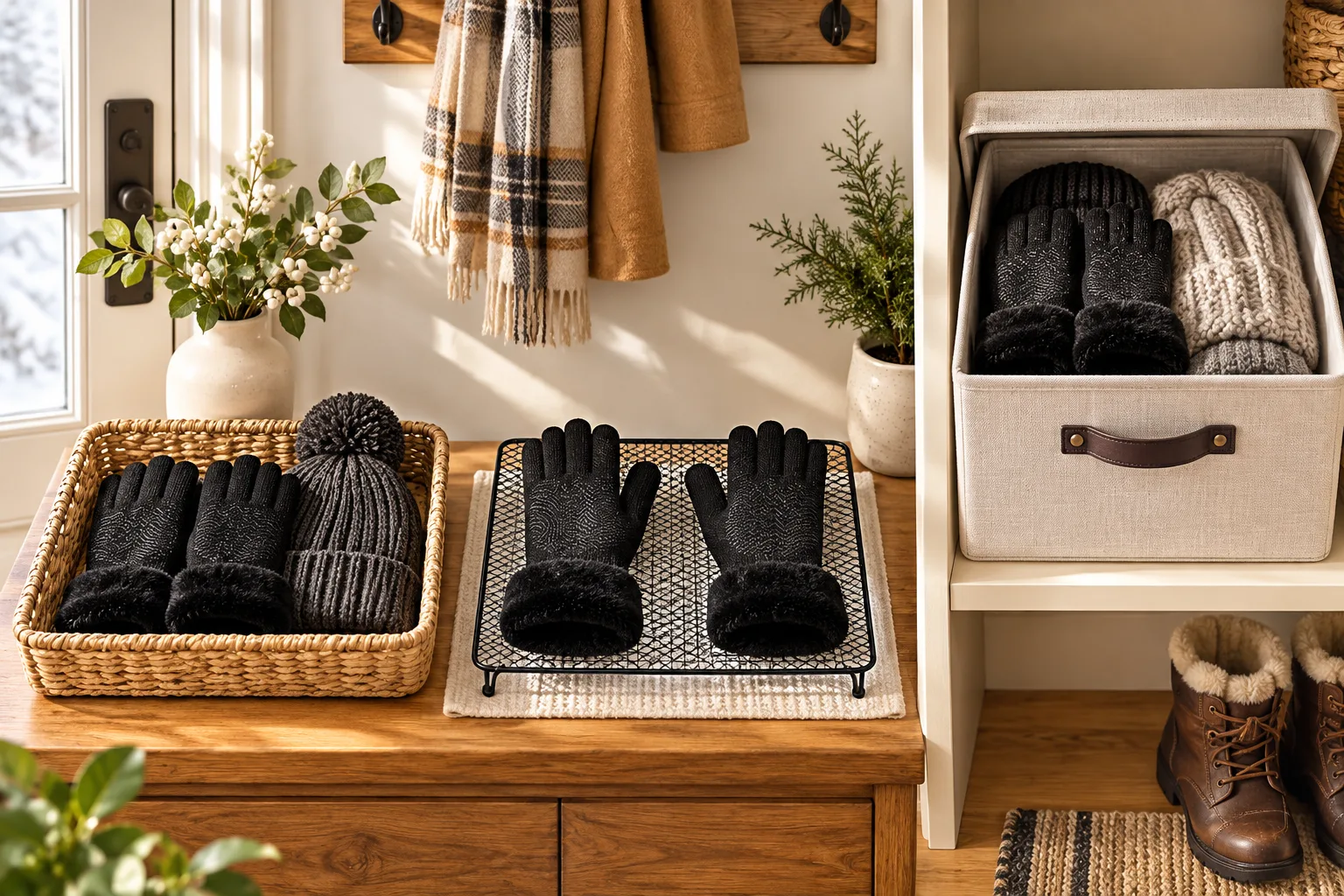
Keep only fully dry, high-frequency gear in the easiest-to-reach spot. For one or two people, that may be a shallow basket with one everyday glove pair and one hat per person. A family can use one labeled pocket or small bin per person. The goal is a one-motion return: drop the pair, hang the scarf, and move on.
Shallow storage is easier to scan than a deep mixed hamper because fewer items sit on top of one another. That is practical reasoning rather than a measured performance claim, but it directly addresses the common “I bought another pair and found the old one later” problem visible in the live search results.
Do not turn the daily zone into permanent storage. Backup mittens, ski gloves, formal gloves, and rarely worn hats can live on a higher shelf or in a secondary bin. A smaller active set is faster to maintain.
Where Should Damp Gloves and Hats Go?
Damp gear should go somewhere open with airflow, not into a closed basket or sealed box. Use a small rack, a ventilated shelf, or a washable towel placed away from direct high heat. Separate the two gloves and open the cuffs so the lining can dry. Follow the care label for each item.
For CozyGalar’s wool-blend gloves, the verified care direction is hand wash cold and air dry; do not bleach or tumble dry. If the exterior feels dry but the lining is still cool or damp, leave the pair in the drying zone longer. Our detailed guide explains how to wash and air-dry touchscreen gloves without turning this organization article into a duplicate care page.
Do not assume ordinary knit gloves are ready for wet snow. CozyGalar is not verified waterproof. If a pair becomes soaked, move it out of the daily bin and use weather-appropriate protection next time; our guide to knit-glove wet-weather limits explains why.
Which Organizer Works for Your Space and Household?
Choose the smallest setup that makes the return action obvious. You do not need to copy a magazine mudroom or buy a wall of matching containers.
| Situation | Best starting setup | Why it works | Main drawback |
|---|---|---|---|
| One or two adults | One shallow open basket plus two hooks | Fast to see and return a small active set | Becomes messy if backup gear moves in |
| Family with children | One reachable pocket or bin per person | Ownership is obvious; children can return their own gear | Needs labels or consistent colors |
| Tiny entryway | Over-door pockets plus a narrow drying rack | Uses vertical space and keeps the floor clear | Deep pockets can hide small items |
| No coat closet | Wall hooks, two small baskets, and a boot tray | Creates a landing zone without furniture | Visible storage needs a smaller inventory |
| Frequent wet snow | Separate ventilated drying station near laundry | Keeps damp gear away from dry daily items | Requires a second step after drying |
| Many activity-specific gloves | Daily bin plus labeled backup box by activity | Keeps technical gear from burying everyday pairs | Labels need seasonal review |
Before hanging an over-door organizer, confirm that the door still closes and that hardware will not damage the door or wall. Keep heavy items off lightweight pockets, and follow the organizer maker’s installation and weight instructions.
How Should You Sort and Pair Winter Accessories?
After separating damp from dry, sort by the choice your household makes at the door. For a family, that is usually person first. For one adult with several activities, it may be everyday, dress, wet-weather, and sport. Material can remain a secondary cue for care.
- Match pairs before storing: keep unmatched gloves in one small, time-limited tray rather than scattering them through multiple bins.
- Keep pairs visible: lay them side by side or use a soft divider. Avoid tight rubber bands that can compress cuffs or leave marks.
- Put frequency at the front: everyday gear should not sit underneath occasional ski or work equipment.
- Limit the active set: if the return container is overflowing, move backup gear instead of buying a larger catch-all.
- Inspect damage: loose seams, worn palms, and stretched fingertips belong in a repair or replace decision—not back in circulation.
How Do You Organize Winter Gear in a Small Entryway?
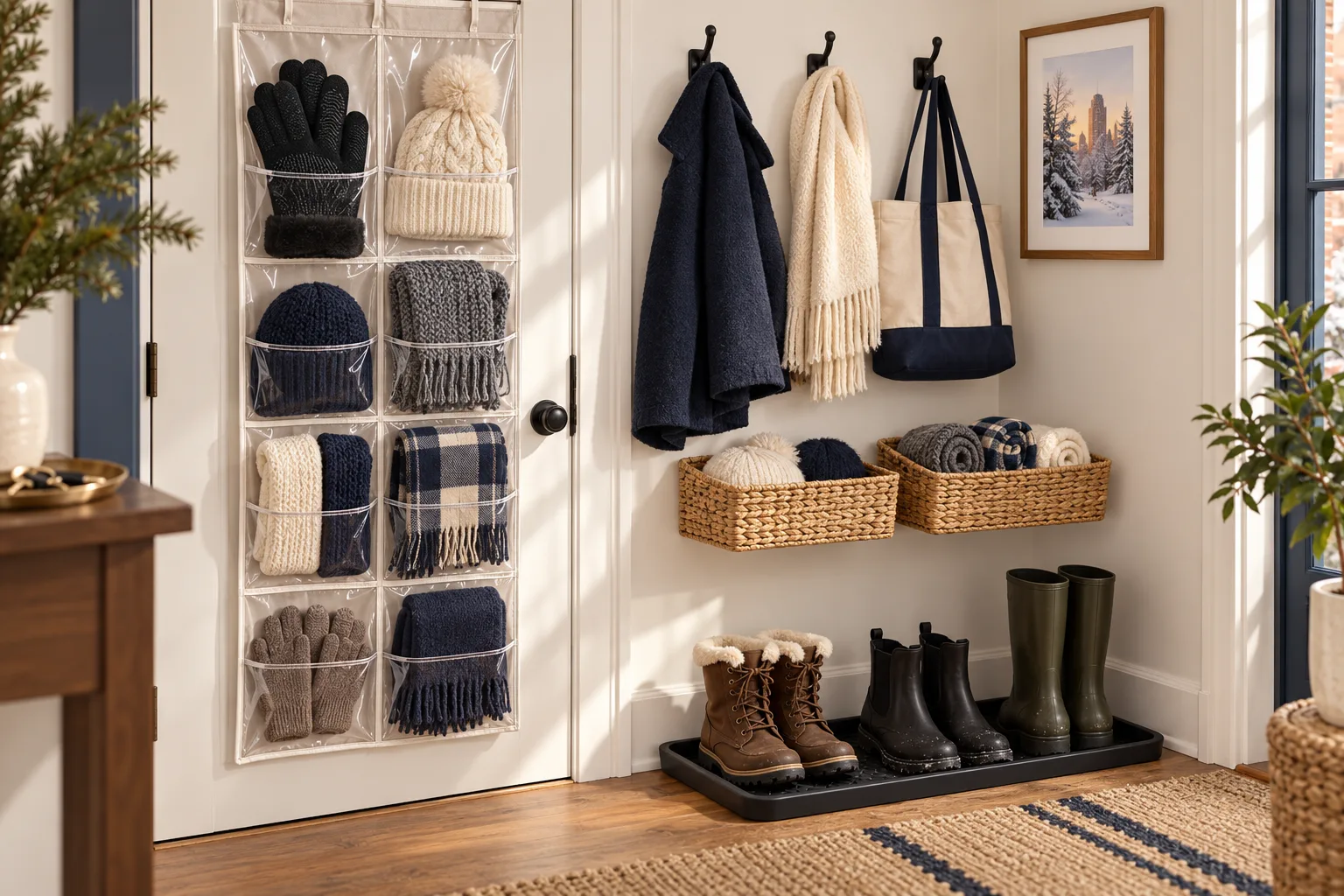
Use the door and wall before using floor space. A clear or mesh over-door pocket organizer makes small items visible. Two shallow wall baskets can separate people or dry daily items from clean backups. Hooks hold scarves and coats; a narrow boot tray contains tracked-in moisture below.
Keep the drying zone visually different from the return zone. Even a folded towel on a ventilated shelf can work when a rack will not fit. The important part is that nobody mistakes damp gear for ready-to-wear gear.
How Should You Store Winter Hats and Gloves After the Season?
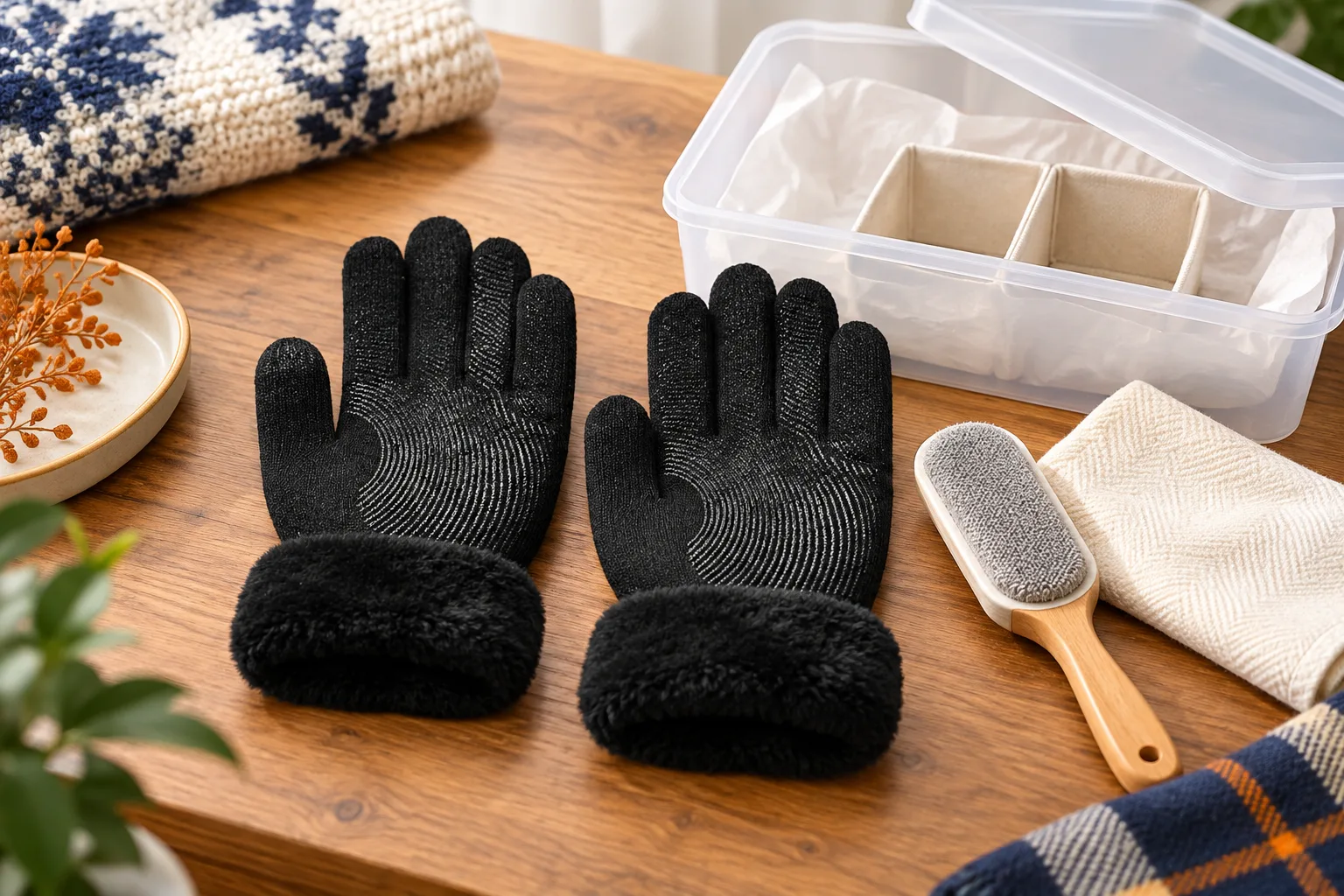
Clean every item according to its own care label, let it dry completely, inspect it, and then place it in protected storage. The Smithsonian’s household textile guidance recommends a clean, cool, dry, dark location and periodic inspection. For ordinary winter accessories, that supports an interior closet or under-bed area rather than a damp basement, hot attic, or spot beside a heating vent.
Wool and other animal-fiber items deserve extra attention. University of Maryland Extension notes that clean, properly stored woolens are less attractive to clothes-moth larvae and recommends sealed boxes for storage. That is a prevention measure, not a guarantee. If you see holes, webbing, larvae, or other signs of an active infestation, identify and address the pest instead of simply sealing the problem with the rest of your gear.
Do not casually add mothballs or pesticide products. University of Maryland treats mothballs as a last resort and says they must be used only in sealed containers according to their directions. Most households can begin with cleaning, dry storage, a clean closet, and regular inspection.
How Should CozyGalar Gloves Fit Into This System?
CozyGalar’s men’s gloves are a fleece-lined blend of 20% merino wool, 10% elastane, 5% conductive fiber, and 65% polyester, with touchscreen fingertips and textured grip. Put a fully dry everyday pair in the return zone, palms visible so the pair is easy to identify. Move damp gloves to the drying zone immediately.
These are intended for cool-to-cold everyday routines such as commuting, driving, dog walking, and errands. They are not verified waterproof, ski-grade, or rated for extreme cold. Storage does not change those boundaries.
If a pair is hard to identify because several family members wear similar black gloves, give each person a labeled pocket rather than marking the glove fabric. To keep touchscreen contact and control predictable, also check that the fingertips fit closely using our winter-glove fit guide.
Want one everyday pair for the return zone?
See the current CozyGalar listing for sizes and availability. This is a brand-owned commercial link; CozyGalar does not earn an affiliate commission from it.
What Should You Reset Each Week?
Spend two minutes matching loose pairs, moving fully dry gear out of the drying zone, and returning specialty items to backup storage. Empty tracked-in water from the boot tray and wipe the active basket if it is dirty. A weekly reset keeps the system small enough to work.
- Match every pair and decide what to repair, donate, recycle where accepted, or discard.
- Clean each item according to its own care label.
- Wait until linings, cuffs, and seams are completely dry.
- Clean and dry the storage area.
- Pack similar items in a protected container without crushing structured pieces.
- Store in a cool, dry interior location and inspect periodically.
Sources and editorial notes
- Smithsonian NMAAHC: family textile preservation toolkit (PDF)
- Smithsonian Museum Conservation Institute: climate and textile storage
- University of Maryland Extension: clothes moth prevention and storage
Competitor pages were used to map common answer formats and gaps, not as product-truth sources. Original AI-assisted images were created from a brand-owned CozyGalar reference and do not represent independent testing.