


Winter driving safety
How Do You Remove Snow From a Car Roof Safely?
Clear the roof before the windows, using a long-handled soft automotive snow tool from stable pavement. Push loose snow off without dragging hard edges across paint, then clear every window, mirror, light, camera, sensor, plate, wiper, hood, and trunk before driving.
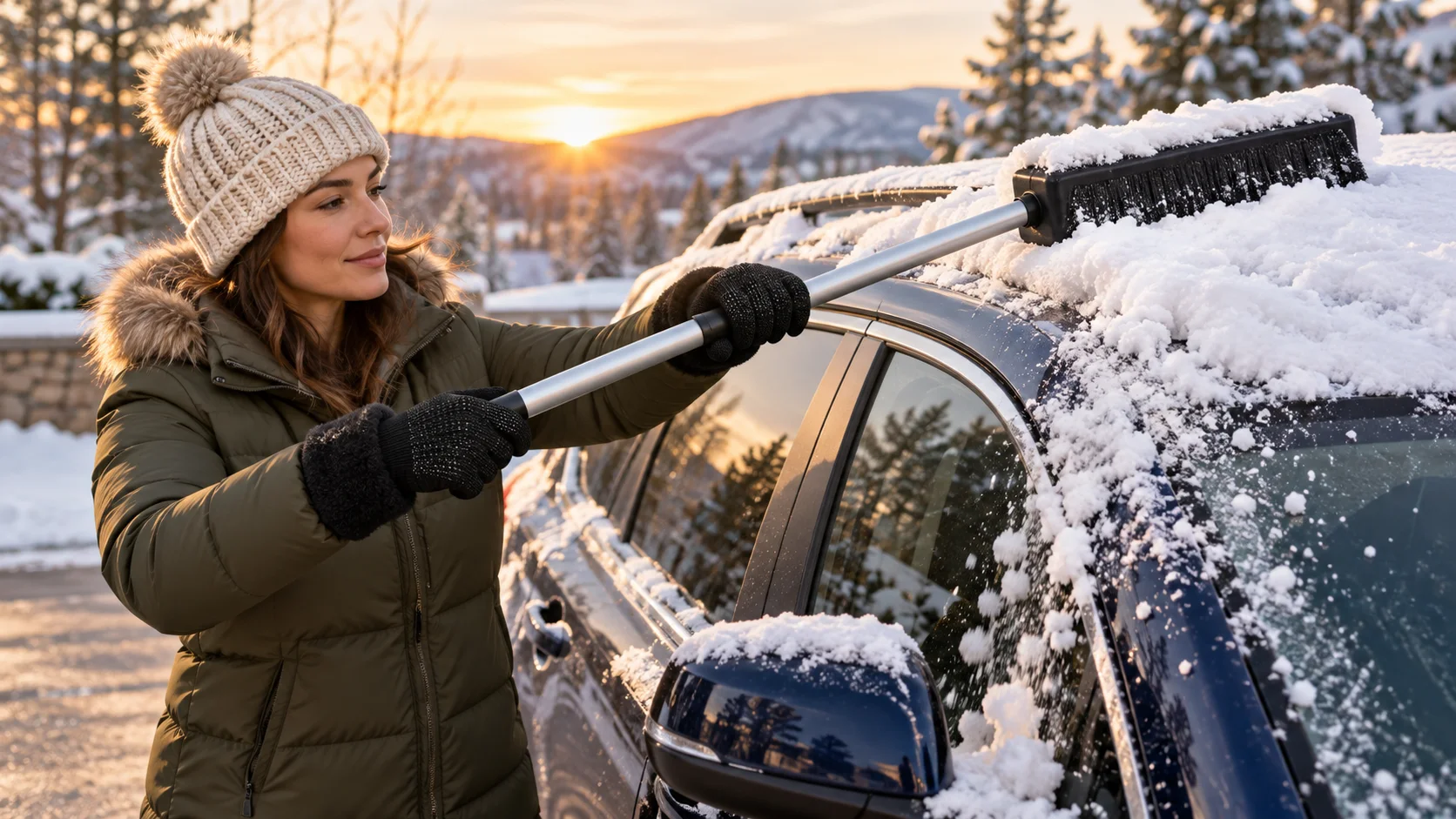
Remove all loose snow and safely removable ice before the car moves. Start on clear, stable ground; check that the exhaust outlet is unobstructed if the engine will run; use a clean, long-handled foam or soft automotive snow tool; work from the roof downward; and reserve a clean plastic ice scraper for glass only. Never pour hot water on glass or attack painted panels with a metal shovel, key, or scraper.
- Park fully and give yourself stable, cleared footing around the vehicle.
- If the engine will run, confirm that the exhaust outlet is free of snow.
- Start the vehicle’s defroster only as your owner’s manual permits.
- Push loose snow from the roof first with a long-handled soft automotive tool.
- Clear the hood, trunk or hatch, and all body surfaces that could shed snow.
- Clear every window, mirror, light, camera, sensor, license plate, wiper, and washer nozzle.
- Walk around the whole vehicle. Drive only when visibility and the exterior are clear.
Why Must Snow Come Off the Car Roof Before You Drive?
Roof snow is not harmless just because it sits above your line of sight. A stop can send it forward onto your windshield. Airflow can lift snow or ice and send it toward someone behind you. Massachusetts and New York transportation agencies explicitly tell drivers to clear the roof along with windows and lights before driving.
Do not settle for one small viewing hole in the windshield. You need a clear windshield, side and rear windows, mirrors, headlights, taillights, turn signals, cameras, sensors, and license plate. The exact equipment varies by vehicle, so use the owner’s manual to locate and protect driver-assistance sensors and cameras.
What Tools Remove Roof Snow Without Scratching Paint?
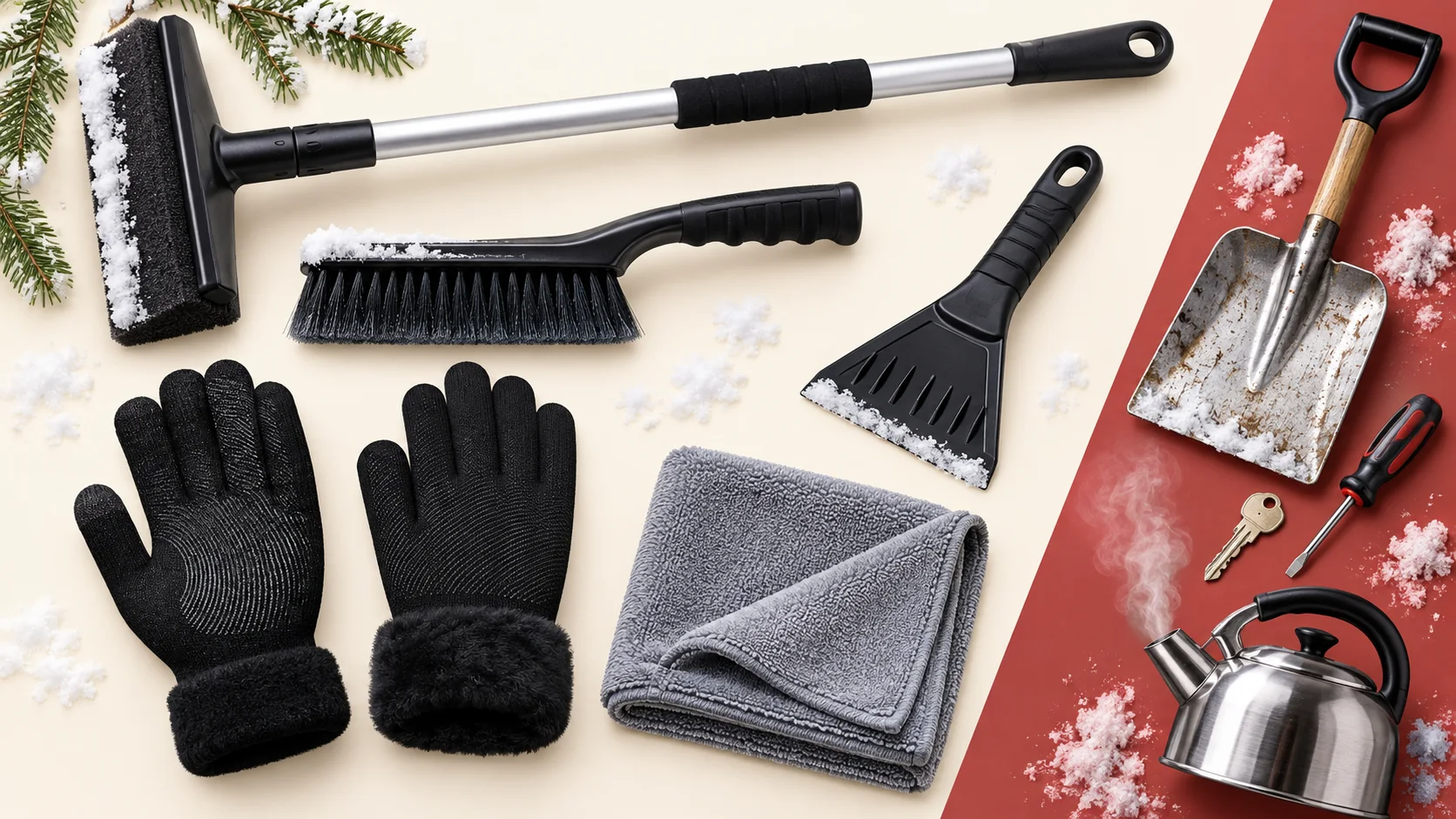
Use a clean, long-handled tool made for vehicles, preferably with a soft foam head. The extra reach lets you work from the ground instead of leaning your coat, belt, or tool handle against the paint. Keep the working face in the snow and use light pushing passes rather than grinding the head against the panel.
No tool makes scratching impossible. Snow can contain grit, and even a soft tool can drag it across clear coat. Remove the bulk with as little paint contact as practical, keep the tool clean, and follow the vehicle maker’s finish-care instructions—especially for matte paint, wraps, coatings, soft convertible tops, roof glass, solar roofs, or unusual trim.
| Surface and condition | Safer starting tool | Do not use | Stop condition |
|---|---|---|---|
| Loose snow on roof, hood, or trunk | Long-handled soft foam automotive snow tool | Metal shovel, sharp edge, dirty household broom | Tool begins contacting or dragging grit across paint |
| Loose snow on glass | Soft automotive snow brush or foam tool | Metal tool | Snow is bonded as ice |
| Softened ice on windshield or side glass | Clean plastic ice scraper, with defroster support per the manual | Hot water, key, screwdriver | Glass is chipped, cracked, or ice will not release gently |
| Bonded ice on painted roof or body | Safe thawing and vehicle-specific guidance | Any ice scraper, hammering, prying | Immediate—do not force it from paint |
| Lights, cameras, sensors, plastic lenses | Soft tool or cloth as the owner’s manual permits | Hard scraper or abrasive brush | Component is iced over or location is uncertain |
What Is the Safest Roof-First Snow-Removal Sequence?
First, make the work area safe. Clear enough pavement to stand without slipping. Do not work in traffic or where another vehicle may move. Set the parking brake as appropriate, keep keys under your control, and do not let children play around the vehicle.
Second, check the exhaust before idling. If you plan to run the engine for the defroster, make sure snow is not blocking the exhaust outlet. Follow the owner’s manual and local idling rules. Never run a vehicle in a closed garage.
Third, clear the roof from stable ground. Extend the soft tool until you can reach without climbing, twisting sharply, or pressing against the car. Push snow toward the sides or rear only when nobody is in the fall path. Work in manageable sections instead of trying to move the entire load at once.
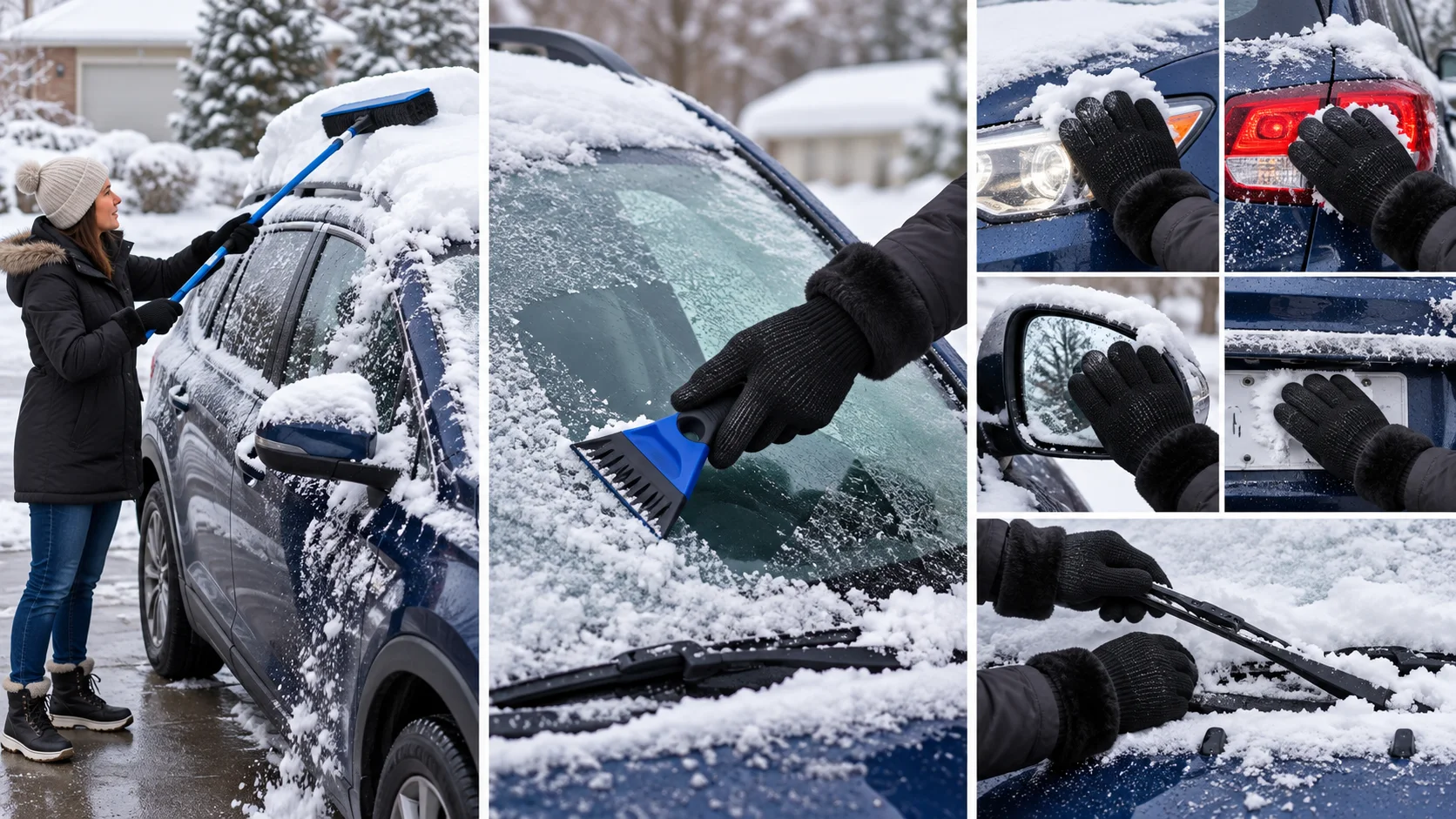
Fourth, continue down the vehicle. Clear the hood and trunk or hatch so snow cannot lift or slide while you drive. Then clear all glass. Give the defroster time to loosen windshield ice and use a clean plastic scraper only on glass. Our separate guide explains how to remove windshield ice safely.
Fifth, finish the details. Clear mirrors, wiper blades, washer nozzles, headlights, taillights, turn signals, cameras, sensors, door handles, and the license plate. A final walkaround catches the strip of snow left along a roof rail or the light you could not see from the driver’s side.
Should You Treat Powder, Wet Snow, and Bonded Ice Differently?
Yes. Fresh powder is usually easiest to push away with minimal surface contact. Wet, heavy snow requires smaller passes so the tool stays controllable and your stance stays stable. Bonded ice on paint is a stop signal: do not pry, hammer, or scrape it from the roof.
Use the vehicle’s defrosting systems only for the surfaces and in the way its manual describes. A windshield scraper is not a roof scraper. If roof ice will not release safely, wait for suitable thawing conditions or ask a dealer or qualified automotive professional for vehicle-specific advice. Being late is less serious than driving with an uncleared roof or damaging a panel while rushing.
How Do You Clear an SUV or Truck Roof Without Overreaching?
Use a purpose-built extendable soft snow tool long enough to reach from the ground. Move around the vehicle rather than stretching across it. Keep your feet on a cleared, stable surface and stay out of the path where snow will fall. Do not climb on a tire, door sill, bumper, icy step, ladder, or the vehicle roof.
If you cannot reach the center while maintaining control, stop. A longer vehicle-safe tool, a safer parking location, or help from someone equipped for the vehicle is the answer. Gloves improve neither balance nor reach, and four-wheel drive does not make an icy driveway safe to stand on.
Which Gloves Are Appropriate for Clearing a Snow-Covered Car?
Match the glove to moisture, temperature, and task. For a brief dry-cold job with loose powder, a close-fitting knit glove can add hand comfort while preserving enough dexterity to hold a tool. For wet snow, heavy accumulation, long exposure, or abrasive work, choose weather-appropriate waterproof insulated gloves with the grip and protection the task requires.
CozyGalar’s fleece-lined black gloves are a blend of 20% merino wool, 10% elastane, 5% conductive fiber, and 65% polyester. Their textured palm and fingers are intended to support everyday grip, and the conductive fingertips are designed for compatible touchscreens. They are not verified waterproof, windproof, work-rated, or suitable for extreme cold.
If CozyGalar gloves become wet, change into a suitable dry pair and let them air-dry. Hand wash cold, air dry, and do not bleach or tumble dry. A glove never makes an icy stance, obstructed exhaust, moving vehicle, or poor tool choice safe.
Need a dry-cold everyday glove?
See the current CozyGalar listing for sizes and availability. This is a brand-owned commercial link; CozyGalar does not earn an affiliate commission from it.
Is It Illegal to Drive With Snow on Your Car Roof?
The legal answer depends on your state and locality. Some jurisdictions specifically require drivers to remove accumulated snow or ice from the roof or other vehicle surfaces. Others can address it through clear-view, unsafe-load, careless-driving, or hazard rules. Penalties and timing can change.
Check the current motor-vehicle or transportation-agency guidance where you will drive. Do not rely on a viral 50-state graphic or an old list. Regardless of the local wording, the practical safety action is the same: clear the entire vehicle before entering traffic.
This article is general safety information, not legal advice, and it cannot replace your vehicle manual, current state or local rules, emergency guidance, or advice from a qualified automotive professional.
What Belongs in a Five-Item Car Snow-Removal Kit?
- Long-handled soft foam automotive snow tool: long enough for your vehicle without overreaching.
- Soft automotive brush: for loose snow on glass and small exterior details, as the manual permits.
- Clean plastic ice scraper: for glass only.
- Dry task-appropriate gloves: ordinary knit for brief dry powder; waterproof insulated protection for wet work.
- Microfiber towel: kept clean for mirrors, lenses, and final detail work where appropriate.
Store tools where you can reach them before the vehicle is buried, but secure them so they cannot become loose objects in the cabin. Inspect the foam, bristles, scraper edge, and handle during the season. A dirty or damaged tool should be cleaned, repaired, or replaced before it touches the vehicle.
Pair this kit with the supplies in our winter car emergency-kit checklist. If doors or seals freeze after the storm, use the separate frozen car-door guide rather than pulling harder.
Sources and editorial notes
- NHTSA: Winter Weather Driving Tips
- Massachusetts DOT/MEMA: Safe winter driving tips
- New York State DOT: Experience Winter Driving
- Pennsylvania State Police: Rules of the Road — Snow and Ice
- State Farm: How to get ice off your windshield and other tips
- NAPA Know How: 5 Tips for Cleaning Snow off a Car
Sources were checked September 12, 2026. Competitor pages informed the gap analysis, not CozyGalar product claims. Original AI-assisted images were created from brand-owned CozyGalar references; they are editorial illustrations, not independent product testing or a vehicle/tool-brand collaboration.