

Everyday winter science
Why Does Metal Feel Colder Than Wood in Winter?
Metal and wood can be at the same temperature, yet metal usually feels colder because it moves heat away from your warmer skin faster. Your nerves register that quicker skin cooling—not a direct reading of the object’s temperature. In winter, the useful next question is how long, how wet, and how demanding the contact will be.
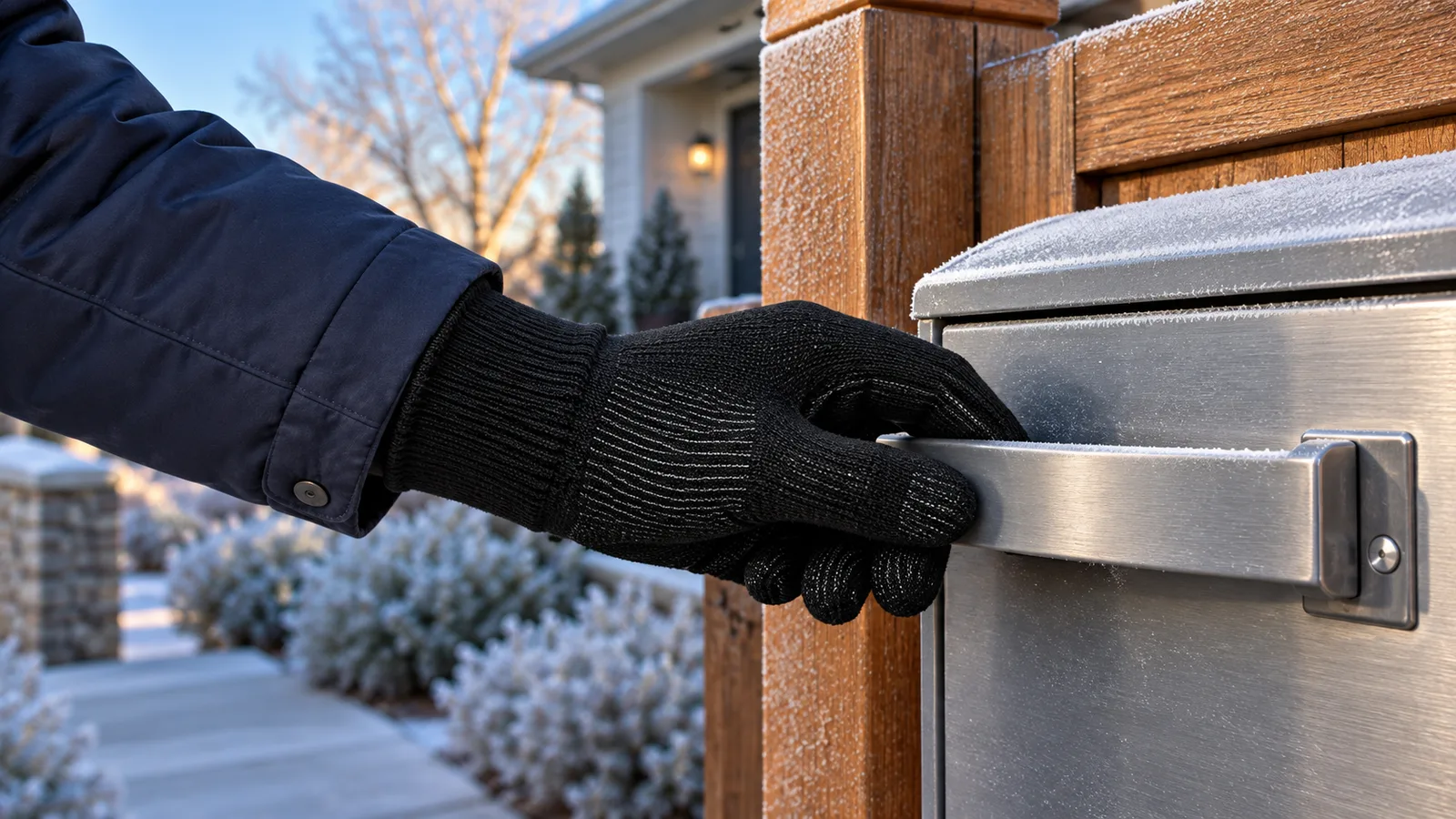
The short answer: metal is usually a much faster pathway for heat than wood. When your warm hand touches a cool metal handle, heat leaves the skin quickly, so the skin temperature drops quickly and the surface feels sharply cold. Wood slows that transfer. The sensation is real, but it is not proof that the metal began at a lower temperature.
Are the Metal and Wood Actually the Same Temperature?
Often they are close—especially after sitting in the same shaded indoor or outdoor environment long enough. A metal mailbox and a wood post can both settle near the surrounding air temperature while still feeling very different to your hand. That difference in sensation comes mainly from heat transfer, not from one object secretly being much colder.
But “same place” does not guarantee “same surface temperature.” Direct sun, shade, wind, recent handling, contact with the ground, surface color, thickness, coatings, and moisture can make two objects differ. Your hand is not a reliable thermometer. If actual temperature matters, use a suitable measuring method rather than comparing surfaces by touch.
Why Does Heat Leave Your Hand Faster Through Metal?
Your skin is usually warmer than a winter mailbox, rail, key, or door handle. When they touch, energy moves from the warmer skin toward the cooler object. Metals are generally good thermal conductors, so they carry that energy away from the contact point efficiently. Wood is a much poorer conductor and slows the same process.
The University of Illinois Physics Van explains the sensation in human terms: skin detects changes in its own temperature. A cool metal surface lowers the temperature at the skin-metal interface quickly, while a wood surface produces a slower change. That is why metal can feel startlingly cold even when a nearby wood surface shares roughly the same starting temperature.
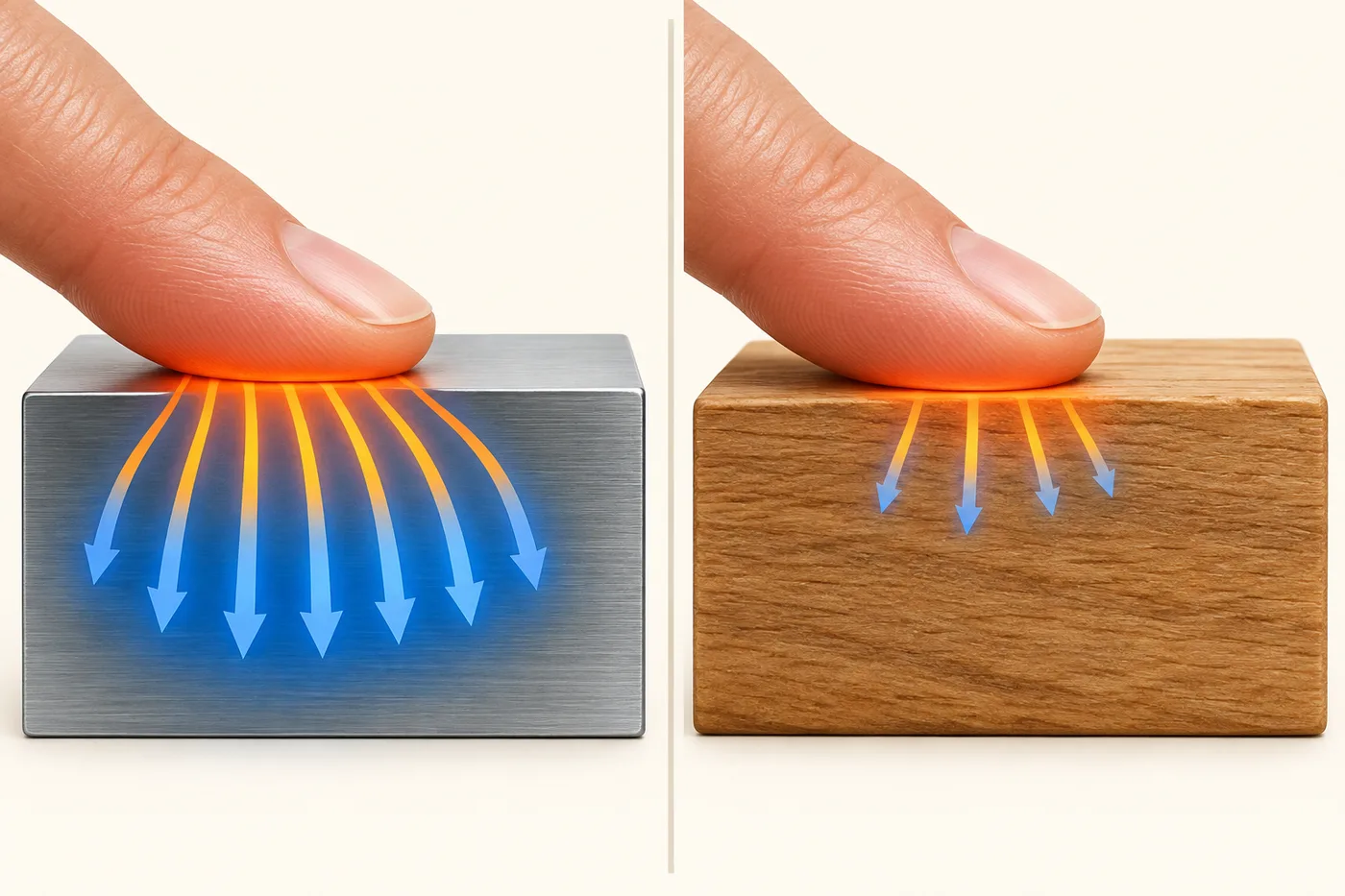
Conductivity is the most useful everyday explanation, but the complete contact sensation also depends on the object’s density, heat capacity, surface finish, thickness, moisture, and how long you touch it. Those variables are why a universal “safe touch time” cannot be read from the material name alone.
Why Can the Same Metal Feel Hotter Than Wood in Summer?
The process reverses when the object is warmer than your skin. A hot metal bench, car buckle, pan handle, or tool can move energy into the skin faster than a wood surface at the same temperature. Metal then feels hotter for the same reason it felt colder in winter: it is better at moving heat across the contact.
This reversal is a useful reality check. “Metal feels cold” is not an inherent property of metal. The material speeds heat transfer in whichever direction the temperature difference sends it. That is also why sensation alone should never replace a thermometer, a manufacturer warning, or task-specific safety guidance.
Does the Cold Feeling Mean the Metal Is Dangerous?
Not by itself. A quick touch of a cool indoor key can feel sharper than touching a wood tabletop without being an injury. Risk rises as the actual surface becomes colder, contact lasts longer, pressure and grip increase, skin is bare or wet, and the person has reduced circulation or sensation. Wind and overall cold exposure matter too.
Do not turn the physics lesson into permission to test a very cold surface. No single article can give a safe temperature or duration for every material, person, and task. Avoid prolonged bare-skin contact with cold metal, follow workplace or equipment instructions, and use protection selected for the actual exposure. Electrical, chemical, machine, freezer, cryogenic, and industrial cold-contact work require hazard-specific PPE—not ordinary winter knit gloves.
| Situation | Better response | Main boundary |
|---|---|---|
| Brief dry contact with a mailbox, key, or door handle | Use a dry everyday glove if it improves comfort and grip | Short ordinary errands are not a performance test or temperature rating |
| Holding a rail, cart, or steering wheel for longer | Reduce unnecessary contact time; keep the hand covered; pause if sensation changes | Duration and pressure increase heat transfer and may reduce dexterity |
| Wet, icy, or snow-covered metal | Use weather-appropriate waterproof protection and avoid unsafe surfaces | Ordinary knit gloves are not verified waterproof |
| Outdoor tools, freezers, industrial equipment, chemicals, or energized systems | Follow the employer, equipment maker, and hazard assessment for task-specific PPE | Everyday winter gloves are not occupational safety equipment |
| Pain, persistent numbness, pale or waxy skin, or loss of dexterity | Stop, get to shelter, and follow medical guidance | Do not keep testing the surface or rely on a blog to diagnose injury |
What Changes When Your Hand or Glove Is Wet?
Moisture changes both comfort and product choice. A wet hand or soaked glove can lose heat faster and remain cold longer than a dry one. Wet fabric may also compress, cling, and reduce useful insulation. Treat moisture as a reason to shorten exposure, switch to dry protection, and get indoors—not as a small detail.
CozyGalar knit gloves are not verified waterproof. They may suit a dry mailbox check, commute, or quick handle-and-key task, but rain, wet snow, slush, and sustained contact call for weather protection designed for those conditions. The separate guide on whether knit gloves are waterproof explains that boundary in more detail.
Which Winter Touch Tasks Need Different Protection?
Choose by the task, not by the first cold sensation. A glove that is comfortable for a 30-second mailbox stop may be wrong for clearing wet snow, carrying cold metal for several minutes, handling tools, or working around mechanical and electrical hazards.
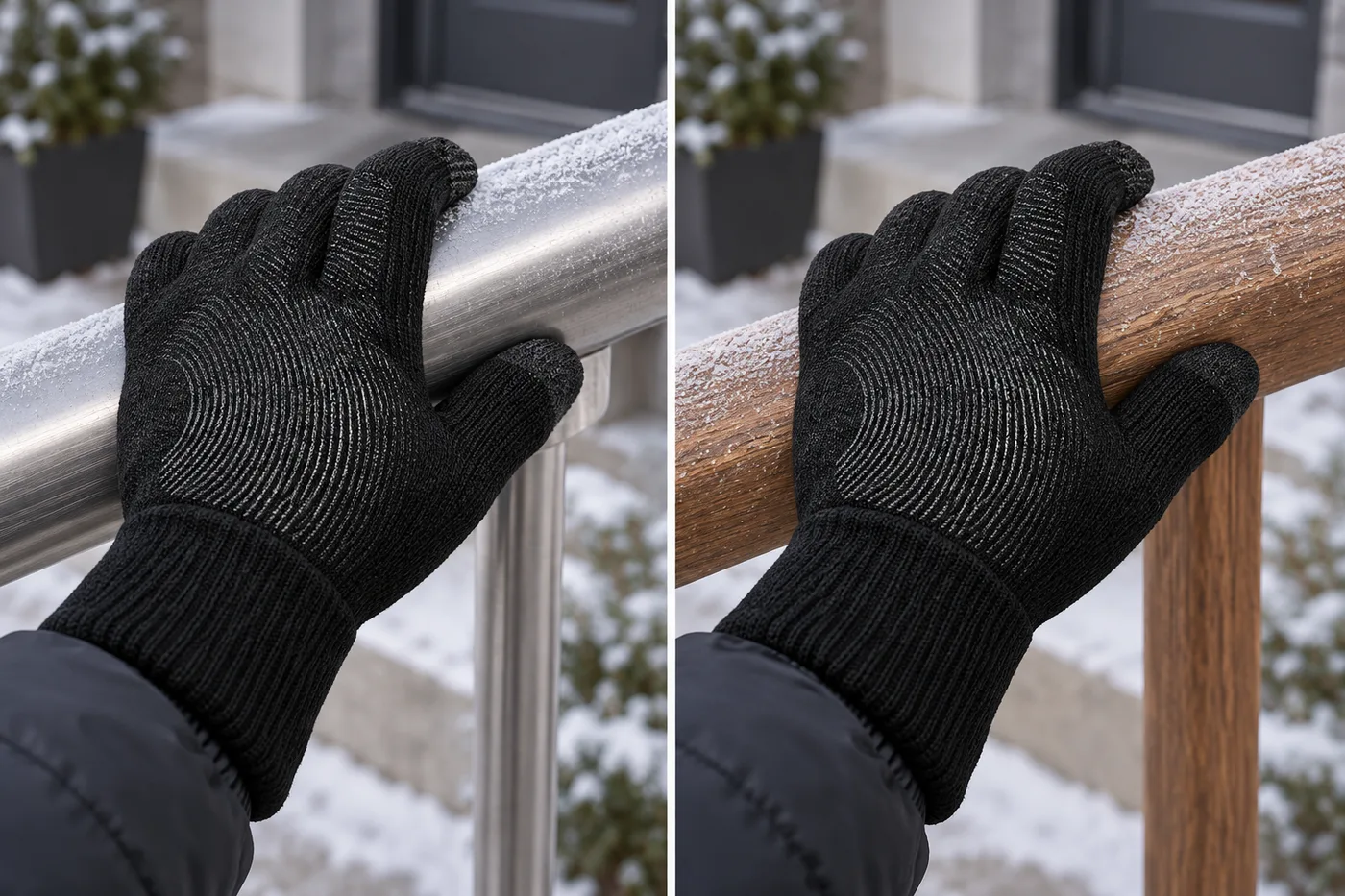
- Mailbox, key, or door handle: prioritize dry hand coverage, fingertip control, and a secure hold.
- Handrail or shopping cart: add contact duration and surface stability to the decision; ice or water changes the task.
- Steering wheel: preserve safe vehicle control. Do not operate a phone while driving, with or without touchscreen gloves.
- Shovel, snow blower, or outdoor tool: use task-specific grip, water protection, impact/abrasion protection, and machine guidance as required.
- Workplace cold contact: follow the formal hazard assessment and PPE specification. Consumer knit gloves are not a substitute.
Do Ordinary Knit Gloves Help With Cold Metal?
They can help with ordinary dry-cold contact by placing fabric and trapped air between skin and the metal, slowing the first rush of heat away from the hand. Fit matters: excess fingertip fabric can reduce precision, while a tight glove can feel restrictive and compress insulation. See the winter glove fit guide for a practical finger, palm, and cuff check.
CozyGalar gloves are made with 20% merino wool, 10% elastane, 5% conductive fiber, and 65% polyester, with a fleece-lined interior, textured palm and fingers, and conductive fingertips designed for compatible phones and tablets. Those are brand-owned specifications, not proof of a laboratory cold-metal test. Touchscreen response can vary by device, screen protector, fit, moisture, and wear.
The gloves are intended for ordinary cool-to-cold everyday use. They are not verified waterproof, windproof, extreme-cold rated, industrial PPE, or suitable for electrical, chemical, machine, or cryogenic hazards. If your hands stay cold even in appropriate gloves, work through the separate cold-hands troubleshooting guide instead of assuming the metal alone is the cause.
When Should You Stop and Warm Your Hands?
Stop the task when pain, stinging, persistent numbness, loss of dexterity, or unusual skin color appears. CDC guidance lists redness or pain as possible early frostbite warnings and identifies pale or gray-yellow, firm, waxy, or numb skin as signs that need prompt attention. Move to shelter and seek medical guidance when cold injury is suspected.
Do not rub or massage suspected frostbite, and do not use direct high heat such as a heating pad, stove, fireplace, or radiator on numb tissue. This article cannot diagnose or treat a cold injury. Follow current CDC instructions and contact a qualified healthcare or emergency service for the situation.
What Is the 20-Second Winter Touch Check?
- Surface: Is it dry, stable, and part of an ordinary task—or wet, icy, damaged, energized, moving, or chemical-exposed?
- Duration: Is this a quick key turn or a sustained grip?
- Conditions: Are actual temperature, wind, and moisture within the glove’s verified use case?
- Glove: Is it dry, well fitted, and appropriate for the task rather than merely convenient?
- Hands: Do you have normal color, feeling, and dexterity? If not, stop.
The key lesson is simple: metal often feels colder because it changes your skin temperature faster. Use that sensation as a prompt to assess the task—not as a thermometer, a dare, or a product test.
Need a dry-cold everyday layer for short errands?
Check the current CozyGalar listing for live price, sizes, and availability. This is a brand-owned commercial link; CozyGalar does not earn an affiliate commission from it. These gloves are not waterproof, extreme-cold equipment, or task-specific occupational PPE.
Sources and editorial notes
- University of Illinois Physics Van: Why do Metals Feel Cold or Hot to the Touch?
- NASA Genesis: Heat — An Agent of Change
- CDC: Preventing Frostbite
- Institute for Future Intelligence: Why do Metals Feel Colder than Wood?
Sources and live US search results were checked September 20, 2026. This article provides general educational information and does not replace medical, emergency, workplace, equipment-manufacturer, or hazard-specific PPE guidance. Ranking pages were used to map questions and gaps, not as proof of CozyGalar product performance. Original AI-assisted images were created for this article; glove scenes use a brand-owned CozyGalar reference. They are not thermal measurements, product-test evidence, or a third-party collaboration.