

Late-season hunting glove guide
What Are the Best Hunting Gloves for Cold Weather?
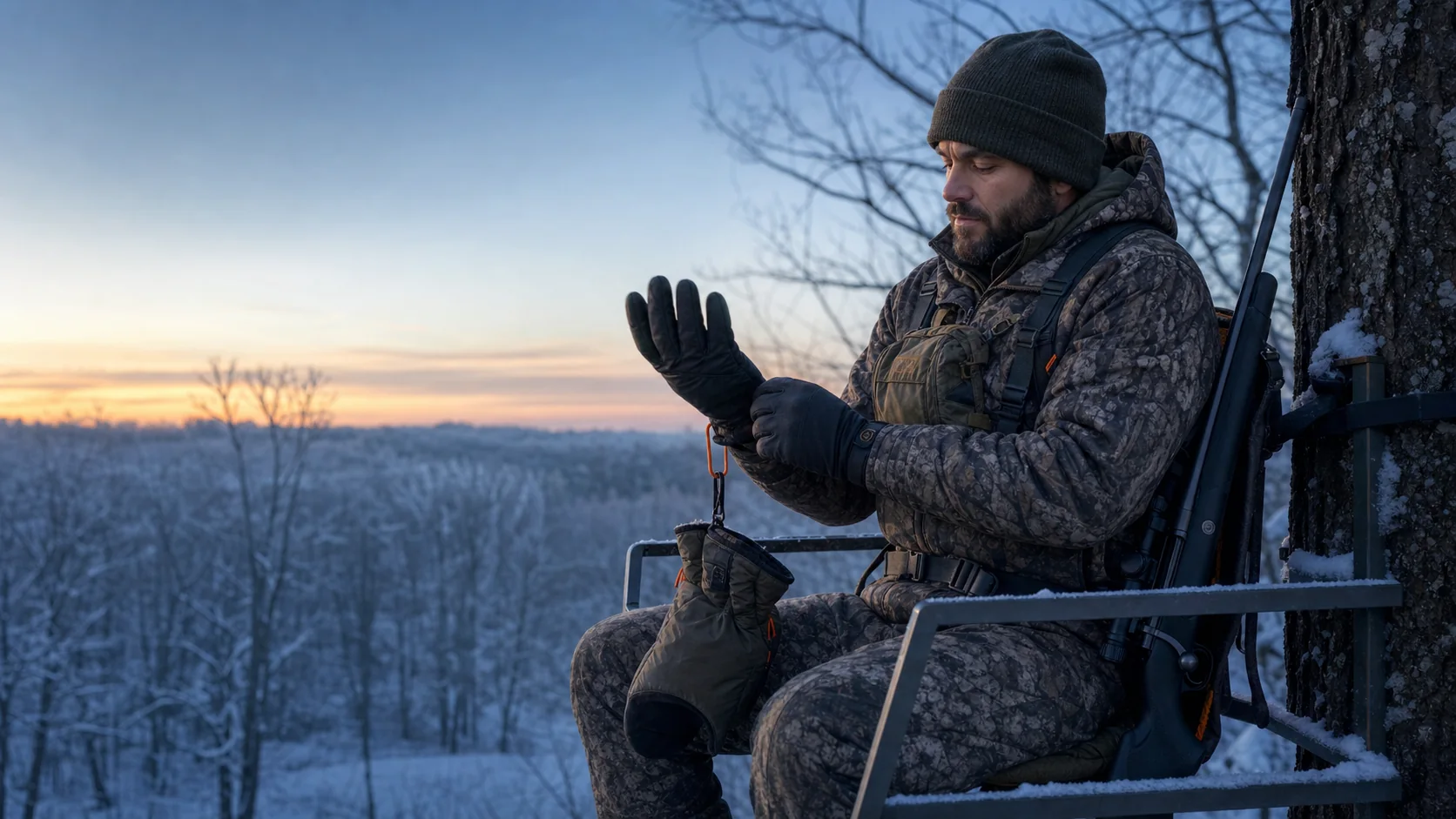
The best cold-weather hunting setup is usually a thin, quiet control glove paired with fast-removal warmth: a trigger mitt, waterproof over-mitt, or waist muff. Choose the SITKA Blizzard GTX for wet five-finger protection, the First Lite Grizzly 2.0 for cold stationary hunts, the KUIU Northstar Glomitt for maximum insulated coverage with an independent index finger, or a Thermic Muff when you prioritize instant access.
Editorial disclosure: CozyGalar does not receive a commission from the third-party links in this guide. Prices and availability were checked on August 25, 2026 and can change. We did not personally laboratory-test every item. Recommendations compare verified current specifications, independent editorial testing, and recurring owner concerns. Brand temperature ranges and waterproof claims are manufacturer guidance, not our guarantee.
What are the best cold-weather hunting gloves right now?
| Best for | Product | Verified design | Price checked | Main limitation |
|---|---|---|---|---|
| Wet five-finger protection | SITKA Blizzard GTX | GORE-TEX; PrimaLoft Gold Cross Core; short gauntlet | $189 | Too bulky for some precise controls |
| Cold stationary hunts | First Lite Grizzly 2.0 | Trigger mitt; removable shearling liner; gauntlet and leash | $140 | Fit and wind warmth vary by user |
| Maximum insulated glomitt | KUIU Northstar Glomitt | 340 g back / 170 g palm; HDry; independent index/thumb | Check current | Warmth-first design, not maximum fine dexterity |
| Bow or release dexterity | First Lite Trigger | Thin synthetic fleece; exposed index/thumb; DWR | $60 | Official 45–60°F stand-alone range; low inventory |
| Thin whitetail control layer | SITKA Fanatic | 1.6 oz stretch knit; half-finger index/thumb | $45 | Designed to work with a hand-muff system |
| Fastest transition from warmth | First Lite Thermic Muff | 100 gsm PrimaLoft Gold; Sherpa; windproof membrane | $65 | Not hand protection while hiking or handling wet gear |
These are use-case winners, not a universal ranking. A five-finger glove that excels in wet wind may be too bulky for precise equipment. A thin control glove that feels excellent at the moment of use can become dangerously cold during a two-hour sit. The correct choice depends on how long your hands are exposed, how much you move, and how quickly you can move between warmth and control.
Why does one hunting glove usually fail in cold weather?
A cold hunt is not one task. A western hunter may climb hard, glass while motionless, then handle cold metal. A whitetail hunter may walk in warm, cool down in a stand, and need a quiet transition after hours of inactivity. A waterfowl hunter adds rain, wet decoys, and wind. A bowhunter needs thin contact around a release; a firearm hunter must ensure that no glove interferes with safe control operation.
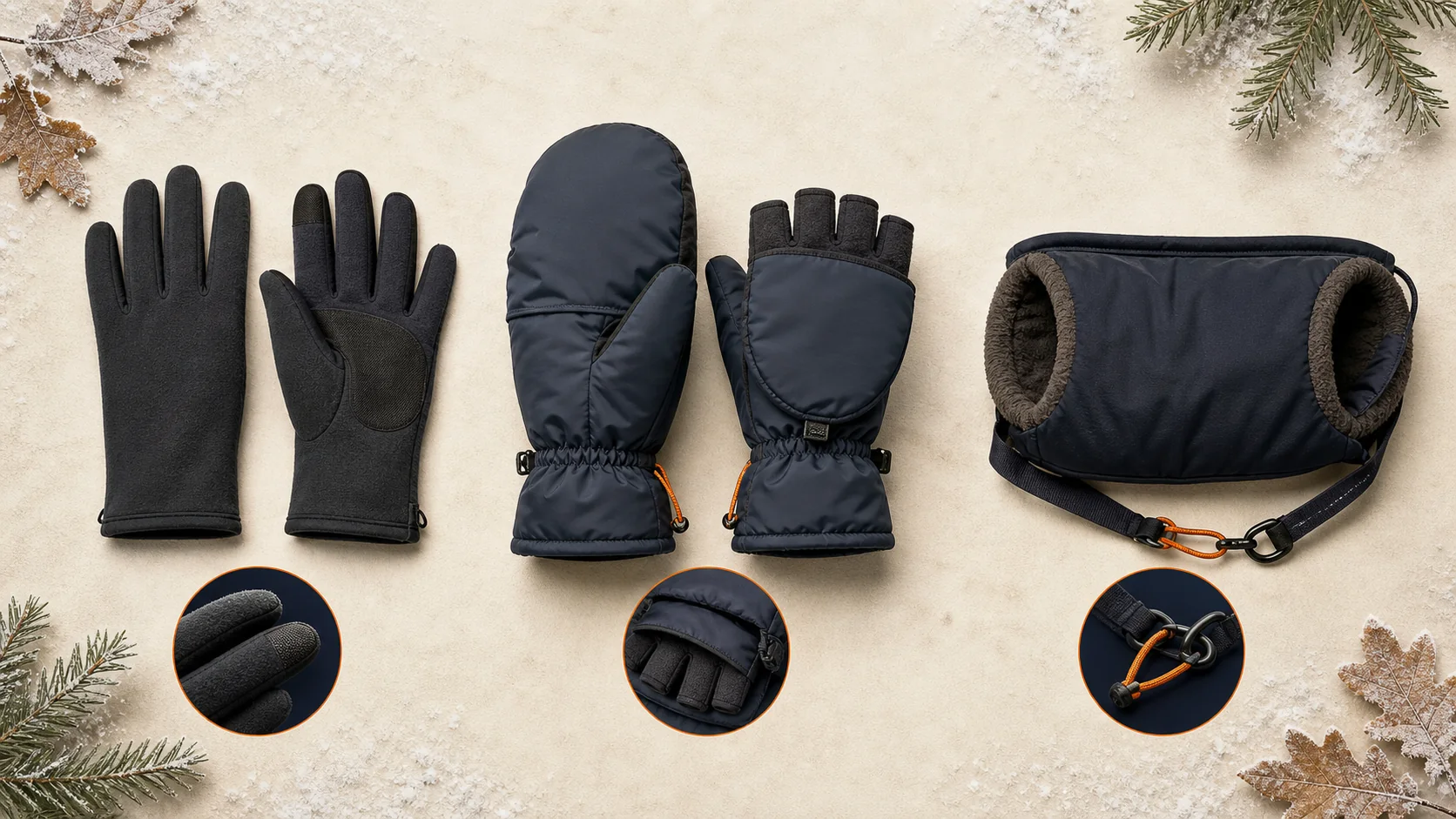
One glove cannot maximize insulation, moisture escape, quietness, waterproofing, grip, and fine control at the same time. A more dependable system assigns jobs:
- Thin control layer: close fit, quiet fabric, sufficient grip, and only the dexterity required for lawful equipment use.
- Warm storage: trigger mitt or waist muff for static periods.
- Weather shell: waterproof/windproof glove or over-mitt for precipitation, wet vegetation, decoys, snow, and travel.
- Dry backup: spare liner kept sealed, because sweat or rain can defeat the first system.
Which cold-weather hunting handwear is best by job?
1. Best waterproof five-finger glove: SITKA Blizzard GTX
SITKA’s current Blizzard GTX uses a breathable GORE-TEX liner, PrimaLoft Gold insulation with Cross Core technology, a stretch-woven polyester shell, synthetic-leather palm and finger patches, wrist adjustment, and a short gauntlet intended to sit under a jacket cuff. The official page listed it at $189 with sizes XS through XXL.
Why it stands out: this is the most complete single-glove answer for hunters who remain active in wet snow or rain and cannot keep their hands in a muff. It combines a sealed membrane with five-finger articulation and palm reinforcement.
Limitation: “more dexterous than a heavy mitt” does not mean “safe for every control.” Insulation and grip patches add bulk. Test every lawful control on unloaded equipment in a safe setting, following the manufacturer’s instructions. The brand does not publish one universal comfort temperature, and owner warmth reports cannot substitute for a controlled rating. Check Blizzard GTX sizes and current price.
2. Best trigger mitt for stationary cold: First Lite Grizzly 2.0
The Grizzly 2.0 uses a trigger-mitt layout, removable wool shearling liner, 4.5-layer 37.5 fabric system, DWR finish, locking gauntlet, wrist leash, and hanging loop. First Lite lists it at $140 and places it in temperature categories from below 20°F through 45°F. Treat those bands as brand guidance; wind, metabolism, fit, and activity can move the result dramatically.
Why it stands out: grouped fingers retain heat better than five separate finger stalls, while the independent index provides more control than a standard mitten. The removable liner also improves drying and lets the shell be paired with another compatible layer.
Limitation: product-page feedback is not uniformly positive. Some owners report excellent warmth; others mention wind performance, oversize fit, or premature seam wear. Inspect stitching early, measure carefully, and do not assume the index compartment fits your equipment. See current Grizzly 2.0 options.
3. Best maximum-insulation glomitt: KUIU Northstar
KUIU specifies 340 grams of PrimaLoft Gold with Cross Core on the back and 170 grams on the palm, an HDry waterproof membrane, Pittards OilTac leather, a gauntlet cuff, removable wrist tether, and independent index finger and thumb. At 8.3 ounces per pair, it is a substantial warmth-first design for glassing and frigid wet conditions.
Why it stands out: it publishes unusually clear insulation placement rather than one vague total. The high backhand amount protects the surface facing wind, while the leather palm targets grip. KUIU’s own page calls the design waterproof and windproof; that remains a manufacturer claim rather than our laboratory result.
Limitation: an independent index still has insulation and volume. Multiple KUIU owner comments frame it as a warmth/glassing product rather than a precision shooting glove, and sizing opinions vary. Use a separate control layer and remove the glomitt deliberately when appropriate. The crawled page did not expose a reliable current price, so we will not invent one. Check KUIU’s current Northstar price and sizes.
4. Best thin bowhunting control glove: First Lite Trigger
The Trigger Glove is a two-layer synthetic fleece glove with exposed pointer finger and thumb, a wrist-release-friendly cuff, DWR treatment, textured palm, and 2-ounce listed weight. First Lite prices it at $60 and gives a stand-alone range of roughly 45–60°F, with later-season use depending on the rest of its layering system.
Why it stands out: it is honest about being a control layer, not a magic extreme-cold glove. The exposed digits can reduce interference with a release aid, rangefinder, phone, or small controls, while the remaining hand stays covered.
Limitation: exposed fingertips become cold quickly and can contact wet surfaces. The official page showed a low-inventory signal. Pair it with a mitt or muff; do not expect thin fleece to protect through a long stationary freeze. View First Lite Trigger stock.
5. Best lightweight whitetail layer: SITKA Fanatic Glove
The Fanatic weighs 1.6 ounces and uses a stretch polyester knit with a half-finger forefinger and thumb. SITKA lists it at $45 and explicitly designs it to work with the hand muff integrated into Fanatic system garments.
Why it stands out: the product’s role is clear. It preserves quiet handling and touch access while the muff supplies the missing insulation during the sit. That is a more coherent system than judging the thin glove alone against a heavy waterproof gauntlet.
Limitation: outside its paired system, it is not a severe-cold solution and is not presented as waterproof. Half-finger openings are also direct heat-loss points. Check current Fanatic Glove availability.
6. Best rapid-access warmth: First Lite Thermic Muff
The Thermic Muff combines 100 gsm PrimaLoft Gold insulation, Sherpa fleece, a windproof membrane, a zippered pocket, and a glove-compatible belt buckle at 7 ounces. First Lite lists it at $65 and places it across cold categories including below 0°F. Again, those categories are manufacturer guidance, not a promise for every wearer.
Why it stands out: both hands can share heat and exit without peeling off a tight glove. For a stationary whitetail hunter, that rapid transition can matter more than adding another bulky fingered glove.
Limitation: a muff protects only while hands remain inside it. It does not replace gloves for climbing, handling wet gear, or moving through brush. Make sure its position and strap do not interfere with harnesses or other safety equipment. See the current Thermic Muff listing.
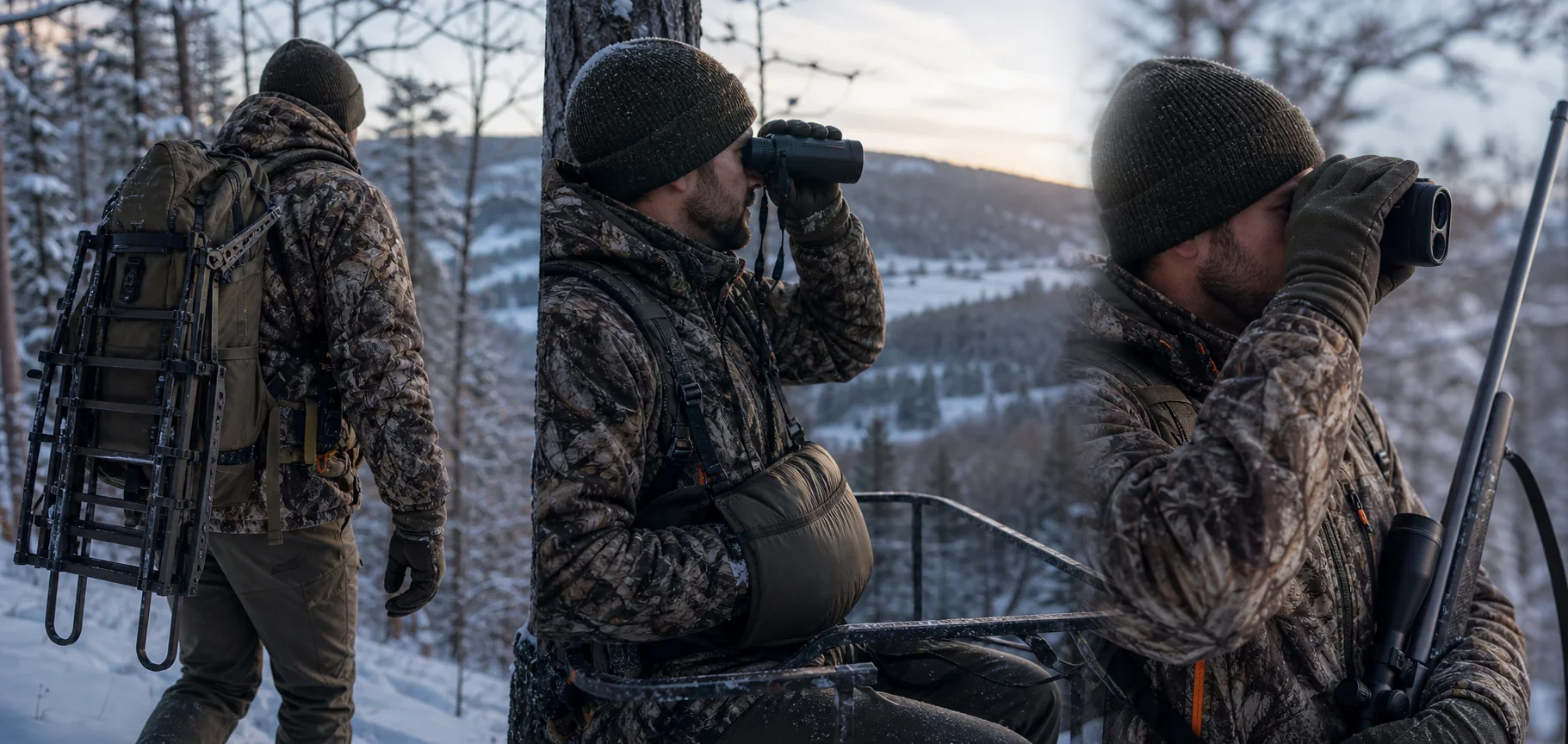
How does hunting style change the glove choice?
Late-season whitetail
Long inactivity makes passive warmth the priority, but quiet transitions matter. Start with a thin, quiet control glove and a muff or trigger mitt. Avoid stiff shells that scrape loudly against a stand or clothing unless precipitation makes weather protection essential.
Western spot-and-stalk
Climbing can soak heavy insulation from the inside. Hike in a breathable light glove or no glove when safe, then add the insulated layer before glassing. A packable weatherproof glove is more useful than wearing maximum insulation through the ascent.
Waterfowl
Wet decoys, rain, mud, and wind increase the value of a genuine membrane, sealed cuff, and spare dry liner. Separate the glove used for wet work from the clean, dry control glove whenever possible.
Bowhunting
Release style and wrist-strap clearance determine fit. A thin exposed-index design may improve contact but increases heat loss. Test the exact release, glove, sleeve, and safety harness combination before the hunt.
Should cold-weather hunting gloves be waterproof, windproof, or quiet?
The answer depends on exposure. Waterproofing is essential for waterfowl, wet snow, and freezing rain. Windproofing can matter more than waterproofing during a dry, exposed ridge sit. Quietness matters in close-range whitetail and bowhunting, where a crisp shell may create unnecessary noise.
Trying to maximize all three in one shooting glove often produces bulk. A better architecture is a quiet inner control glove plus a removable waterproof over-mitt. First Lite’s Omen Over-Mitt, for example, was $80 when checked and uses a three-layer shell, HDry liner, wrist cinch, and leash. Its official page showed low inventory, so verify stock. It adds weather protection without pretending to be the warm inner layer.
Is a trigger mitt or hand muff better?
Choose a trigger mitt when your hands need continuous protection while moving, glassing, or handling equipment. Choose a muff when you spend long periods stationary and want the fastest possible exit into a thin control glove. A muff lets both hands share heat and can hold a warmer, but it offers no protection once the hands leave.
The warmest system may combine both: thin liner, mitt or over-mitt for movement, and muff during the sit. Avoid stacking so many layers that circulation is restricted. For the underlying heat-retention difference, read Gloves vs. Mittens: Which Is Warmer?.
How should hunting gloves fit, and how should you test them safely?
Fit must protect insulation loft without sacrificing control. Too tight can compress insulation and restrict circulation. Too loose can bunch at the fingertips, snag, or reduce tactile feedback.
- Measure both circumference and hand length using the current brand chart.
- Try every intended layer together; do not automatically size up without checking the brand system.
- Close the glove with your actual jacket cuff and verify there is no wind channel.
- With lawful equipment unloaded and pointed in a safe direction, follow its manufacturer’s handling instructions and verify that gloves do not enter guards, block safeties, snag, or prevent a complete controlled grip.
- Test binoculars, rangefinder, zippers, release aid, phone, and harness hardware.
- Return the glove unused if any safety-critical movement is uncertain.
Never cut, alter, or remove a product’s safety feature to accommodate bulky gloves. Change the glove system instead. Our winter glove fit guide explains why finger length and palm circumference must both be checked.
What should go in a cold-weather hunting hand kit?
- A thin control glove that has passed the complete equipment test.
- An insulated mitt, glomitt, or muff matched to the amount of stationary time.
- A waterproof shell or wet-work glove when precipitation is likely.
- One dry spare liner sealed separately.
- Wrist leashes so removed mitts do not fall from a stand or into snow.
- Hand warmers only in compatible pockets and according to their instructions.
- A repair check for seams, membranes, closures, and leashes before departure.
Start the hike slightly cool rather than soaking a heavy glove in sweat. Add warmth before the sit, not after your fingers are numb. For layering details, see Do Glove Liners Actually Keep Your Hands Warmer?.
When are cold hands a medical warning?
Redness or pain can be an early warning. Numbness, white or grayish-yellow skin, or a firm, waxy feel may indicate frostbite. The CDC advises moving to warmth, seeking medical care for suspected frostbite, avoiding rubbing, and using warm—not hot—water only when refreezing is not possible and appropriate care is available.
Do not wait for a planned end time if dexterity is deteriorating. Difficulty operating ordinary zippers, buckles, or navigation equipment is a reason to warm up, replace damp layers, or leave. A glove purchase cannot compensate for poor circulation, wet clothing, inadequate calories, or unsafe weather exposure.
Are CozyGalar knit gloves suitable for cold-weather hunting?
Not as primary hunting protection. CozyGalar wool-blend, fleece-lined touchscreen gloves are intended for everyday commuting, driving, dog walking, grip, and phone use. They are not verified waterproof, windproof, extreme-cold rated, or designed as hunting safety equipment.
They may be useful for dry travel and ordinary errands before or after a hunt, but this article’s recommended systems use purpose-built hunting products. If your need is everyday cold rather than a hunt, you can see CozyGalar sizes on Amazon. This is a brand-owned shopping link, not a third-party affiliate recommendation.
What is the bottom line?
Buy for the failure mode. Choose SITKA Blizzard GTX when wet weather and continuous five-finger protection dominate; First Lite Grizzly 2.0 for stationary cold with trigger-mitt structure; KUIU Northstar Glomitt for heavy waterproof insulation; First Lite Trigger or SITKA Fanatic as the thin control layer; and the Thermic Muff for rapid-access warmth in a stand or blind.
The most reliable solution is a system that separates warmth, weather protection, and fine control. Keep a dry spare, test every layer with your actual gear in a safe setting, and stop before numbness turns a gear problem into a medical emergency.
Sources and methodology
- Outdoor Life: The Best Hunting Gloves — independent editorial testing with affiliate disclosure.
- National Weather Service: Cold Weather Safety
- CDC: Preventing Frostbite
- Current official First Lite, SITKA, and KUIU product pages linked in each recommendation.
We compared current construction, insulation placement, membranes, cuff design, control access, stock signals, official owner feedback, independent testing, and user-reported failure modes. We did not conduct laboratory warmth, waterproofness, sound, or dexterity tests.