


Task-first winter work glove guide
What Are the Best Winter Work Gloves for Working Outside?
The best pair protects against the job’s hazards first, then adds the right balance of insulation, weather protection, grip, and dexterity.
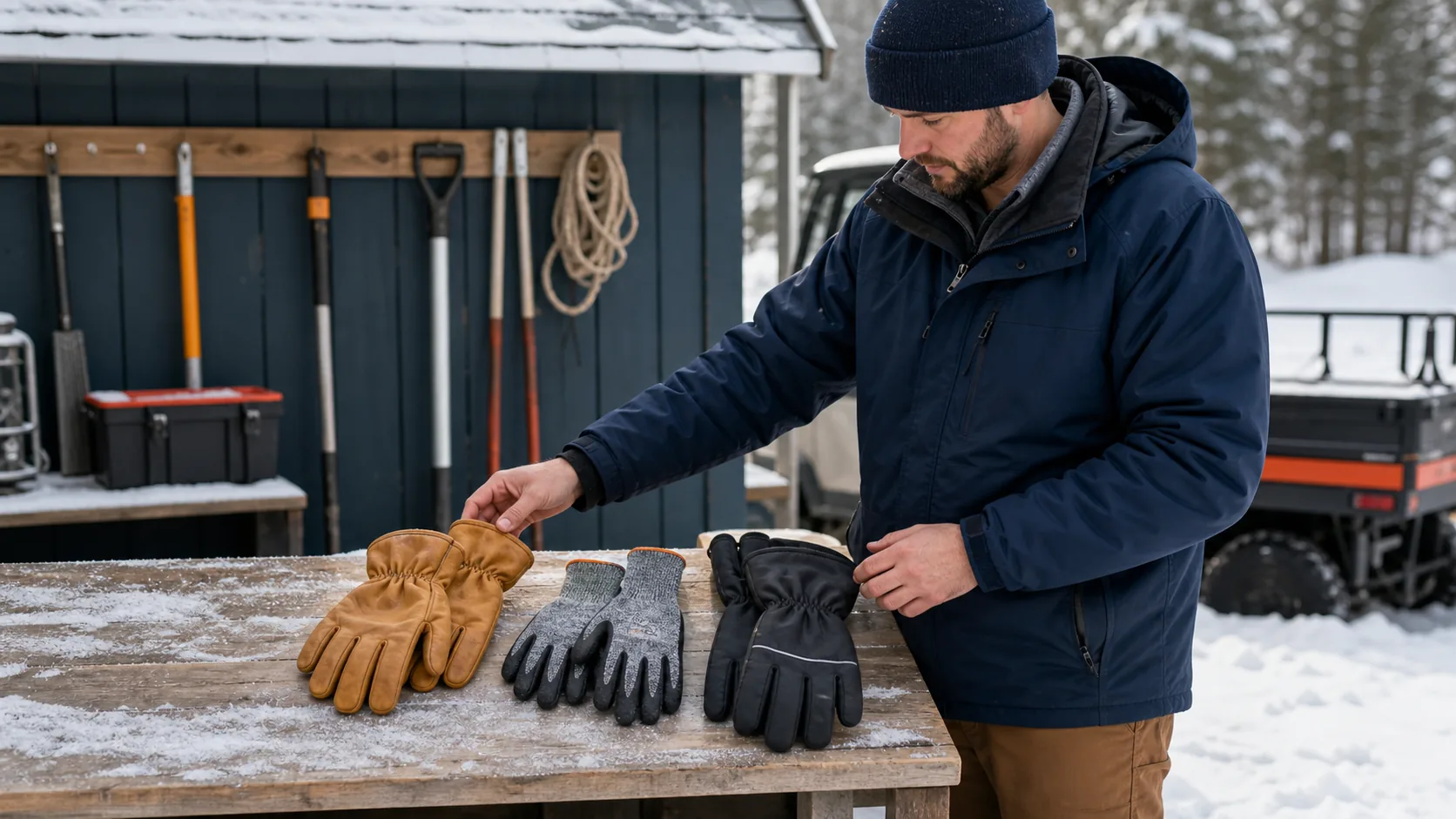
Searching for “warm work gloves” looks simple until two pairs make completely different promises. One emphasizes thick insulation. Another highlights cut resistance. A third claims waterproof performance. A fourth is thin enough to handle fasteners but exposes the wrist. They are not interchangeable because cold-weather work is not one activity.
US search results often answer with product roundups or retailer categories. Those can help build a shortlist, but they can also make warmth look like the first filter. For real work, the order matters. OSHA’s hand-protection rule says selection should be based on the task, conditions, duration, and hazards. Cold protection belongs inside that evaluation—not above it.
What should a winter work glove protect you from first?
Start with the injury that could occur even on a mild day. If the task involves sharp metal, rough lumber, chemicals, energized equipment, hot surfaces, vibration, crushing or impact, the glove needs appropriate protection for that hazard. A soft insulated knit glove may feel warm while still being the wrong protective equipment.
Write down the actual job before shopping. “Outdoor maintenance” is too broad. “Moving dry boxes from a truck,” “handling wet lumber,” “clearing snow with a shovel,” and “working near energized electrical parts” require different choices. The glove also needs to suit how long it will be worn and whether it contacts wet, oily, abrasive, or sharp surfaces.
A warm glove can still be unsafe. Choose the required cut, puncture, impact, chemical, electrical, heat, abrasion, or wet-contact protection first. Add cold protection only within a glove or glove system that preserves the required task protection.
For employees, the employer’s hazard assessment and PPE program take priority over a shopping guide. Read the glove manufacturer’s technical documentation and the instructions for the tool or substance. Do not infer protection from appearance, thickness, star ratings, or words such as “tough” and “heavy duty.”
Which winter work glove type matches the task?
The useful categories are not strict rankings. Each solves a different combination of hazards, weather, and hand-control requirements.
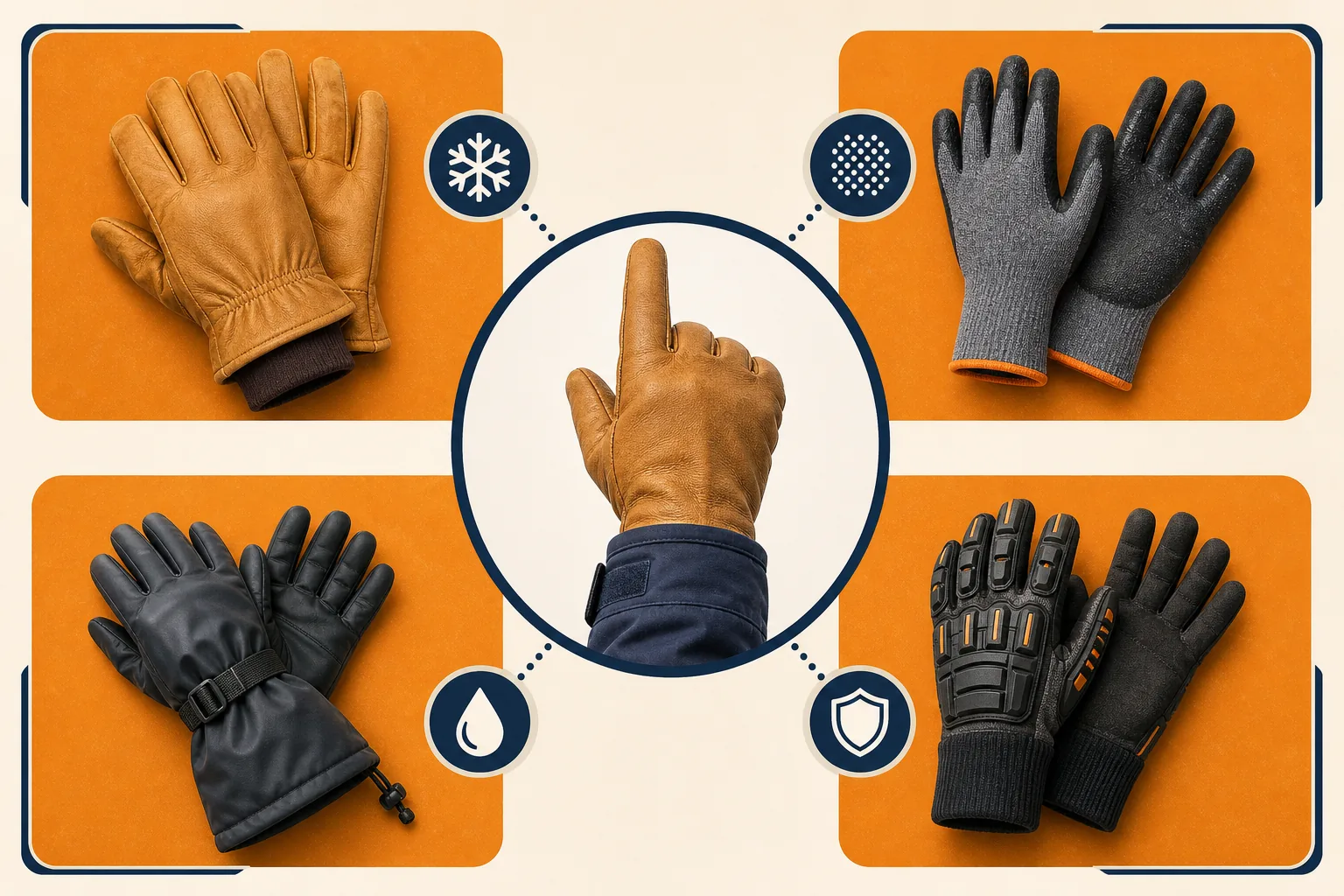
| Glove category | Where it can work well | What to verify | Common mismatch |
|---|---|---|---|
| Insulated leather work glove | General material handling, rough surfaces, firewood, some property work | Exact leather, insulation, seams, cuff, water treatment, required hazard rating | Assuming leather is waterproof or puncture-proof |
| Insulated coated-knit glove | Fasteners, boxes, light maintenance, tasks needing grip and finger control | Coating material and coverage, lining, abrasion/cut rating if required, wet-grip performance | Using a thin palm coating for sharp, chemical, or heavy-impact hazards |
| Waterproof insulated gauntlet | Wet snow, slush, prolonged moisture, snow removal | Waterproof construction, cuff seal, liner drying, tool grip, dexterity | Choosing a ski-style shell that cannot safely control the work tool |
| Impact-protection winter glove | Tasks with back-of-hand impact or pinch concerns when specified by the risk assessment | Relevant performance rating, coverage, cold flexibility, compatibility with the task | Assuming molded padding also provides cut, chemical, or electrical protection |
| Cold-rated specialty glove or mitten system | Freezers, prolonged stationary work, severe wind chill, specialized cold environments | Conditions behind the temperature guidance, task dexterity, employer approval, emergency plan | Treating a marketing temperature as a universal guarantee |
| Everyday fleece-lined knit glove | Commuting, driving, inspections, errands, dry low-hazard routines | Fit, grip, warmth, phone use, weather limits | Using it as construction PPE, wet-work protection, or extreme-cold equipment |
Which features actually matter in winter work gloves?
Hazard-specific protection
This is the non-negotiable layer. Check the exact standard and performance level required by the employer or task. A glove marketed for cold weather does not automatically protect against cuts, chemicals, electricity, heat, or impact. Likewise, a cut-resistant glove may have little insulation or weather protection.
Weather protection
“Water-resistant” and “waterproof” are not the same promise. For intermittent dry snow, a treated material may be enough. For slush, rain, wet materials, or hours of contact, construction details such as membranes, seams, cuff design, and liner behavior matter. If the inside becomes wet, more insulation does not solve the problem.
Grip for the actual surface
Test the glove against the real handle, fastener, box, steering control, or material. Dry grip does not prove wet or oily grip. A thick palm that feels secure in the store may reduce feedback; a very thin coating may wear quickly or provide too little protection.
Dexterity and control
Dexterity is not a luxury in work gloves. You need enough finger movement to maintain tool control, operate closures, handle small parts, and keep the glove on. Independent gear tests repeatedly include zipper, buckle, grip, and small-object tasks because warmth without usable control can fail the job.
If a glove is so bulky that you repeatedly remove it for fine tasks, your hands cycle between insulation and bare exposure. A slightly less bulky—but still adequately protective—system can be safer and warmer in practice when it stays on and preserves control.
Cuff and wrist coverage
A short knit wrist can work under a sleeve for dry tasks. A longer gauntlet may fit over a jacket for wet snow or debris. What matters is a reliable overlap that still allows wrist movement and does not funnel water, snow, or cold air inside.
Drying and liner construction
Ask whether the liner is fixed or removable, how long the full glove takes to dry, whether the liner pulls out, and whether a wet glove can be replaced during the shift. A glove that performs well for one hour but stays damp for the next day is not a complete work solution.
How should you choose winter work gloves by job?
| Job or task | Start with | Cold-weather additions | Do not assume |
|---|---|---|---|
| Construction and rough material handling | Task-required abrasion, cut, puncture, and/or impact protection | Insulation that remains flexible; suitable cuff; dry spare | A warm knit glove is construction PPE |
| Landscaping and property maintenance | Grip, abrasion protection, thorn/puncture needs, tool control | Breathability for active work; wind or wet protection as conditions change | One heavy glove will suit both active raking and stationary equipment checks |
| Snow shoveling and snow removal | Secure grip and wet-weather protection | Insulation, long cuff, moisture management, spare pair | A thick glove is waterproof or safe around powered equipment |
| Delivery, loading, and outdoor warehouse work | Box grip, abrasion needs, scanner and fastener control | Moderate insulation, close fit, wind protection, warm break glove | Touchscreen compatibility will work with every scanner |
| Driving and vehicle support | Reliable control of wheel, keys, latches, and equipment | Low-bulk warmth and dry palm | A bulky ski glove gives better control because it is warmer |
| Electrical, chemical, welding, or high-heat work | Employer-specified, purpose-built protective system | Only cold layers explicitly compatible with that system | An ordinary liner or outer glove can be added without affecting protection |
For snow removal, our separate guide explains how to choose gloves for shoveling snow. If the primary issue is very low temperatures rather than work hazards, use the extreme-cold glove decision guide.
How much insulation is enough for working outside?
There is no universal insulation number that predicts comfort for every worker. The result changes with wind, moisture, activity, contact with cold materials, circulation, glove fit, work duration, and access to warm breaks. OSHA notes that cold stress can occur near freezing in regions unaccustomed to winter weather, and that wetness—including sweat—accelerates heat loss.
Use workload to set a starting point:
- High-output work: Favor breathability, moisture management, and enough dexterity to keep the glove on. Excess insulation can drive sweat.
- Mixed activity: Choose a moderate task glove and carry a warmer standby option for stops or lower-output periods.
- Low-output or stationary work: More insulation and wind protection may be needed, but only if the glove still supports the required task.
- Wet cold: Prioritize a moisture barrier, cuff design, and dry replacement plan; damp insulation can become a liability.
A manufacturer temperature claim is useful only when you know the test or use conditions behind it. Ask: Was the wearer moving? Was there wind? Was the glove dry? How long was the exposure? What hand temperature or comfort threshold defined “works”? If the page does not answer, treat the number as a marketing guide, not a guarantee.
How should winter work gloves fit?
A winter work glove should allow a relaxed hand, full finger bend, and secure tool control without compressing the fingertips. Insulation needs room to retain loft, but excess finger length can catch, reduce precision, and weaken grip. The thumb crotch should seat correctly; the palm should not fold into a thick ridge; the cuff should overlap the sleeve throughout the task.
- Use the manufacturer’s hand-width and hand-length chart; do not rely only on “usual size.”
- Make a fist, spread the fingers, flex the wrist, and reach the thumb across the palm.
- Pick up a key, nut, or fastener; operate a zipper; and grip the actual tool handle if practical.
- Check fingertip pressure after several minutes, not only at first contact.
- If using a liner, test it inside the exact outer glove; do not assume two correct sizes form a correct system.
- Confirm the glove stays secure without overtightening the wrist.
Tingling, numbness, unusual paleness, or pressure at the fingertips are not signs that a glove is “breaking in.” Move to warmth and reassess. For a more detailed sizing method, see how men’s winter gloves should fit.
Are liners, spare gloves, or over-mitts better than one heavier glove?
Often, the best winter work setup is a system rather than a single do-everything pair. A compatible system may include a task-rated primary glove, a thin moisture-managing liner when enough room remains, a dry spare, and a warmer over-mitt or break glove for periods when fine control is not required.
Do not add layers blindly. A tight liner can compress insulation and reduce circulation. A casual over-glove can interfere with a protective glove’s fit, grip, or rating. Electrical, chemical, heat, and other specialized PPE systems require manufacturer and employer guidance.
A dry spare can be more valuable than extra insulation worn all day. If the first pair becomes wet from snow, sweat, or contact with damp material, changing to a dry pair restores the system instead of asking wet insulation to perform harder.
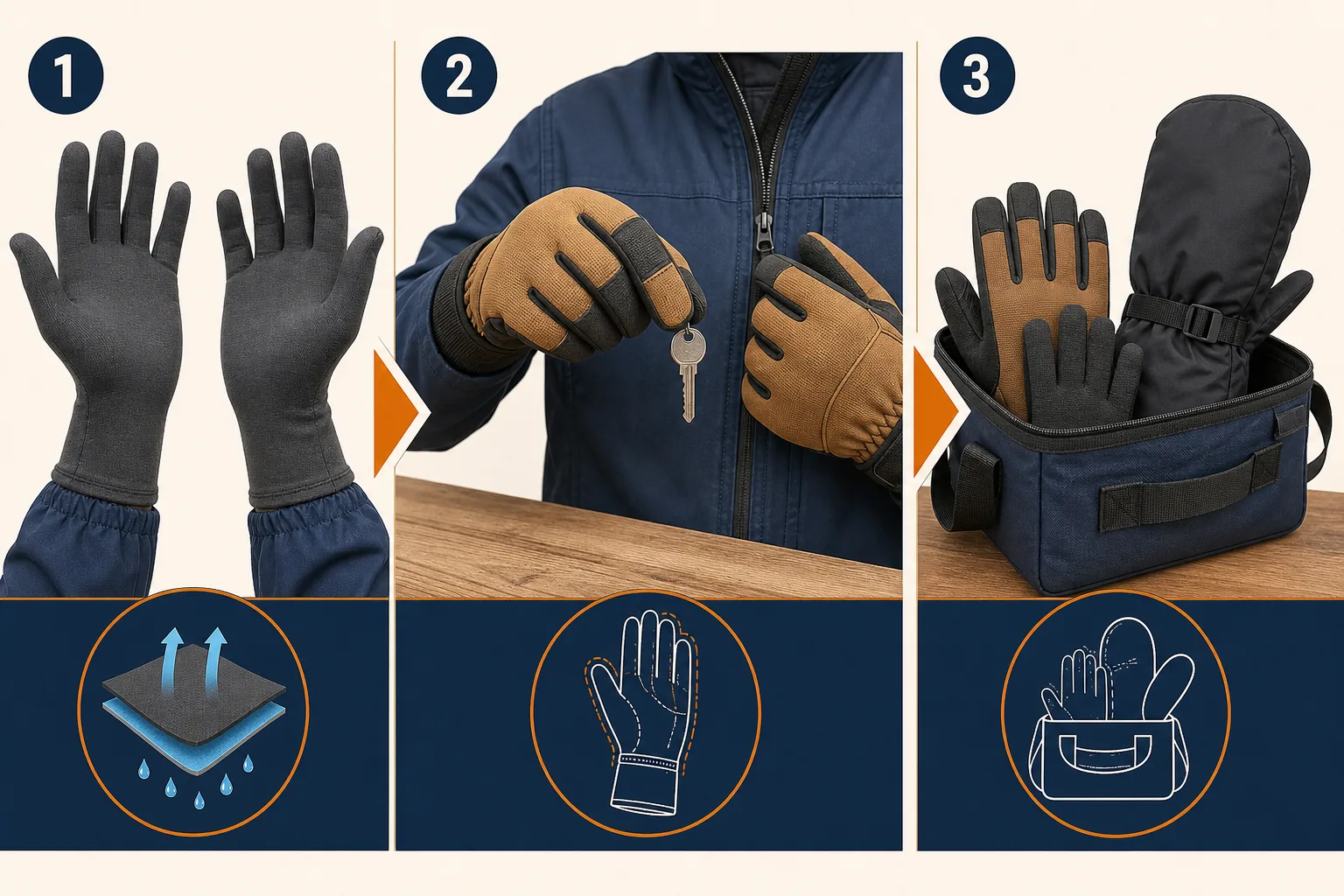
A glove selected for dry cold may become the wrong glove when the job adds meltwater, rain, wet lumber, slush, or heavy perspiration. Reclassify the task when moisture changes—then consider shell construction, cuff sealing, breathability, drying, and a dry spare.
Which winter work glove claims deserve extra checking?
- “Waterproof”: What construction, membrane, seam treatment, and test support the claim? Does it cover the whole glove or only a material?
- “Extreme cold” or a temperature number: Under what wind, activity, duration, and dryness conditions?
- “Cut resistant”: Which standard and performance level, and where does the protection apply?
- “Impact protection”: Which part of the hand is covered, and what rating or test is reported?
- “Chemical resistant”: Resistant to which chemical, concentration, contact time, and temperature?
- “Electrical”: Is it a purpose-built, properly classed electrical protective glove system with required testing and leather protectors—not merely a rubber-looking glove?
- “Touchscreen compatible”: Which fingers, which devices, and can the glove perform the real scanner or phone task while preserving grip?
- “Warmest” or “best”: Best for which task, person, weather, and tradeoff?
Customer reviews can reveal recurring fit, liner, grip, and durability themes, but they do not replace technical documentation. A five-star review from a dry dog walk does not verify a glove for wet construction, chemicals, sharp materials, or powered equipment.
How can you test winter work gloves before a full shift?
Use the return window for a controlled, low-risk check. Do not test a new glove for the first time in a situation where failure could cause injury.
- Read first. Check the label, standards, limitations, care instructions, and compatibility with the task.
- Test fit indoors. Wear the complete system for ten to fifteen minutes and look for fingertip pressure, bunching, and restricted wrist movement.
- Rehearse the task. Handle representative objects, controls, closures, and tools while everything is dry and inactive.
- Check grip transitions. If relevant and safe, compare dry and damp surface control without exposing the glove to a chemical or hazard it is not rated for.
- Run a short outdoor trial. Stay near warmth, use milder conditions, and observe the start, active phase, stop, and recovery.
- Inspect after use. Look for wet lining, pulled seams, coating damage, stiffening, liner displacement, and slow drying.
- Plan replacement. Define what wear, contamination, loss of grip, failed closure, or damage ends the glove’s service.
Cold-stress prevention is not just a glove choice. CDC/NIOSH recommends warm locations for breaks, monitoring workers, suitable clothing, and carrying extra gloves and other cold-weather items. If uncontrollable shivering, confusion, loss of coordination, persistent numbness, or skin-color changes appear, leave the cold and follow workplace emergency procedures.
Where does CozyGalar fit—and where does it not?
CozyGalar men’s gloves are an everyday fleece-lined wool-blend option for cool-to-cold routines such as commuting, driving, errands, and dry dog walks. The verified composition is 50% Merino Wool, 5% Conductive Fiber, 45% Polyester. They include touchscreen-compatible fingertips and a textured palm.
They are not verified as waterproof, windproof, ski-grade, extreme-cold-rated, cut-resistant, impact-rated, chemical-resistant, electrically protective, or construction PPE. That distinction matters. For hazardous work, prolonged wet exposure, severe cold, or specialized environments, use purpose-built equipment selected through the employer’s hazard assessment.
For a low-hazard inspection, commute, drive, or everyday outdoor routine near shelter, CozyGalar may suit a shopper who prioritizes fleece-lined comfort, phone access, and low-bulk grip. It should not be promoted as the answer to every “winter work glove” search merely because it is warm.
Need an everyday glove rather than work PPE?
Check CozyGalar’s current sizes, verified listing details, price, and availability on Amazon. For construction, wet work, chemicals, electricity, powered equipment, or extreme cold, choose purpose-built protection for the task.
Commercial disclosure: CozyGalar makes the glove linked above. This is a direct brand-owned Amazon link, not an affiliate-commission link. We receive no commission from the external editorial or safety sources in this guide.
Frequently asked questions
Are mittens warmer than work gloves?
Mittens often retain more heat because the fingers share one chamber, but they reduce independent finger control. They may suit breaks, stationary work, or tasks that do not require fine manipulation. Do not substitute a mitten where the job requires task-specific finger control or protective ratings.
Are leather gloves good for winter work?
Lined leather can offer durability and abrasion protection for some tasks, but the exact leather, construction, treatment, insulation, and rating matter. Leather appearance alone does not prove waterproof, puncture, cut, chemical, or electrical protection.
Are knit gloves good for construction in winter?
Only when the specific glove’s documented protection matches the construction task. A coated knit work glove may provide useful grip and dexterity, but an ordinary fleece-lined knit glove should not be assumed to provide the cut, puncture, impact, or other protection a jobsite requires.
Should winter work gloves be tight?
No. They should be secure enough for control without compressing fingertips or insulation. A glove that is too loose can catch and reduce precision; a glove that is too tight can reduce comfort, loft, and circulation.
Do more grams of insulation always mean warmer hands?
No. Insulation amount is only one variable. Wind, wetness, fit, compression, activity, duration, circulation, shell design, and liner moisture can change the outcome. Compare full systems under comparable conditions.
How many pairs should an outdoor worker carry?
The answer depends on the job, but CDC/NIOSH specifically recommends carrying extra gloves for cold work. A dry spare is especially important when snow, sweat, or wet materials can saturate the first pair.
Sources and research notes
CozyGalar did not laboratory-test or rank specific work gloves for this article. We used OpenSEO US keyword and live SERP evidence refreshed August 24, 2026, current competitor-page coverage, primary US safety guidance, and verified CozyGalar product facts. Search volumes are third-party estimates, not guaranteed visits. Product-page superlatives and temperature claims were not treated as universal facts.