

Winter hiking glove buying guide
What Are the Best Winter Hiking Gloves?
The best winter hiking setup is usually not one extra-thick glove. Use a breathable glove while climbing, a waterproof insulated glove for wet snow and exposed terrain, and a dry mitten or shell as backup. Among products verified for this update, the Sealskinz Kelling is the strongest all-round starting point; colder stops call for a warmer removable-liner glove or mitten.
Editorial disclosure: CozyGalar does not receive a commission from the third-party product links in this guide. Prices, ratings, and availability were checked on August 27, 2026 and can change. We did not personally laboratory-test every glove. Recommendations compare current official specifications, trail use, independent guide coverage, and published retailer feedback; no universal temperature guarantee is implied.
What are the best winter hiking gloves right now?
| Best role | Current option | Why it fits | Price checked | Main limitation |
|---|---|---|---|---|
| All-round wet winter hiking | Sealskinz Kelling | Waterproof Aquasealz membrane, insulated lining, close-fitting design | $89.95 | A membrane can still feel clammy during hard climbs |
| Cold and exposed stops | Hestra Army Leather Heli Ski 5-Finger | Windproof construction and removable lining | $185 | Heavy and expensive for mild, high-output hiking |
| Budget insulated waterproof glove | REI Co-op Trailsmith Insulated Gloves | Current waterproof hiking category; straightforward insulated option | $64.95 | 3.5/5 retailer rating at check time signals mixed owner experience |
| Waterproof emergency shell | Black Diamond Waterproof Overmitts | Shell-style backup that layers over a movement glove | $99.95 | Mitten structure reduces fine dexterity |
| Light liner layer | REI Co-op Merino Wool Liner Gloves 2.0 | Thin, replaceable layer for moisture and brief dexterity tasks | $32.95 | Not weather protection on its own |
This is a role-based comparison, not a claim that one pair is objectively best for every hiker. Route exposure, wind, precipitation, pace, stop length, circulation, fit, and whether you carry a dry backup all change the answer. Current size availability should be checked before departure planning.
Why does trail stage matter more than a universal temperature rating?
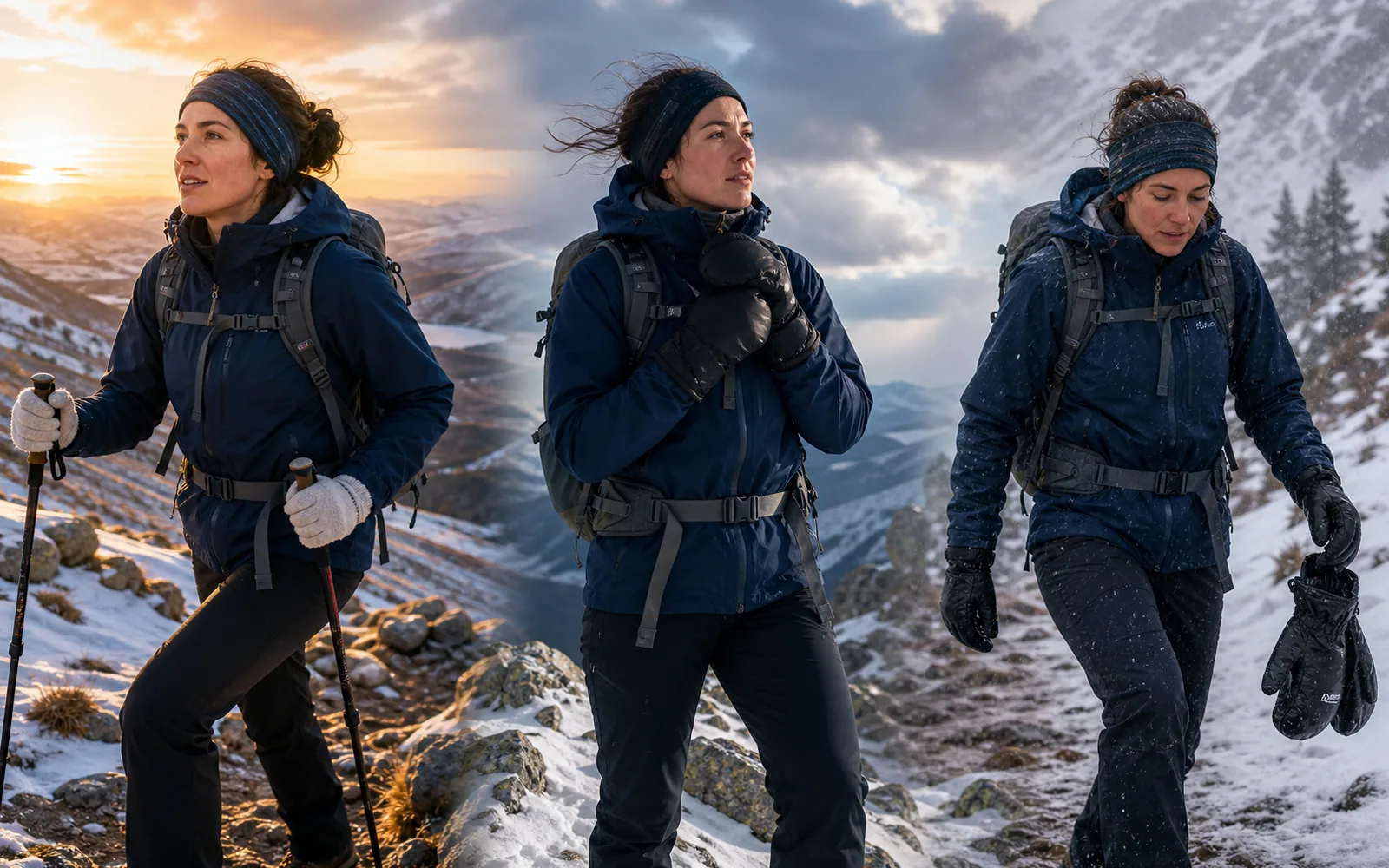
Winter hiking creates a heat-management problem. On a steep climb, your body may produce enough heat to make a heavily insulated glove damp from the inside. At a viewpoint, lunch stop, navigation pause, or gear repair, heat production drops while wind keeps removing warmth. On the descent, the same damp liner can become a cold sink.
That is why a product’s advertised temperature range is rarely a complete buying answer. Pace and moisture can change faster than the forecast. Wind also accelerates heat loss from exposed skin; the National Weather Service cold-safety guidance emphasizes covering exposed skin and staying dry. A glove that feels perfect in sheltered forest may be inadequate a few hundred feet higher on an open ridge.
Which winter hiking gloves fit each role?
1. Best all-round starting point: Sealskinz Kelling
The Kelling is the most direct match to the main query among products we could verify as purchasable on an official US page. Sealskinz lists an Aquasealz waterproof membrane, an insulated and moisture-wicking polyester lining, a close-fitting design, and sizes S through XXL. The brand explicitly describes it as suitable for winter hiking.
Why it works: it combines weather protection and insulation in one glove without presenting itself as an expedition mitt. That makes it a practical starting point for marked winter trails, snowshoeing, wet snow, and mixed precipitation where a thin fleece glove alone is too exposed.
What to watch: waterproof does not mean sweat-proof. A membrane slows outside moisture but also adds resistance to vapor leaving the glove. On a hard climb, open the cuff, reduce layers early, or switch to a lighter movement glove before the lining becomes damp. The official page contains conflicting palm-material descriptions, so we do not rely on a palm-material claim here. Check current Kelling sizes and price.
2. Best for cold, exposed stops: Hestra Army Leather Heli Ski 5-Finger
This is a ski-oriented glove rather than a minimalist hiking glove, but its architecture solves a real winter-hiking problem: long, windy stops. Hestra’s US page lists a removable lining and windproof construction, and showed purchasable sizes at $185 when checked.
Why it works: a removable liner can be separated for drying, replaced, or carried as a spare. The longer, more protective build is useful when a route includes above-treeline pauses, belays, photography, waiting for a group, or emergency delays.
What to watch: it is more glove than many hikers need while moving. Weight, bulk, and cost are the tradeoffs, and a five-finger insulated glove still will not retain heat as efficiently as a comparable mitten. Treat it as the warm/exposed piece of a system rather than the default glove for every mile. View the current Hestra listing.
3. Best lower-price waterproof insulated option: REI Co-op Trailsmith
REI’s current waterproof hiking-glove category lists the Trailsmith Insulated Gloves at $64.95. That makes it a simpler budget step below the Kelling for shoppers who want a single insulated waterproof glove from a retailer with current shipping inventory.
Why it works: the product appears in a waterproof hiking-specific category rather than only a ski collection. It is easy to compare beside alternatives and comes from a retailer that publishes owner feedback.
What to watch: the category showed a 3.5/5 average from 19 reviews at check time. That is not proof the glove will fail, but it is a reason to read current fit, durability, and moisture comments rather than buying on category labels alone. Ratings can change. See the current waterproof REI hiking-glove selection.
4. Best shell backup: Black Diamond Waterproof Overmitts
A shell overmitt is not meant to replace every glove. It is a packable weather barrier that goes over a liner or movement glove when wind and wet snow increase. REI’s waterproof hiking-glove category listed Black Diamond Waterproof Overmitts at $99.95 with a 4.7/5 average from 110 reviews when checked.
Why it works: separating weather protection from insulation lets you keep a thin, breathable layer on your hands during the climb, then add the shell without exposing bare skin. It also provides redundancy if the primary glove wets through.
What to watch: mittens reduce finger independence. Test trekking-pole straps, zippers, traction-device buckles, phone access, and navigation tasks before relying on them. Do not wait until your hands are numb to discover that a shell will not fit over the intended liner. Check current overmitt availability.
5. Best liner role: REI Co-op Merino Wool Liner Gloves 2.0
REI listed its Merino Wool Liner Gloves 2.0 at $32.95 with a 4.4/5 average from 223 reviews. A liner is valuable because it handles the high-output portion of the hike, offers short-duration dexterity when the outer glove comes off, and can be swapped for a dry pair.
Why it works: the layer is thin enough to fit under a compatible shell and inexpensive enough that carrying a second pair is realistic. A spare liner in a sealed bag often adds more resilience than investing the same money in a slightly thicker single glove.
What to watch: a liner is not a waterproof or windproof glove. It should never be the only hand protection carried into exposed winter terrain. Check that the liner and outer glove fit together without compressing fingers. View current REI liner-glove options.
Should winter hiking gloves be waterproof?
Waterproofing is valuable when the route includes wet snowfall, melting snow on poles, stream crossings, rain near freezing, or repeated contact with snow. It is less automatically useful during a cold, dry, high-output climb where breathability is the bigger problem.
- Choose a waterproof insulated glove for mixed precipitation, wet snow, and simple one-pair convenience.
- Choose a separate waterproof shell when conditions change quickly or you want to regulate insulation independently.
- Choose a breathable softshell or liner for sustained uphill output, but carry weather protection.
- Carry a dry spare when the route is remote, long, or difficult to exit.
Water can also come from inside. The CDC notes that hypothermia can occur at temperatures above 40°F when a person becomes chilled by rain, sweat, or cold water. That makes sweat management a safety issue, not merely a comfort preference.
Are mittens or gloves better for winter hiking?
Gloves are better for pole grips, phone use, buckles, snacks, zippers, and traction-device adjustments. Mittens are usually warmer for a comparable build because the fingers share heat and have less individual surface area exposed to insulation and cold air.
The strongest compromise is often a glove-plus-mitten system: a thin liner or movement glove for normal hiking, with a warm overmitt for stops, ridges, and emergencies. A split-finger or lobster design falls between the two, but it still needs a control test with your actual equipment.
How should winter hiking gloves fit for warmth and trekking poles?
Fingertips should not press hard into the ends, insulation should not be crushed when you close your hand, and the wrist should stay secure when pulling on a pole strap. Excess finger length, however, makes pole control, zippers, and phone use imprecise.
- Measure the dominant hand using the brand’s current circumference and length instructions.
- Try both hands; they may differ slightly.
- Make a relaxed fist and grip the actual trekking pole.
- Check that fingertips do not compress when the pole strap is loaded.
- Layer the intended liner under the outer glove; never assume sizing up will work.
- Confirm you can remove one outer glove without pulling the liner off.
For a more detailed measurement walkthrough, use our winter glove fit guide. If your hands remain cold in a roomy, dry system, our guide to why hands stay cold inside gloves covers circulation, moisture, cuff gaps, and whole-body insulation.
What belongs in a three-part winter hiking glove system?
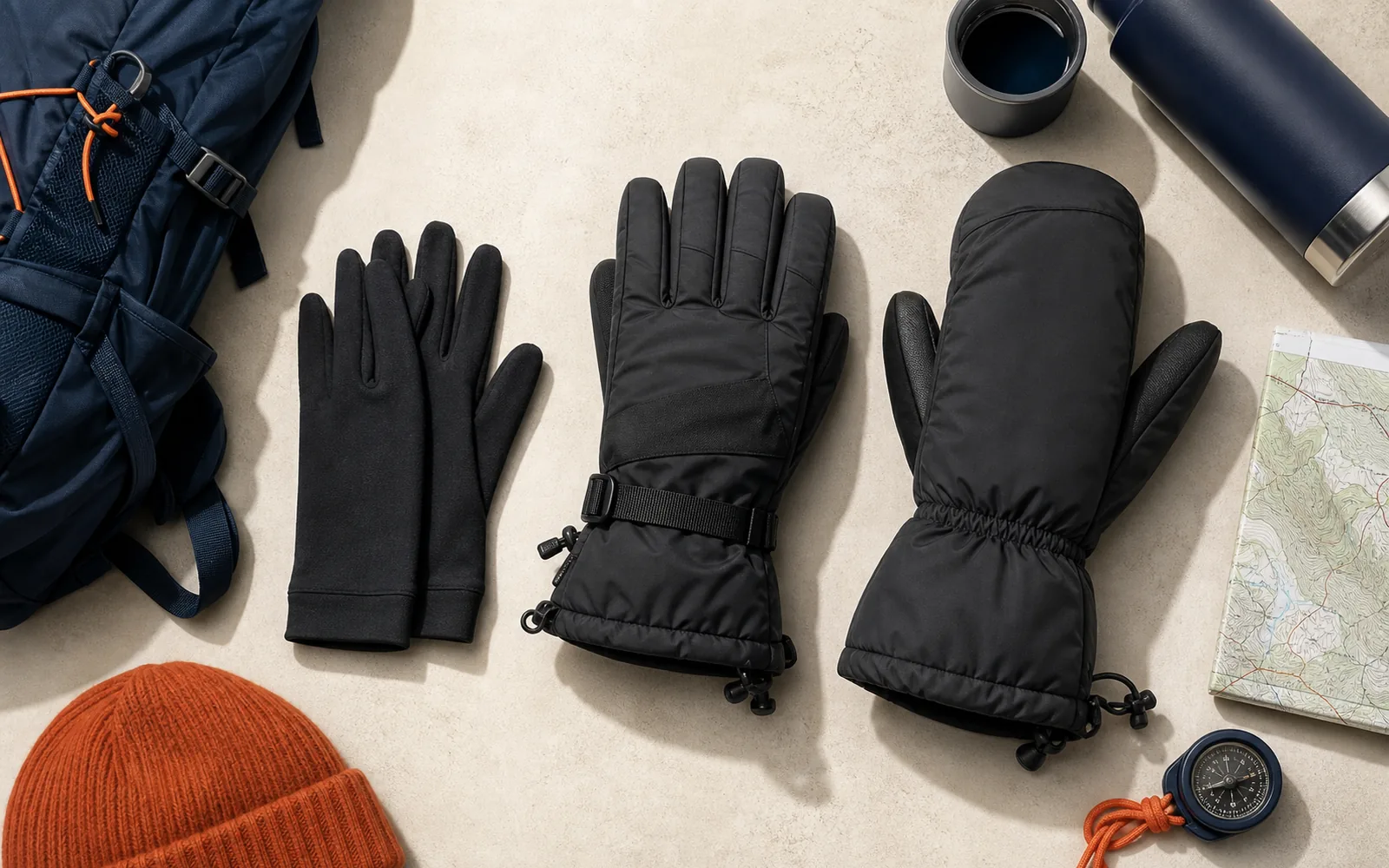
Layer 1: movement glove or liner
Use the lightest layer that keeps hands comfortable while climbing. It should manage sweat, grip poles, and allow basic dexterity. Carry a second dry pair in a sealed bag if the route is long.
Layer 2: weather and insulation glove
Add this before entering wet snow, strong wind, or slower terrain. It may be a single waterproof insulated glove such as the Kelling or a separate shell over the liner. Compatibility matters more than theoretical thickness.
Layer 3: stop or emergency warmth
This is the warm mitten or removable-liner glove reserved for exposed breaks, delays, or cold-sensitive hands. Keep it dry and easy to reach. If it is buried under the entire pack, hikers tend to wait too long to use it.
The REI snowshoe day-hiking checklist includes ski gloves or mittens as core equipment. For colder or more remote objectives, the backup should be treated as essential gear rather than an optional comfort item.
Can CozyGalar gloves be used for winter hiking?
Only for the right boundary. CozyGalar’s wool-blend, fleece-lined touchscreen gloves suit everyday walking, driving, commuting, and dry low-risk use. They are not verified as waterproof, windproof, impact-protective, or rated for extreme mountain exposure. We therefore do not recommend them as the primary glove for wet, remote, above-treeline, or severe-cold winter hikes.
They may be useful for the drive to the trail, town walks, or dry casual paths where a technical weather shell is unnecessary. See CozyGalar sizes on Amazon. For true severe-weather buying, compare our extreme-cold winter glove guide.
When are cold or numb fingers a medical warning?
Redness or pain can be an early frostbite warning. The CDC frostbite guidance lists white or grayish-yellow skin, unusually firm or waxy skin, and numbness as concerning signs. Stop, seek shelter, replace wet layers, and get medical help. Do not rub or massage suspected frostbite and do not use intense direct heat on numb tissue.
Also watch the whole person. The CDC hypothermia guidance lists shivering, exhaustion, confusion, fumbling hands, memory loss, slurred speech, and drowsiness among adult warning signs. Fumbling is not simply evidence that a glove lacks dexterity; it can be a systemic cold-injury sign.
What is the bottom line?
For mixed US winter hiking, the Sealskinz Kelling is the clearest single-glove starting point we verified. The Hestra Heli Ski 5-Finger is better positioned for cold, exposed stops; the REI Trailsmith is the lower-price insulated waterproof option; Black Diamond overmitts add modular weather protection; and a merino liner handles movement and redundancy.
The deeper answer is a system, not a trophy winner. Start light enough to avoid soaking the inside, add weather protection before exposure, keep a warm dry backup accessible, and test the complete combination with your poles and gear. That approach remains useful even when products, prices, and inventory change.
Sources and methodology
- CDC: Preventing Frostbite
- CDC: Hypothermia
- National Weather Service: Cold Weather Safety
- REI: Snowshoe Day-Hiking Checklist
- Current Sealskinz, Hestra, and REI product/category pages linked in the recommendations.
We researched the query with OpenSEO, reviewed current US competitor coverage, checked CozyGalar’s published inventory for overlap, and verified product facts on official brand or current retailer pages. We excluded products that showed a default out-of-stock state and did not assign laboratory scores or claim personal testing.