


Snowmobile glove buying guide
What Are the Best Snowmobile Gloves for Trail, Backcountry, and Extreme Cold?
The best snowmobile glove is the one matched to your riding style—not simply the thickest pair. We compared six current options using verified insulation placement, weather protection, grip design, heat system, and published owner feedback. Our top cold-trail pick is the 509 Range; aggressive riders should start with the KLIM PowerXross.
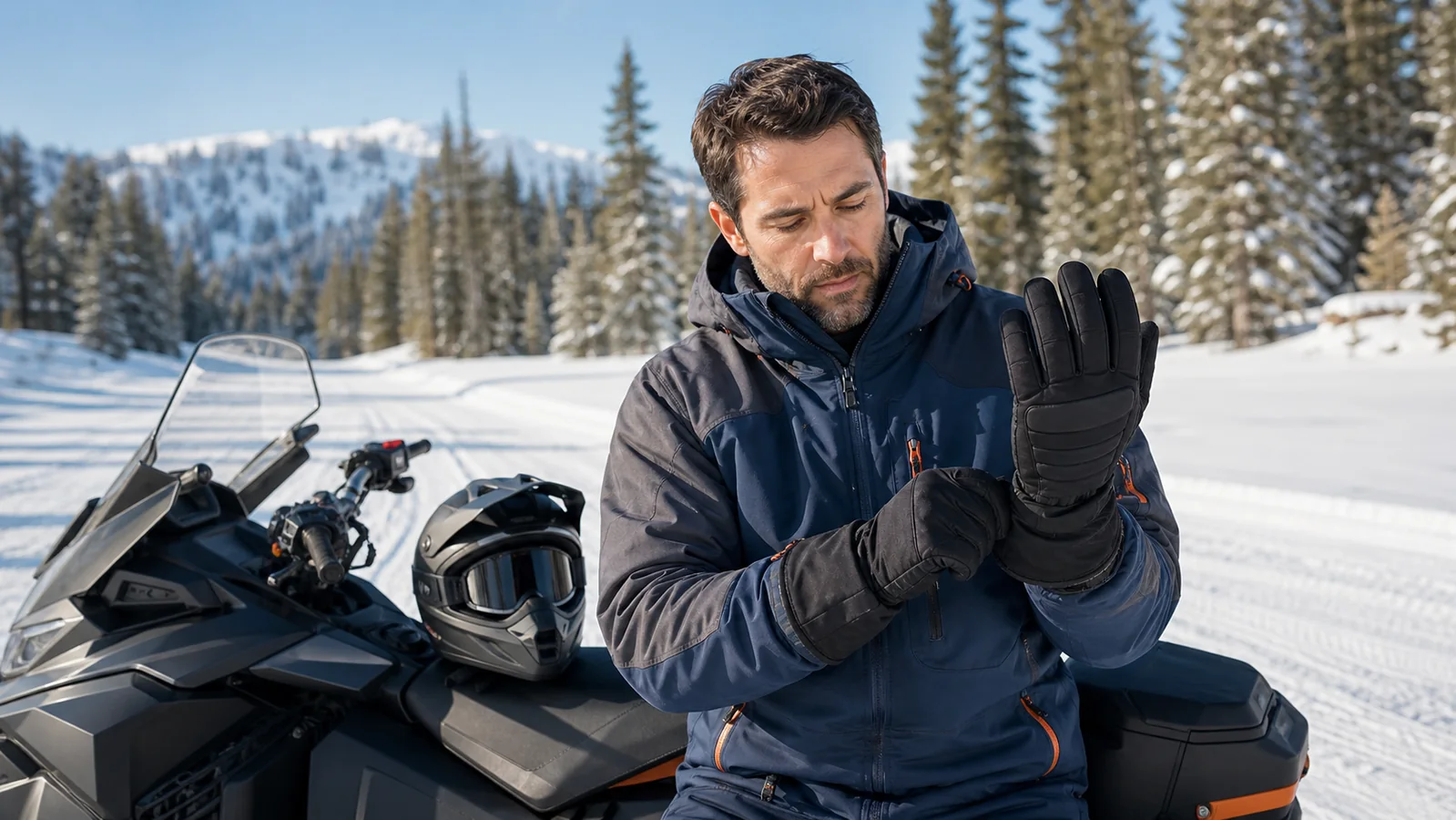
Editorial disclosure: CozyGalar does not receive a commission from the third-party product links in this guide. Prices and availability were checked on August 25, 2026 and can change. We did not personally laboratory-test these gloves; the recommendations compare current manufacturer specifications, use-case design, and recurring published customer feedback. Manufacturer warmth language is not a temperature guarantee.
What are the best snowmobile gloves right now?
| Best for | Product | Verified construction | Price checked | Main limitation |
|---|---|---|---|---|
| Cold trail riding | 509 Range Insulated | 400 g back / 100 g palm Thinsulate; Hipora membrane; goat-leather palm | $129.95 | Bulk can reduce thumb and throttle articulation |
| Aggressive backcountry control | KLIM PowerXross | 100 g backhand; no palm insulation; GORE-TEX + GORE Grip | $139.99 | Not designed as the warmest passive trail glove |
| Balanced, active riding | 509 Freeride | 70 g back / 40 g palm; Hipora; goat leather; merino liner | $89.95 | Too light for some riders in severe cold |
| Heated-grip riders who want active heat | KLIM PowerXross HTD | 100 g back; no palm insulation; fingertip/backhand heat | $231.99 closeout | Battery/runtime and closeout-size availability |
| Maximum passive warmth with brake access | 509 Duke Trigger Finger Mitt | 600 g back / 200 g palm; Hipora; goat leather | $129.95 | Less finger independence than a five-finger glove |
| Value and removable liner | Free The Powder RX Pro | Removable insulated liner; leather palm; softshell back | $72 sale | Multi-use ski glove, not a sled-specific design |
These are category winners, not a claim that one pair is objectively best for every hand or every climate. Your windshield, hand guards, heated grips, riding speed, moisture, circulation, fit, and how hard you work all change the result.
Why is there no single warmest glove for every snowmobile rider?
Trail touring and mountain riding ask opposite things from a glove. A trail rider may sit in fast-moving air for hours with relatively little upper-body work. That rider benefits from a sealed gauntlet, substantial insulation, and a weatherproof membrane. A backcountry rider may stand, sidehill, dig out a sled, and sweat. That rider needs a thinner palm, better lever feel, and enough breathability to avoid wetting the liner from the inside.
Speed matters because wind increases heat loss from exposed skin. The National Weather Service wind-chill guidance explains that increasing wind carries heat away faster. A snowmobile’s windshield and hand guards can reduce direct airflow around the hands, but they do not turn a mild glove into an extreme-cold system.
Which snowmobile gloves are best by riding style?
1. Best for cold trail riding: 509 Range Insulated Gloves
The Range is the clearest choice here for riders who prioritize passive warmth during long trail miles. 509 lists 400 grams of Thinsulate on the back of the hand and 100 grams on the palm, plus a waterproof/breathable Hipora membrane, top-grain goat-leather palm, pre-curved sled fingers, and an extended gauntlet with cinch closures.
Why it stands out: the insulation is deliberately asymmetric. The heavily insulated back faces moving air, while the palm remains thinner for throttle control. It is still much more insulated through the palm than the PowerXross, so it better suits steady trail use and riders who run cold.
Limitation: warmth has a dexterity cost. Published owner feedback on the product page includes both strong warmth reports and a complaint about thumb inflexibility. Try it with your actual throttle geometry and return it unused if your thumb cannot move freely. Check current 509 Range sizes and price.
2. Best for aggressive backcountry control: KLIM PowerXross Glove
KLIM’s PowerXross is designed around bar feel rather than maximum bulk. The current specification lists 100 grams of Thinsulate on the backhand and no palm insulation, together with GORE-TEX, GORE Grip construction, a DWR-treated goat-leather palm and fingers, low-profile palm seams, and touchscreen functionality.
Why it stands out: leaving the palm uninsulated makes it easier to feel the throttle and allows heat from heated grips to reach the hand more directly. That is valuable when the rider is moving constantly and generating body heat.
Limitation: it is not the first pair we would choose for hours of slow, subzero trail cruising without effective heated grips or wind protection. If you stop moving or your grips fail, the thin palm becomes a liability. See the current KLIM PowerXross listing.
3. Best balanced active-riding glove: 509 Freeride Gloves
The 509 Freeride sits between the Range and PowerXross. Its current design uses 70 grams of Thinsulate on the back, 40 grams on the palm, a waterproof/breathable Hipora membrane, a top-grain goat-leather palm, and a merino-wool liner. Pre-curved fingers and an oil-tack palm target grip and lever feedback.
Why it stands out: this is the most balanced specification in the group for riders who alternate between trail approaches and active terrain. A small amount of palm insulation adds warmth without creating a heavy cold-trail glove.
Limitation: balanced is not the same as extreme. Published reviews on 509’s page include praise for movement and grip, but also reports of liner tearing, bulky sizing, and inadequate warmth below roughly -20°C for one wearer. Individual reviews are not controlled tests, but they are useful warnings to check fit and liner attachment immediately. Check the 509 Freeride.
4. Best heated option for control: KLIM PowerXross HTD Glove
The heated PowerXross keeps the regular model’s control-oriented idea and adds heating elements around the fingertips and backhand. KLIM lists 100 grams of backhand insulation, no palm insulation, GORE-TEX weather protection, a leather palm, three heat levels, and two batteries—one per glove.
KLIM advertises up to 8 hours on low, 3 hours on medium, and 1.5 hours on high; high automatically drops to medium after ten minutes unless reactivated. Those are manufacturer maximums, not a promise for every outside temperature, battery age, or charge state.
Limitation: it was a closeout at $231.99 when checked, so sizes may disappear. More important, any heated glove is an electrical system: charge state, connectors, and battery health matter. Carry a passive backup. View current PowerXross HTD availability.
5. Best trigger mitt for passive warmth: 509 Duke Trigger Finger Mitt
The Duke groups fingers together for heat retention while leaving a dedicated trigger finger for brake access. 509 specifies 600 grams of backhand and 200 grams of palm Thinsulate, a waterproof/breathable Hipora membrane, goat leather, a full gauntlet, and grip treatment on the palm.
Why it stands out: among these six options, it has the highest published insulation amounts and the mitten-like structure reduces the separate surface area around each finger. It is the logical passive-warmth choice for cold trail use when five-finger dexterity is not the priority.
Limitation: a trigger mitt cannot provide the same independent finger movement as a glove. Test brake reach, throttle return, switches, and tether access before riding. Do not assume a high insulation number guarantees comfort at a specific temperature. See the 509 Duke Trigger Finger Mitt.
6. Best value with a removable liner: Free The Powder RX Pro
The RX Pro is the deliberately non-snowmobile-specific recommendation. Its current $72 sale listing combines a treated PFAS-free cowhide palm, flexible softshell back, gauntlet cuff, wrist leashes, protection patch, and a removable insulated liner. Removing the liner makes overnight drying and carrying a spare liner easier than with a permanently attached system.
Why it stands out: moisture management and repairability matter on multi-day trips. A removable liner can be separated from the shell, washed, dried, or replaced. The leather palm also provides the grip and durability many riders look for at a lower price than the snowmobile-specific options above.
Limitation: the brand markets it primarily as a ski glove and does not publish the sled-specific insulation distribution, pre-curved throttle fit, or membrane test values found on some snowmobile models. Treat it as a value crossover choice, not our first pick for fast subzero trail miles. Check RX Pro stock and current price.
How do insulation placement and heated grips change the choice?
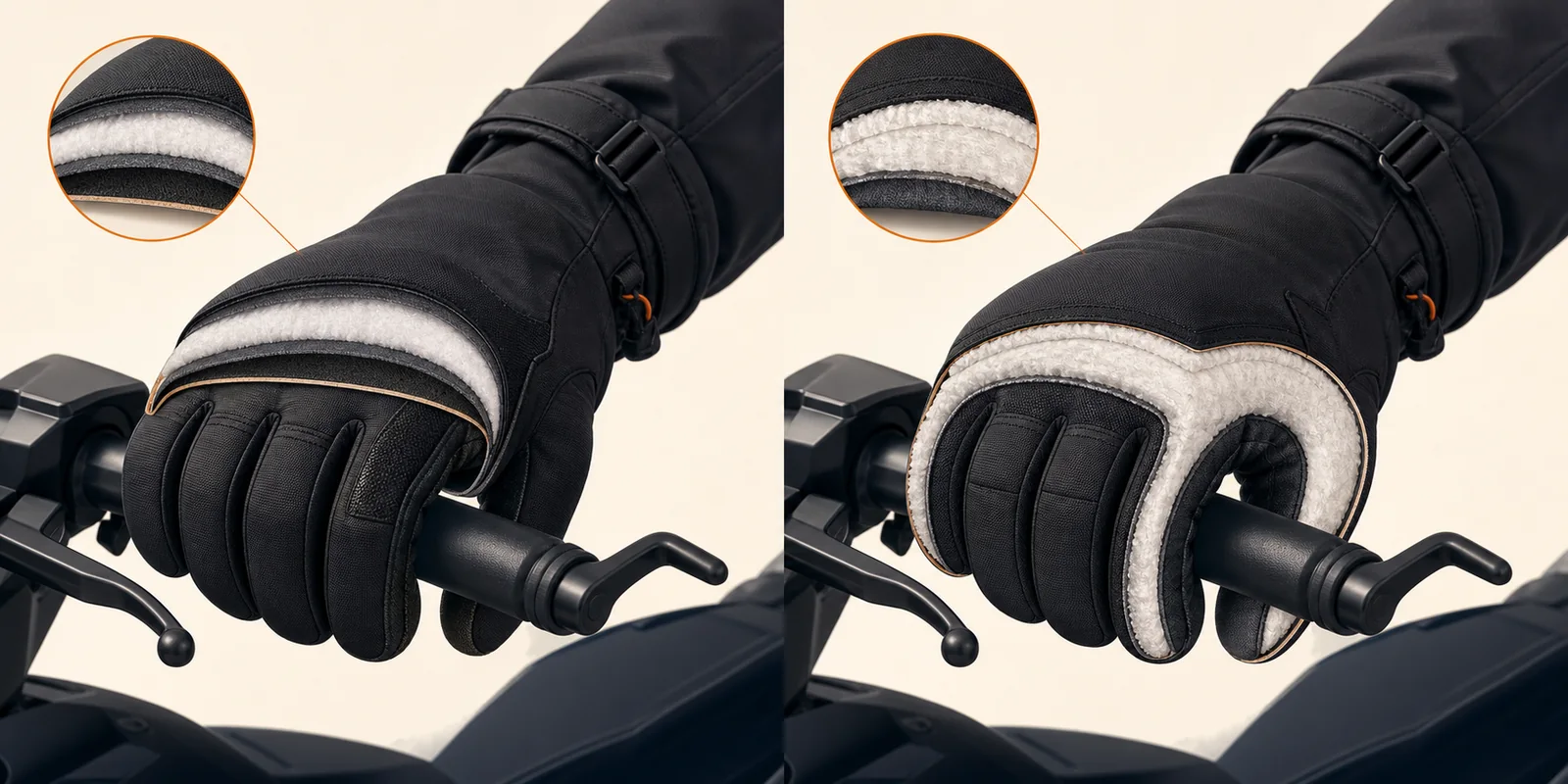
A single “grams of insulation” number can be misleading because the same amount placed on the palm and the backhand does different jobs. The back of your hand faces airflow and usually needs more protection. The palm must wrap the grip, move the throttle, reach the brake, and—if the machine has heated grips—accept heat from below.
- Backhand-heavy, thin-palm designs favor control, heated-grip transfer, and active riding.
- Insulated palms help when grips are weak or absent, but can dull feedback and slow heat transfer.
- Gauntlet cuffs seal over or under sleeves; the correct direction depends on your jacket cuff design. What matters is preventing a wind channel.
- Waterproof membranes help with wet snow and spray, but sweat still has to move out. A saturated inner liner can make a warm glove feel cold.
Are heated snowmobile gloves worth the extra cost?
Heated gloves make the most sense for riders with chronically cold hands, long low-activity trail days, or large temperature changes during one ride. They can also let an active rider keep a thinner, more controllable palm while adding warmth to the fingertips and backhand.
The tradeoff is system complexity. Published runtime usually depends on heat level, ambient temperature, battery condition, and charging. A glove with “up to eight hours” on low may last far less on high. Confirm that replacement batteries are available, that the charger works before departure, and that the controls are usable with the opposite glove on.
For a wider cost-and-safety analysis, read our evidence-led guide, Are Heated Gloves Worth It? Heated gear should supplement—not replace—a windproof, weather-resistant hand system and a backup plan.
Are trigger mitts warmer than five-finger snowmobile gloves?
Usually, a trigger mitt has a structural warmth advantage because several fingers share one compartment. That reduces the amount of cold material separating the fingers and can preserve heat better than five individual finger stalls. The 509 Duke also uses substantially more insulation than the five-finger picks in this guide.
But the control penalty is real. Before riding, sit on the stopped machine and confirm that you can reach the brake, operate switches, use the tether, open the visor, and release the throttle without fabric catching. If any control feels uncertain, choose a more dexterous glove or keep the trigger mitt only for trail segments.
How should snowmobile gloves fit?
A snowmobile glove should have light space at the fingertips without folded fabric, a secure wrist, and enough volume to make a relaxed fist without compressing the insulation. Too tight reduces the air trapped in the insulation and may restrict circulation. Too loose makes the throttle and brake vague and can cause the liner to pull out.
- Measure both hand circumference and palm length using the brand’s current chart.
- Try the glove with the base layer or liner you actually intend to wear.
- Close the cuff exactly as it will sit with your jacket.
- On a stopped machine, run every control through its full movement.
- Keep tags and packaging until the control check passes.
Our detailed men’s winter glove fit guide explains why finger length matters as much as palm width. Do not automatically size up for liners; an oversized glove can be colder if it creates folds or lets air pump through the cuff.
What should you carry as a backup?
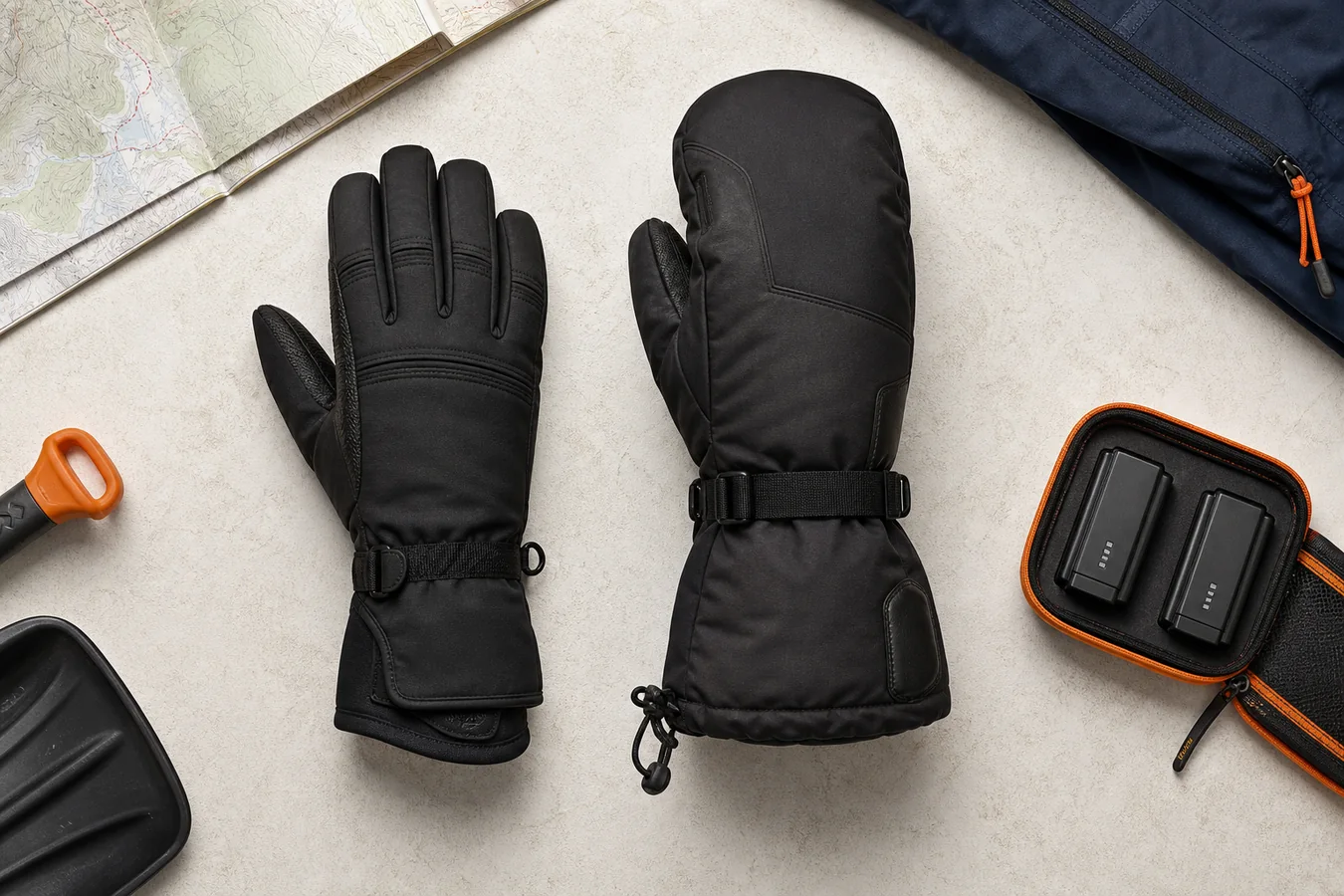
For remote or long rides, one universal pair is a fragile plan. Carry a second dry pair in a waterproof bag. An effective system is a thinner high-control glove for active terrain plus a warm gauntlet glove or trigger mitt for trail approaches, stops, or unexpected wind.
Also consider hand guards or insulated handlebar muffs where appropriate for your machine and riding style. They reduce direct airflow and can let you use a thinner glove for better control. However, verify that no accessory interferes with the brake, throttle, tether, or hand exit.
When are cold fingers a safety warning rather than a gear problem?
Cold discomfort is useful feedback; numbness is not something to ride through. The CDC’s frostbite guidance says redness or pain can be an early warning. White or grayish-yellow skin, an unusually firm or waxy feel, and numbness are signs that require immediate action and medical evaluation.
Stop in a safe place, get out of the cold, replace wet gloves, and warm the person—not just the hands. Do not rub or massage suspected frostbite and do not apply intense direct heat to numb tissue. If cold fingers persist in ordinary conditions, especially with color changes or one-sided symptoms, discuss it with a health professional rather than assuming another glove will solve it.
Should CozyGalar knit gloves be used for snowmobiling?
No—not as the primary riding glove. CozyGalar’s wool-blend knit gloves are designed for everyday commuting, driving, dog walking, grip, and touchscreen access. They are not verified as waterproof, windproof, impact-protective, or rated for high-speed snowmobile exposure. Recommending them here would ignore the core search intent and create a safety risk.
They can still be useful before or after the ride for ordinary errands, but choose a purpose-built snowmobile glove for the machine. For broader cold protection, compare our extreme-cold glove guide.
What is the bottom line?
Choose by riding system and failure mode. The 509 Range is the strongest cold-trail starting point; KLIM PowerXross is the control-first mountain choice; 509 Freeride balances insulation and dexterity; PowerXross HTD adds active heat; the 509 Duke favors passive warmth; and the RX Pro offers a removable-liner value alternative.
Whatever you buy, verify fit on your stopped machine, inspect cuff sealing, carry a dry backup, and treat numbness as a safety signal. A product page can describe construction, but only your complete setup—glove, grips, guards, windshield, activity, weather, and circulation—determines whether your hands stay functional.
Sources and methodology
- NOAA/National Weather Service: Wind Chill
- CDC: Preventing Frostbite
- Current official product pages from 509, KLIM, and Free The Powder, linked in each recommendation.
We compared published construction, insulation placement, weather protection, control-oriented design, current price, stock signals, and recurring customer limitations. We did not assign a laboratory warmth score or claim personal testing. Third-party shopping links are editorial and non-commissioned.