

Extreme-cold glove decision guide
What Are the Best Winter Gloves for Extreme Cold?
Choose a glove system by wind chill, wetness, activity, exposure time, and the dexterity your task actually requires.
Searching for the “warmest glove” sounds simple, but it hides the decision that matters. A stationary spectator in dry, windy weather, a snowshoer climbing uphill, and a person repairing equipment in wet snow can stand in the same air temperature and need three different hand systems.
Current US search results often mix ski gloves, work gloves, mountaineering mittens, heated gloves, and everyday knit gloves in one list. That format is easy to scan but can be unsafe to copy literally. Warmth is not a single product property. It is the result of insulation, air space, wind protection, moisture management, circulation, activity, and time.
What does “extreme cold” mean for your hands?
There is no universal temperature at which every consumer needs the same glove. OSHA notes that the meaning of extreme cold varies by region, while wind, wetness, improper clothing, exhaustion, and individual health all change cold-stress risk. A winter day that feels routine in Minnesota may be unusually dangerous in a region where people and infrastructure are less prepared.
For exposed skin, the National Weather Service wind-chill chart illustrates why air temperature alone is incomplete. At 0°F with a 15 mph wind, the wind chill is about -19°F, and exposed skin can freeze in roughly 30 minutes. Gloves cover the skin, but wind can still strip heat from the glove surface and push cold air through permeable materials.
Use five inputs before comparing products:
- Air temperature and wind: wind raises heat loss and exposes weak cuffs, seams, and open knits.
- Wetness: rain, wet snow, melting snow, and sweat reduce the useful insulation of many materials.
- Activity: hard movement generates heat; standing still does not.
- Exposure time: a ten-minute walk from a parking lot is not a three-hour event or backcountry trip.
- Consequence of failure: cold fingers are inconvenient near a heated building and much more serious far from shelter.
A low temperature, strong wind, wet snow, low activity, and long exposure multiply one another. A glove can cope with one factor and fail when several arrive together. Product-page temperature claims rarely describe that complete stack.
Are mittens warmer than gloves in extreme cold?
Usually, yes. A mitten lets four fingers share warmth in one larger air space and reduces the exterior surface area through which heat escapes. A five-finger glove separates the fingers into narrow compartments. That provides better control, but each finger has less shared heat and more exposed surface.
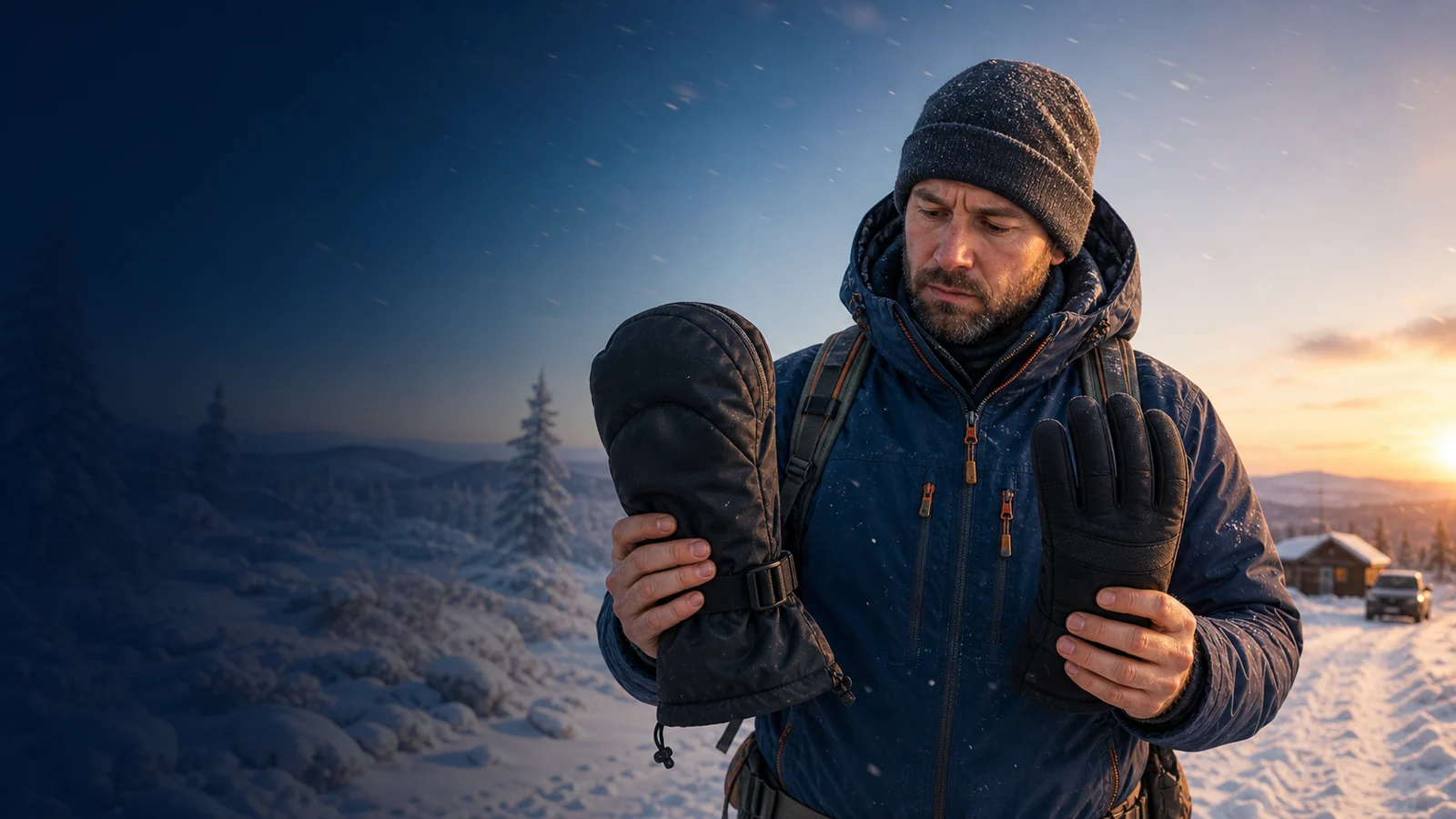
The tradeoff is dexterity. Five-finger gloves make it easier to operate buckles, zippers, trekking poles, tools, cameras, and vehicle controls. Mittens are better when maintaining warmth matters more than fine control. A three-finger or lobster-style glove splits the difference by grouping some fingers while keeping the index finger separate.
For a stationary task in severe cold, begin your search with mittens. For active work that requires repeated hand control, begin with a protective five-finger glove and test whether it is warm enough during pauses. If neither option handles the full day, use a liner plus removable mitten shell so you expose the fingers only for short tasks.
Our detailed gloves-versus-mittens guide explains the shape tradeoff without assuming one format wins every activity.
Which features matter most in extreme-cold gloves?
Product names and insulation weights are useful only when you understand the complete construction. Look for a system with these parts working together.
Insulation with protected loft
Insulation works by slowing heat movement through trapped air. It needs enough space to retain loft. If a glove is too tight, the insulation compresses and circulation may suffer. More insulation can add warmth, but it also adds bulk, slows drying, and can make the hand grip harder.
A wind-resistant outer layer
An open knit can feel warm indoors and lose heat quickly in wind. For severe conditions, choose a shell construction specifically described as windproof or strongly wind-resistant by the manufacturer. Pay attention to seams, wrist closure, and the junction with the jacket sleeve.
Moisture protection matched to the weather
Dry cold and wet cold are different problems. A breathable wind shell may work in dry snow. Wet snow, freezing rain, and repeated contact with meltwater call for verified waterproof construction. “Weather-resistant” is not the same promise as waterproof, and a waterproof membrane does not guarantee every cuff opening or seam will stay dry in every position.
A lining that manages sweat
Sweat can make a warm glove colder after activity slows. A removable liner or spare pair is valuable on long days because it lets you replace damp material. Cotton is a poor choice for a next-to-skin winter liner because it holds moisture and dries slowly.
A cuff that completes the system
Gauntlet cuffs protect the wrist and overlap a jacket sleeve. A drawcord or wrist cinch reduces air and snow entry. Test the glove with the coat you will actually wear; a good glove can still create a cold gap if its cuff and the sleeve do not overlap.
A palm that matches the task
Warmth does not help if you cannot securely hold a ski pole, shovel, dog leash, or tool. Reinforced leather or synthetic palms can improve abrasion resistance. Textured coatings may help in wet conditions. Test twisting control, not just a straight squeeze.
How should activity and exposure time change your choice?
The same person may need different handwear during the same day. While climbing, shoveling, or snowshoeing, the body produces heat and a maximum-insulation mitten may cause heavy sweating. During a lift ride, sports event, photo session, vehicle recovery, or rest stop, heat production falls and the damp system cools quickly.
| Situation | Useful starting system | Main failure to prevent |
|---|---|---|
| High-output hiking or snowshoeing | Breathable protective glove plus dry backup mitten | Sweating through maximum insulation |
| Stationary spectating or photography | Roomy insulated mitten; liner for brief dexterity | Gradual cooling during long still periods |
| Snow work or equipment handling | Weatherproof five-finger glove with secure palm | Wetness, abrasion, and lost control |
| Skiing or snowboarding | Waterproof insulated glove or mitten with gauntlet | Wind, wet snow, and lift-time cooling |
| Remote or long-duration exposure | Layered system plus dry spare and emergency plan | No recovery option if the first system gets wet |
Plan around the coldest low-output phase, then create a way to vent or remove a layer during high output. If you choose only for the warmest part of the activity, hands may chill during the ride home, a mechanical problem, or an unexpected wait.
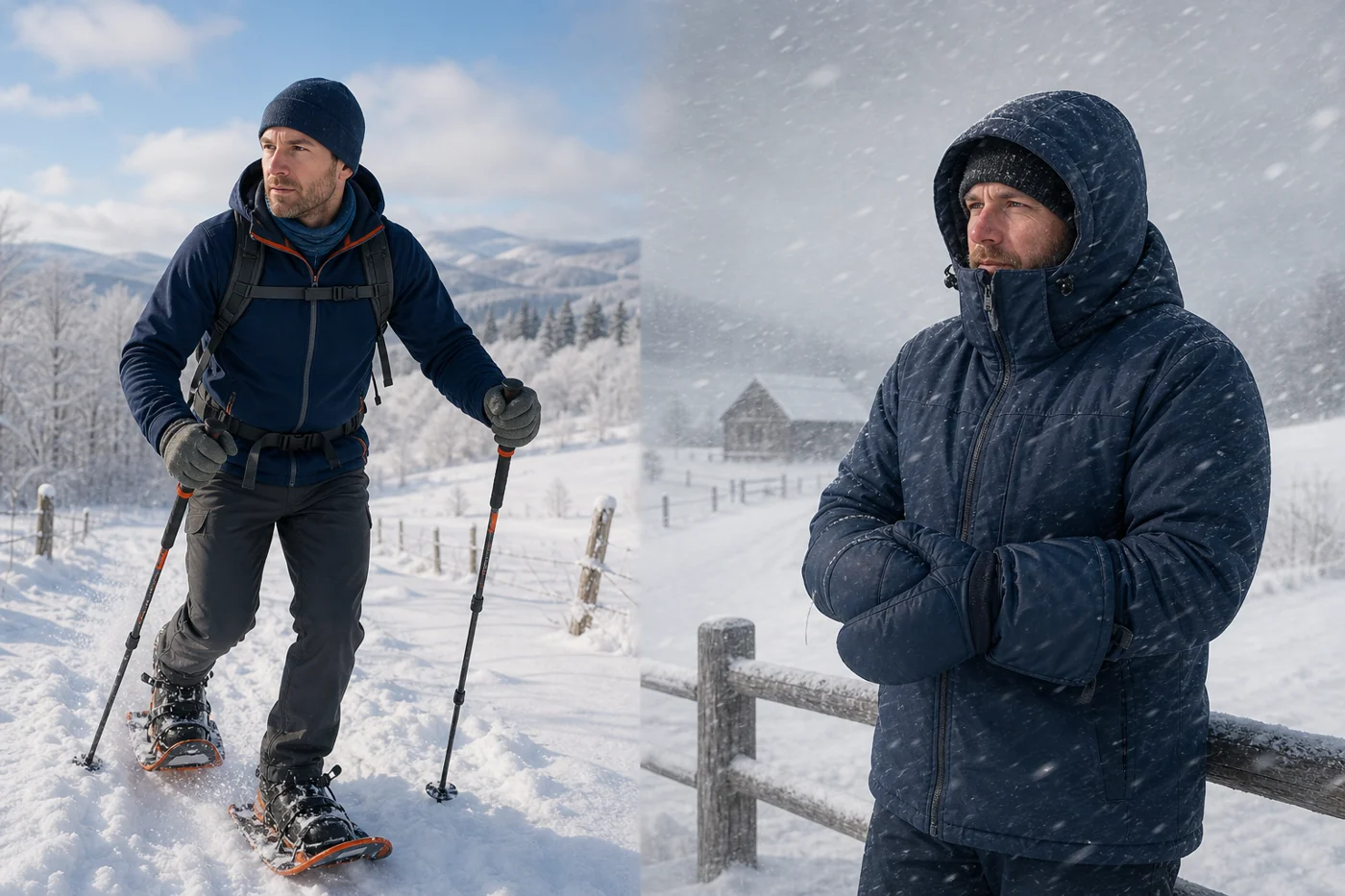
The warmest glove on paper may slow a task so much that you stay outside longer. For tool work, secure dexterity can reduce exposure time—but only if the glove still protects the hand during pauses. The best system balances task speed and heat retention.
Which current glove systems are strong research starting points?
We did not laboratory-test every product below, and this is not a fixed ranking. These are current examples highlighted by independent gear testing or specialist retailers. Use them to understand categories, then verify current specifications, sizing, warranty, and availability before buying.
For maximum passive warmth: Black Diamond Mercury Mitt
OutdoorGearLab identified the Black Diamond Mercury Mitt as the warmest mitten in its current comparison. The mitten format, substantial insulation, and weather-protective construction make it a logical starting point for people who prioritize warmth over finger independence. The limitation is predictable: a bulky mitten is not the first choice for tasks that require fine control.
For a protective five-finger format: Arc’teryx Fission SV
OutdoorGearLab describes the Arc’teryx Fission SV as warm, waterproof, and durable, with the cost as a major drawback. This type of glove is a better research direction when a user needs independent fingers for poles or equipment and accepts that even a premium five-finger glove may not equal a large mitten during stationary exposure.
For budget-oriented winter work: Carhartt Waterproof Insulated Glove
OutdoorGearLab found this glove warm for its price but also noted bulk, a less-secure palm, and slow drying. That combination is an important lesson: warmth and low cost do not erase task-specific weaknesses. Test grip and dexterity before choosing it for tools or driving.
For active heat: Hestra Power Heater Gauntlet Mitt
Powder7 names the Hestra Power Heater Gauntlet Mitt as the warmest glove or mitten it sells. That is a retailer assessment, not our test. It illustrates the heated-mitten category for people who remain cold in strong passive insulation, but buyers must also compare battery runtime by setting, charging time, replacement-battery access, controls, and warranty.
For a modular system: liner, glove, and over-mitten
The Heat Company markets a modular liner, insulated glove, and hood-style shell for extreme cold. The architecture is more useful than any marketing superlative: separate layers let the user expose a liner for dexterity, add insulation for stillness, and replace a wet component. Similar systems can be assembled across brands if each layer fits without compressing the next.
Do not treat inclusion here as a universal recommendation. Use-case fit, verified construction, sizing, and an indoor return-window test matter more than appearing in a roundup.
Can thin gloves work in extreme cold?
A thin glove can be useful in extreme cold as a liner or as a short-duration dexterity layer. It is rarely a complete solution for long, stationary exposure. Thin materials leave less room for insulating air, and close-fitting gloves can feel colder if they are tight at the fingertips.
Thin gloves make sense when you are generating heat, moving between heated spaces, or performing a short task before replacing an outer mitten. They also help keep skin covered when you remove the shell to operate a camera or fastener. Look for smooth exterior fabric that slides inside the outer layer and moisture management next to the skin.
If search results promise “the best thin gloves for extreme cold,” ask whether the recommendation is actually a liner, a wind shell, a heated product, or a glove meant for brief active use. Thinness, warmth, waterproofing, and fine dexterity do not all maximize at once.
How should you layer gloves for severe cold?
A layered system works only when the pieces fit together. Adding a thick glove inside a tight mitten can compress both layers, reduce comfortable movement, and leave the fingers colder.
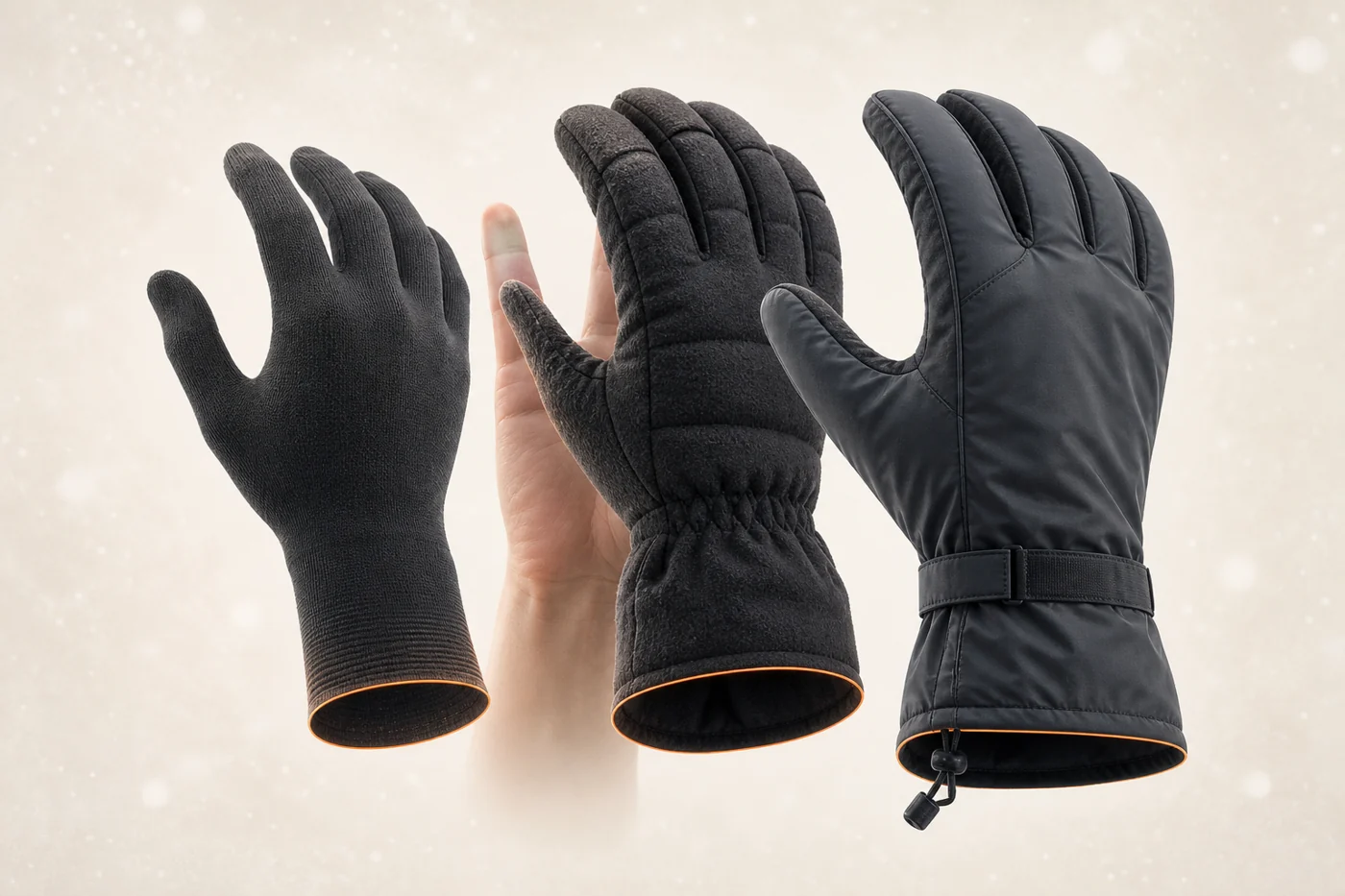
- Start with a thin liner: choose a close but nonrestrictive layer that manages moisture and lets you perform a short task without bare skin.
- Add insulation: use a roomy glove or mitten that retains loft around the fingers.
- Add weather protection when needed: a windproof or waterproof over-mitten should close over the jacket cuff without crushing the insulation.
- Carry a dry replacement: a second liner weighs little and is more useful than adding insulation around damp fabric.
- Practice transitions indoors: open zippers, use controls, and remove or replace the shell without dropping it.
Leashes or wrist straps help prevent a removed mitten from blowing away. If the system is for remote travel, test it near shelter before relying on it. A home fit check cannot reproduce a full storm, but it can reveal restricted fingers, unstable liners, and unusable closures.
Extreme-cold users need a warm state, a dexterity state, and a recovery plan for wetness. One glove rarely handles all three. A removable shell, spare liner, and protected storage pocket can matter more than a small difference between two insulation labels.
How should extreme-cold gloves and mittens fit?
The fingers should reach near the ends without pressing hard into them. You should be able to make a fist, spread the fingers, and flex the wrist without strong pressure. A small amount of air space supports insulation; excessive empty length makes controls and grip less precise.
Measure both hand circumference and hand length, then use the brand’s own size chart. Do not assume your usual letter size transfers between brands. If you plan to wear a liner, measure and test with that liner.
- Wear the complete system for at least ten minutes.
- Check for fingertip pressure, thumb-web tension, or numbness.
- Hold and rotate the tool, pole, leash, or steering wheel you use.
- Zip a jacket and operate the glove’s own closures.
- Raise and lower the arms to see whether the cuff exposes the wrist.
- Remove the outer layer and replace it without exposing bare skin.
- Confirm the liner does not pull out or twist.
If your hands remain cold in a dry, well-insulated system, the problem may be fit, circulation, sweat, or low activity rather than insufficient insulation. Use our cold-hands troubleshooting guide before buying an even bulkier pair.
Are heated gloves worth it for extreme cold?
Heated gloves can help during long low-output exposure, for people whose hands stay cold in good passive insulation, or for users with specific circulation concerns who have discussed cold exposure with a clinician. Active heat is not a substitute for weather protection, correct fit, and a safe plan.
Compare battery capacity and runtime at each heat setting, not only the maximum advertised runtime. Ask where the heating elements run: the back of the hand, each finger, and fingertips can feel very different. Check whether batteries are replaceable, whether spares are available, how the controls work through a jacket cuff, and what the warranty covers.
Battery systems add weight, charging, failure points, and travel considerations. Carry passive insulation that keeps you safe if power ends. Stop using a heated glove if you notice a persistent hot spot, damaged wire, swollen battery, unreliable control, or water intrusion beyond the product’s stated protection.
For a full decision framework, read Are Heated Gloves Worth It?.
Is CozyGalar an extreme-cold glove?
No. CozyGalar men’s gloves are fleece-lined wool-blend knit gloves for everyday cool-to-cold routines such as commuting, driving, errands, and dry dog walks. They have conductive fingertips, a textured palm, and sizes S through XL. The verified fiber blend is 50% Merino Wool, 5% Conductive Fiber, 45% Polyester.
They do not have a certified temperature rating, and we do not claim they are waterproof, windproof, ski-grade, or suitable as the only protection in extreme cold. For temperatures below about 20°F, our practical product guidance is to use them only as part of a roomier mitten system if fit allows; that is guidance, not a laboratory-certified rating.
CozyGalar may suit a shopper who needs everyday warmth, touchscreen access, grip, and a slim five-finger shape near heated spaces. It is the wrong choice for prolonged exposure, wet snow contact, strong wind without an outer shell, mountaineering, or situations where glove failure would create a safety risk.
Need an everyday glove rather than an expedition mitten?
See CozyGalar’s verified materials, size options, current price, and availability on Amazon. For extreme cold, choose a purpose-built protective system instead.
Commercial disclosure: CozyGalar makes the everyday glove mentioned above. The Amazon button is a direct product link, not an affiliate-commission link. We receive no commission from the editorial sources in this guide.
When should you stop and warm your hands?
Cold protection is not a contest. OSHA lists frostbite warning signs including numbness, tingling or stinging, aching, and pale or waxy skin. Loss of dexterity can be an early practical warning because small movements become difficult before a person recognizes the full injury risk.
Move to shelter if fingers become persistently numb, painful, unusually clumsy, pale, or discolored; if gloves are wet and you have no dry replacement; or if the weather exceeds the plan you prepared. Do not rub suspected frostbitten tissue or use intense direct heat. Seek medical guidance for possible frostbite or when normal feeling and color do not return with safe rewarming.
People with Raynaud’s phenomenon, diabetes, cardiovascular disease, nerve damage, prior cold injury, or medication that affects circulation should ask a qualified clinician about cold exposure and hand protection. A consumer guide cannot set a safe exposure time for an individual.
What is the extreme-cold glove buying checklist?
- Start with wind chill, wetness, activity, exposure time, and distance from shelter.
- Choose mittens for maximum passive warmth; choose gloves only when the task needs finger independence.
- Require a specific wind and moisture protection claim that matches the weather.
- Leave enough room for insulating loft and circulation without losing control.
- Test cuff overlap with the real jacket.
- Test the actual pole, tool, leash, camera, or vehicle controls indoors.
- Plan for sweat with removable liners or a dry spare.
- For heated gloves, compare runtime by setting, battery replacement, element coverage, and warranty.
- Ignore unsupported “works to” temperature claims that lack conditions and test methods.
- Carry a recovery option and know the cold-injury warning signs.
Frequently asked questions
What type of glove is warmest below zero?
A roomy, heavily insulated mitten with wind protection is usually warmer than a comparable five-finger glove. Wetness, wind, activity, fit, and exposure duration still determine whether it is sufficient.
Are ski gloves enough for extreme cold?
Some are, for the activity and conditions they were built for. Verify waterproofing, insulation, cuff, and fit. Ski gloves designed for active use may feel cold during long stationary periods.
Is leather good for extreme cold?
Leather can be durable and wind resistant, but leather alone does not define warmth or waterproofing. The insulation, membrane, seams, treatment, cuff, and fit determine the complete performance.
Should liners be tight?
Liners should be close fitting without pressure or numbness. The outer glove or mitten must have enough room for the liner without compressing insulation or restricting circulation.
Can waterproof gloves make hands colder?
They can feel colder if sweat accumulates inside and activity later drops. Balance waterproofing with breathability, vent clothing during hard work, and change damp liners.
Are two pairs better than one expensive pair?
Often, a purpose-built primary pair plus a dry backup is more resilient than relying on one glove all day. The right answer depends on risk, duration, and whether the pairs cover different activity levels.
Sources and research notes
CozyGalar did not laboratory-test every glove named in this guide. We used OpenSEO US keyword and SERP evidence refreshed August 21, 2026, current ranking-page coverage, primary cold-safety guidance, independent gear comparisons, and verified CozyGalar product facts. Product specifications and availability can change; verify them on the manufacturer or retailer page before buying.