

Winter driving visibility
How Do You Defog a Windshield in Winter?
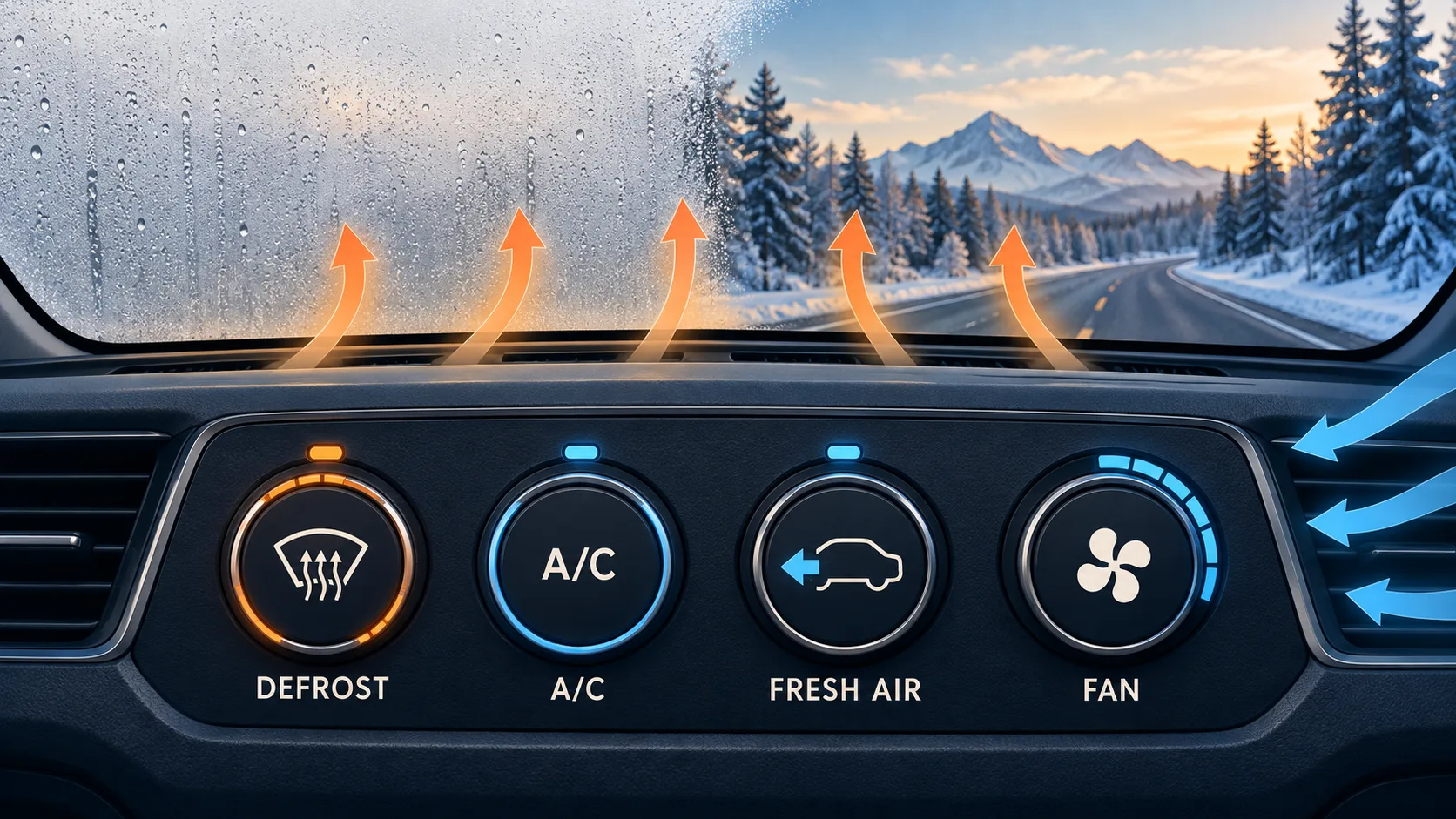
For fog on the inside of the glass, select front defrost, choose a warm setting, turn on A/C, switch recirculation off, raise the fan, and crack a window if it is safe. Do not drive until your full field of view is clear.
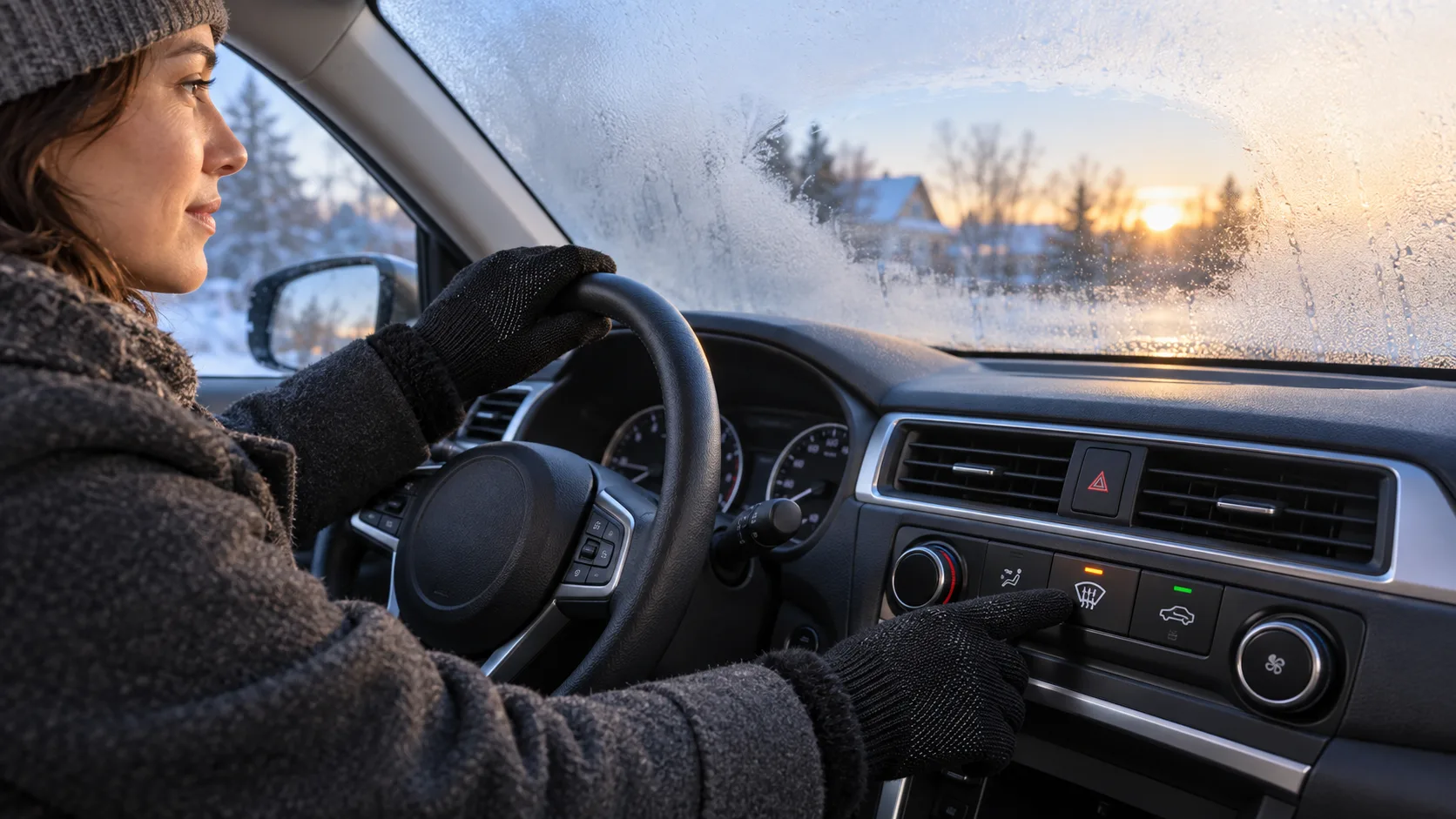
Use the car’s climate system before using your sleeve. With the vehicle safely stopped, point airflow at the windshield, set it warm, engage A/C if the vehicle permits, use fresh outside air instead of recirculation, and turn up the fan. A small window opening can help release humid cabin air. Controls vary, so follow the owner’s manual—and never move until the whole view is clear.
What Is the Fastest Safe Way to Defog a Windshield in Winter?
- Select front defrost. Use the windshield-shaped symbol with rising arrows, not the rear-window grid.
- Choose warm air. Warm airflow raises the glass temperature and can hold more moisture than cold air.
- Turn on A/C if your system allows it. The compressor removes moisture even when the temperature setting is warm; many vehicles engage it automatically in defrost mode.
- Switch recirculation off. Bring in drier outside air instead of repeatedly cycling humid cabin air.
- Raise the fan and, if safe, crack a window. More airflow speeds the exchange. Wait until the windshield, side windows, and mirrors give you a full clear view.
If visibility becomes restricted while you are already moving, reduce speed smoothly and pull over where it is safe and legal. Finish clearing the glass while stopped. Do not reach across the windshield, study the climate panel, or wipe glass with a hand while driving.
Why Does the Inside of a Windshield Fog in Cold Weather?
Fog is made of tiny water droplets. In winter, the windshield is cold while the cabin air is warmer and often more humid. When that moist air reaches glass cool enough to be at or below its dew point, water condenses on the surface.
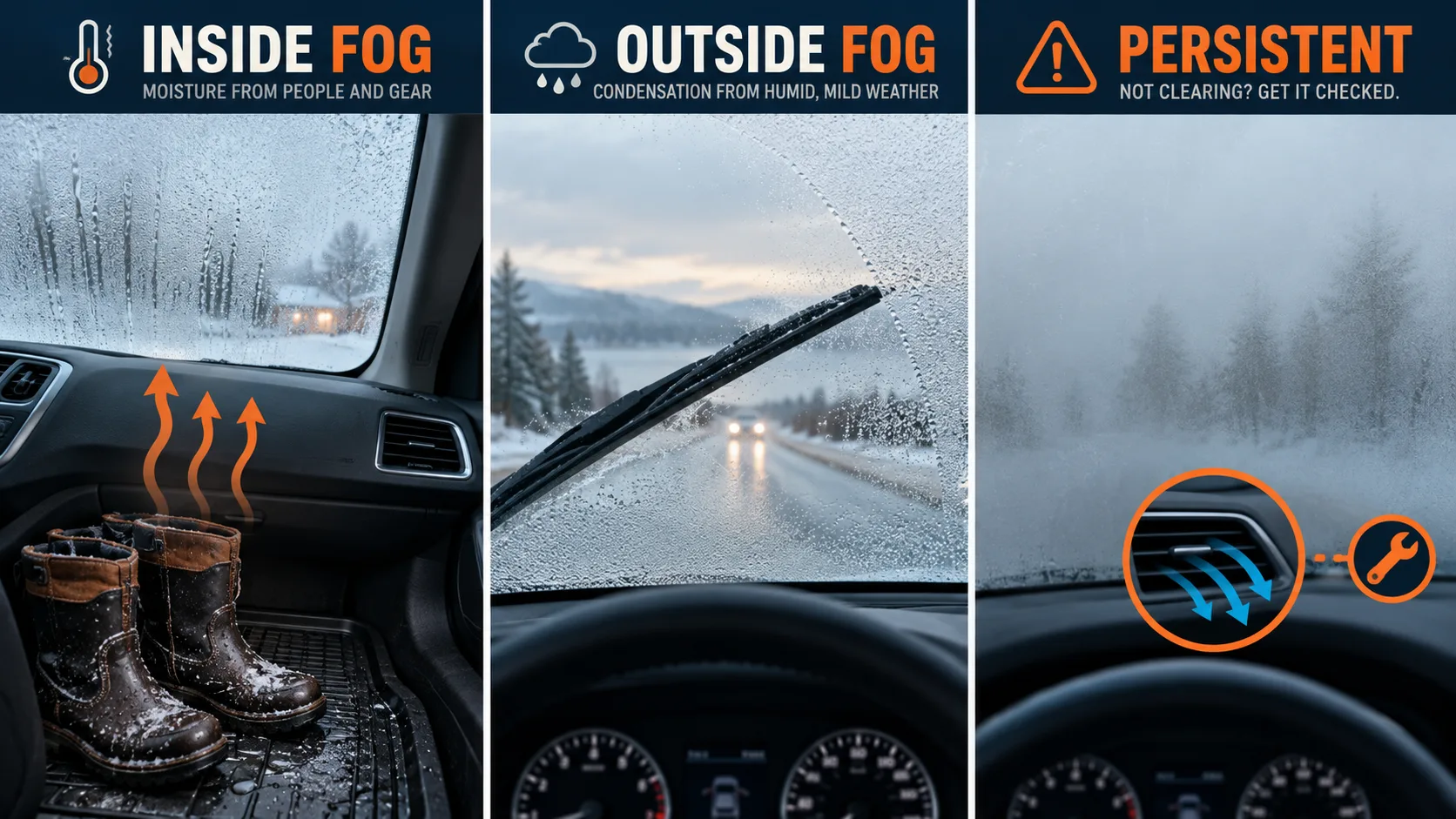
The moisture can come from ordinary sources: people breathing, snow melting on boots, damp floor mats, a wet coat, an umbrella, a pet, or drinks. A full car usually fogs more readily than an empty one because every passenger adds heat and moisture. Defrost works by sending conditioned air across the glass, warming the surface and carrying moisture away.
How Can You Tell Whether the Fog Is Inside or Outside?
Make the diagnosis while stopped. Turn on the windshield wipers once. If they cut a clean path, the moisture is on the outside. If the wipers change nothing, the fog is probably on the inside. Avoid making a fingertip test while moving; it creates a smear and takes attention off the road.
| What you see | Likely surface | First action | Do not confuse it with |
|---|---|---|---|
| Cloudy film that wipers do not change; worse with passengers or wet gear | Inside glass | Front defrost, warm setting, A/C, fresh air, higher fan | Exterior ice |
| Moisture that the wipers remove | Outside glass | Use wipers and washer as appropriate; reduce overcooling of the glass | Interior winter condensation |
| Hard, bonded layer that resists the wipers | Exterior ice | Park; use the vehicle’s defroster and a clean plastic scraper on glass as appropriate | Fog—see our safe windshield-ice guide |
| Interior fog that repeatedly returns despite correct settings | Possible excess moisture or ventilation issue | Remove moisture sources; check the manual; arrange qualified inspection if it persists | A reason to keep driving with a partial view |
Should You Use Heat or A/C to Defog a Windshield?
For winter fog on the inside, use both: warm air helps warm the glass, while A/C helps dry the air. It is not a contest between “heat” and “cold.” The useful combination is warm, dehumidified airflow directed at the windshield.
Some cars show an A/C light; others engage the compressor automatically when defrost is selected. Electric vehicles and vehicles with heat pumps can behave differently. Use the defrost setting described in your owner’s manual instead of forcing a universal button sequence.
Why should recirculation usually be off?
Recirculation keeps the same cabin air moving. In a winter car filled with people and wet gear, that air can remain humid. Fresh-air mode replaces it with outside air that is typically drier once warmed. A slightly open window can accelerate the exchange when weather, security, and road conditions make that safe.
What about fog on the outside?
Outside condensation is more common when humid outdoor air meets glass chilled by the A/C. The wipers should affect it. Use the wipers and washer as appropriate, and make the glass less cold by reducing very cold A/C output or selecting a warmer setting. Again, do this without taking your attention from driving.
How Do You Keep Windshield Fog From Coming Back?
Reduce the moisture that enters and stays in the cabin. Knock loose snow off boots before getting in. Remove soaked floor mats and let them dry. Do not leave a wet umbrella or damp coat in the car overnight. Brush snow from clothing outside the vehicle when practical.
Clean the inside of the windshield with a product and method approved for the glass and any tint or coating. Dust, smoke residue, and oily film give droplets more places to collect and turn a light haze into streaks. Use a clean, dedicated microfiber cloth while parked—never as a substitute for the defroster while moving.
Check the cabin-air-filter interval and air-intake locations in the owner’s manual. A clogged filter or blocked intake can weaken airflow. Keep papers, dashboard covers, and accessories away from defrost vents.
What If the Defroster Does Not Clear the Glass?
Stop and keep the vehicle parked if you cannot restore a full view. Confirm that you selected the front defrost control, that air is coming from the windshield vents, that recirculation is off, and that the intake and vents are not blocked. Then check the manual for the vehicle-specific sequence.
If airflow is weak, the fog returns rapidly, the heater does not warm, or the system behaves abnormally, arrange inspection by a qualified automotive professional. Excess cabin moisture, a blocked intake, a cabin filter, or an HVAC fault are possibilities—not diagnoses. A sweet smell, unexplained wet carpet, or an oily film on the glass also deserves prompt professional attention. Do not keep driving and guessing through a narrow clear patch.
Where Do Gloves Fit a Windshield-Defogging Routine?
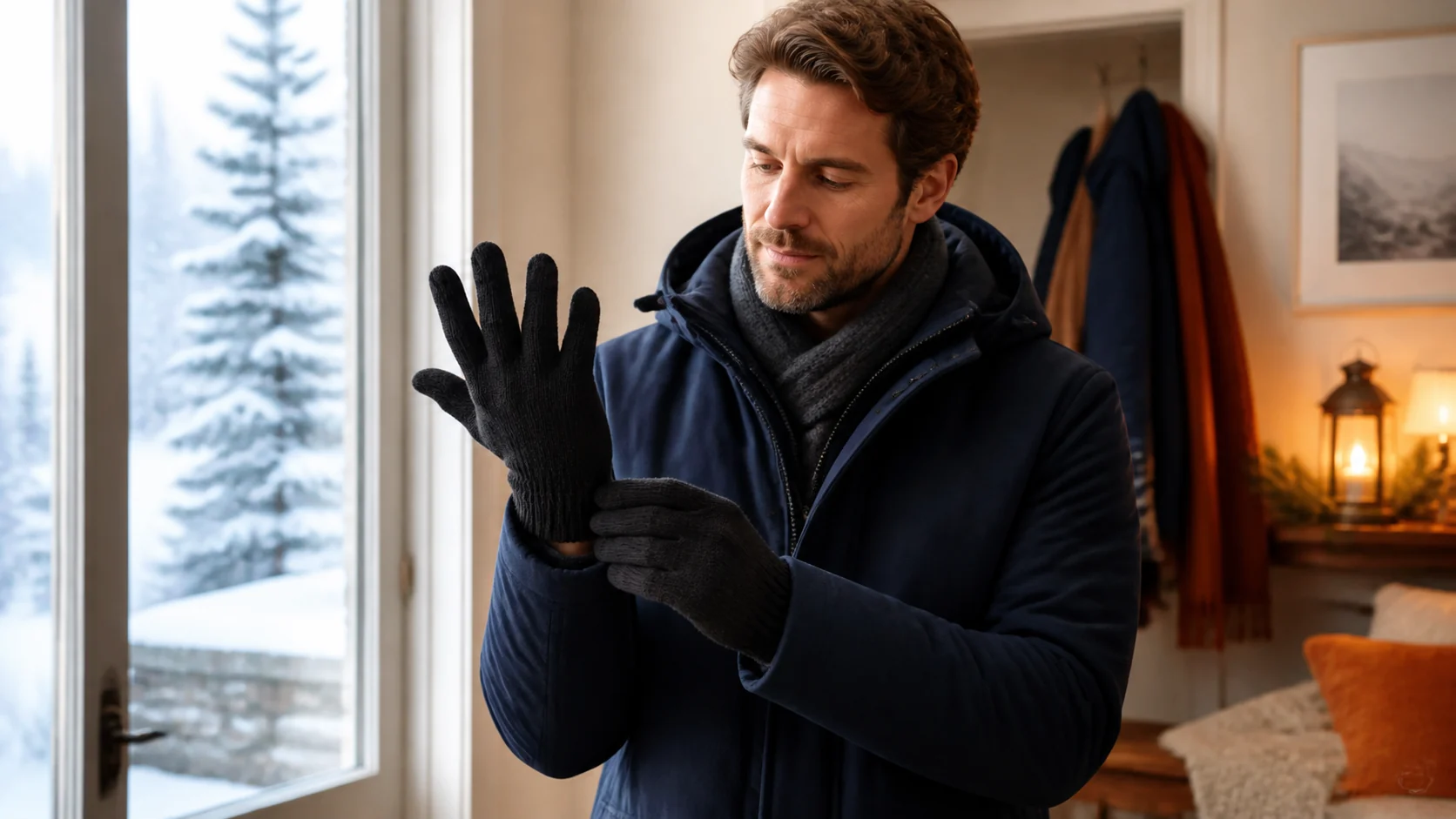
Gloves are a comfort item for the parked pre-drive routine, not a defogging tool. A close-fitting pair can keep hands comfortable while you open the door, start the vehicle, select controls, remove a wet floor mat, or wait outside during warm-up as the manual and local rules permit.
CozyGalar’s fleece-lined black gloves use a blend of 20% merino wool, 10% elastane, 5% conductive fiber, and 65% polyester. Their textured palm and fingers are intended for everyday grip, and their fingertips are designed for compatible touchscreens. They are not verified waterproof, windproof, work-rated, or suitable for extreme cold.
Do not operate a phone while driving, with or without touchscreen gloves. If the gloves become wet, switch to a suitable dry pair and let the CozyGalar pair air-dry. Hand wash cold, air dry, and do not bleach or tumble dry.
Need a dry-cold everyday glove?
See the current CozyGalar listing for sizes and availability. This is a brand-owned commercial link; CozyGalar does not earn an affiliate commission from it.
What Is the One-Minute Pre-Drive Visibility Check?
- Clear exterior snow and safely removable ice from the full vehicle, not only the windshield.
- Remove or dry obvious cabin moisture sources.
- Run the vehicle’s front-defrost sequence until the full windshield is clear.
- Confirm clear side windows, mirrors, lights, cameras, sensors, and plates.
- Make sure wipers move freely and washer fluid is appropriate for the temperature.
- Set navigation, audio, and climate controls before moving.
- Drive only with a complete, stable field of view.
Keep the rest of your cold-weather preparation together with our winter car emergency-kit checklist. If the door itself is frozen, use the separate frozen car-door guide instead of pulling harder.
Sources and editorial notes
- Nissan Parts: How to Defog Windshield in Humidity
- California DMV: Safe Driving Continued
- California DMV: Pre-Drive Checklist — Safety Criteria
- National Weather Service: Ambient Dew Point Temperature
- NHTSA-hosted owner-manual material: windshield defrost operation
Sources were checked September 13, 2026. This is general information, not a replacement for your vehicle owner’s manual, emergency guidance, current traffic law, mechanical diagnosis, or qualified automotive advice. Competitor pages informed the gap analysis, not CozyGalar product claims. Original AI-assisted images were created from brand-owned CozyGalar references where the gloves appear; they are editorial illustrations, not independent product testing or an automotive-brand collaboration.