

Damage-aware winter car care
How Do You Unfreeze a Car Door Without Damaging It?
Diagnose the frozen part first, use the gentlest matching method, and stop before a stuck door becomes a broken handle, torn seal, or unsafe latch.
Safety note: This is general winter-routine guidance, not a replacement for your owner’s manual, product label, roadside assistance, a qualified mechanic, emergency services, weather reports, or local-authority instructions. We did not test these methods on your vehicle.
What Part of the Car Door Is Actually Frozen?
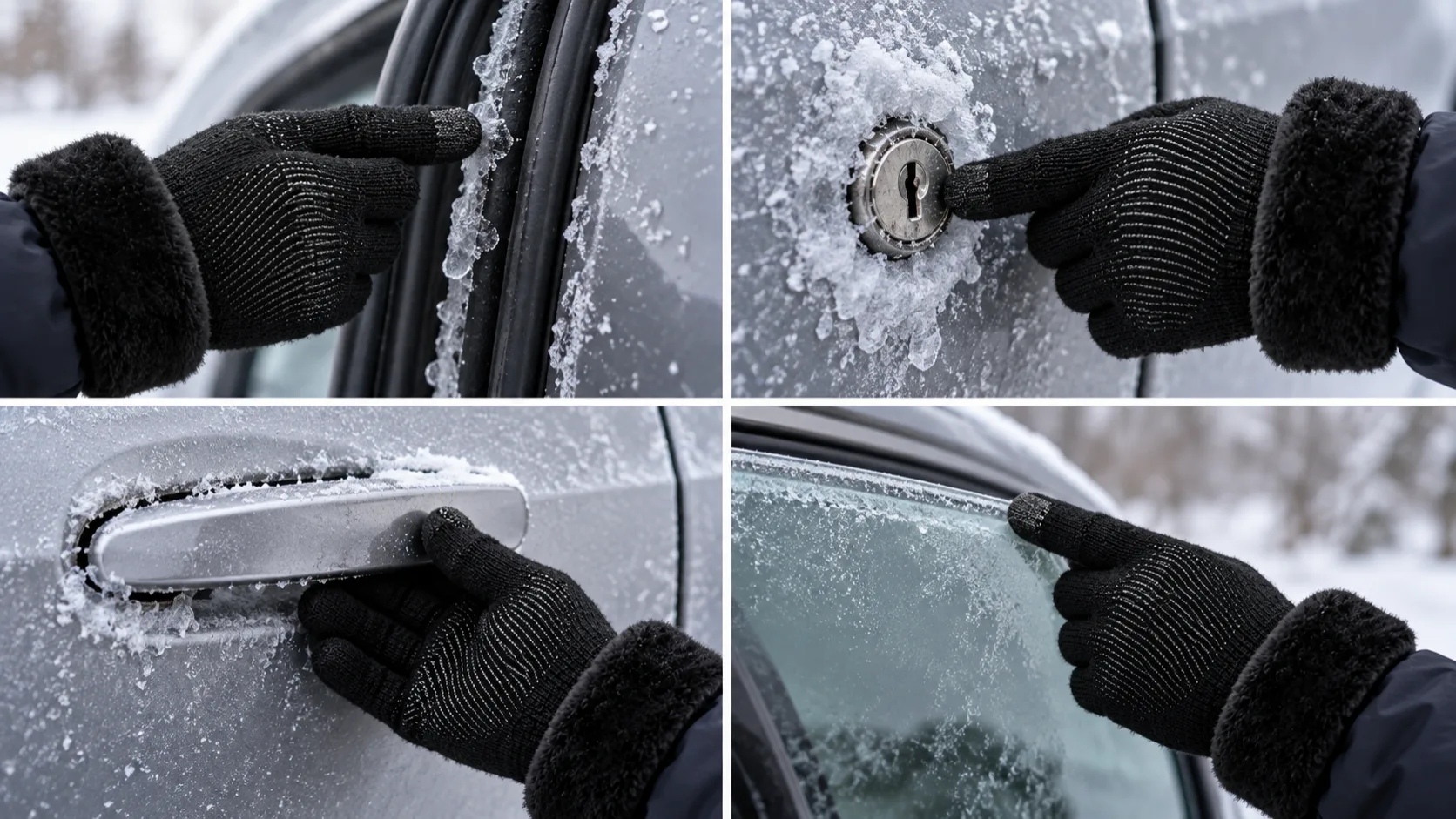
A “frozen door” is not one failure. The lock can release while the rubber seal remains bonded to the frame. A mechanical key cylinder can freeze while an electronic latch still works. A flush handle can be immobilized even though the door seal is free. On a frameless-window car, the glass may be unable to drop as the door opens.
| What you observe | Likely frozen point | Lowest-risk next move | Stop when |
|---|---|---|---|
| Remote unlock sounds normal, but the door will not move. | Rubber seal or ice around the door edge. | Try another door; then press inward gently near the perimeter before a careful pull. | The handle flexes, the seal stretches, or the door still does not release. |
| A mechanical key will not enter or turn. | Lock cylinder. | Use a labeled automotive lock de-icer exactly as directed. | The key bends, the cylinder feels mechanically blocked, or the label/vehicle manual conflicts. |
| The handle itself will not pivot, lift, or extend. | Handle mechanism. | Check the model-specific owner instructions before applying force or chemicals. | The procedure is unclear or the handle does not return to its normal position. |
| Frameless glass does not drop or is bonded at the top seal. | Window-to-seal interface. | Use the maker’s preconditioning/defrost procedure or roadside support. | The glass strains, the regulator moves without the window, or the door cannot reseal. |
| The door opens but will not latch or close normally. | Latch, cable, or remaining internal ice. | Do not drive; warm the vehicle safely or arrange service. | The door cannot be confirmed fully closed and secure. |
What Should You Try First?
Start with options that do not add more moisture, heat, or mechanical load.
- Pause and inspect. Brush away loose snow with a soft tool intended for automotive surfaces. Look for ice around the handle, the door perimeter, and the top edge of any frameless window.
- Confirm the lock state. Listen for the normal unlock sound and watch the lock indicator if your vehicle has one. A released lock does not prove the seal is free.
- Try another normal entrance. Check another passenger door or hatch without forcing it. If one opens, follow the vehicle’s instructions for safe cabin preconditioning. Never run a vehicle in an enclosed garage.
- Use a remote feature only if your model provides it. Some vehicles can precondition or unlatch a door from an app. The control and sequence are model-specific.
- Use gentle inward pressure before pulling. When the lock is released and the seal appears frozen, press the door inward near the latch-side perimeter. Then try the handle normally. Repeat gently, not harder.
AAA Club Alliance likewise warns against excessive force and recommends firm but gentle pressure before pulling. The purpose is to fracture a thin ice bond, not to overpower the handle or latch.
How Do You Free a Frozen Door Seal?
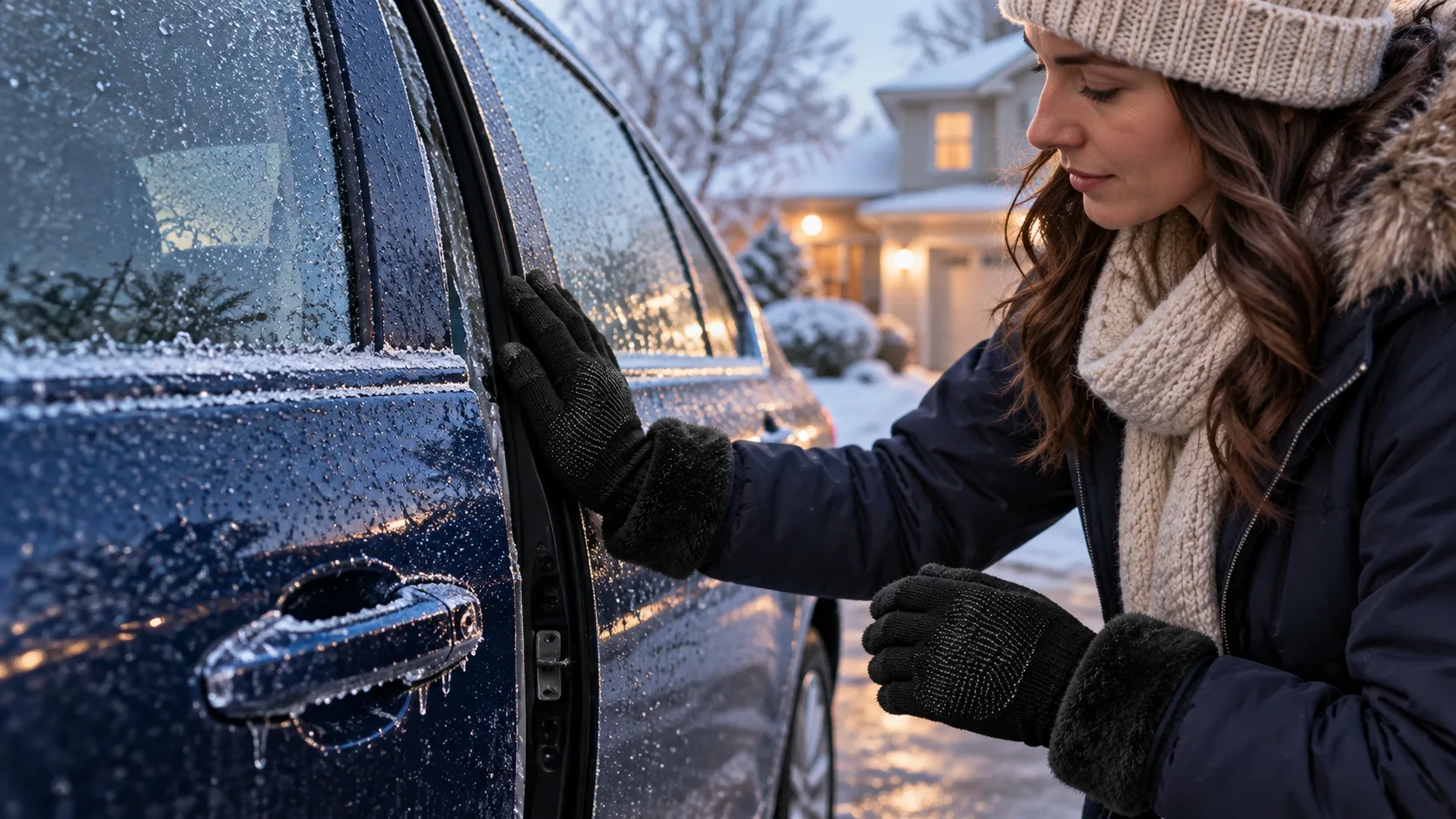
Work around the seal, not through the handle. Press inward with a gloved palm at several points along the perimeter, especially near the latch side. A light change in pressure can break the ice sheet between the rubber weatherstrip and painted frame. Keep your face and fingers away from the gap in case the bond releases suddenly.
If gentle pressure fails, a commercial automotive de-icer may be appropriate around the iced perimeter only when its label and your owner’s manual permit that use. Protect painted, plastic, rubber, sensor, and glass surfaces exactly as directed. Keep the de-icer in the house or another accessible place; a can locked inside the frozen car is not a rescue tool.
Water is not our first-line recommendation. AAA describes warm water as an option and explicitly warns against boiling water because thermal shock can damage glass. Water can also refreeze. A labeled vehicle-safe de-icer and model-specific guidance make a more controlled general plan.
What If the Lock or Handle Is Frozen?
For a frozen mechanical lock cylinder, use a commercial automotive lock de-icer whose label names that use. Insert the nozzle only as instructed, give the product time to work, and keep the key straight. Stop if the key bends, the cylinder feels mechanically blocked, or the product conflicts with the owner’s manual.
For a frozen handle, consult the exact model’s instructions before tapping, heating, spraying, or levering anything. Tesla’s official Model Y service guidance, for example, gives a specific sequence for its flush handle and explicitly says not to use tools or excessive force. That procedure is evidence that handle design changes the answer; it is not a universal instruction for every vehicle.
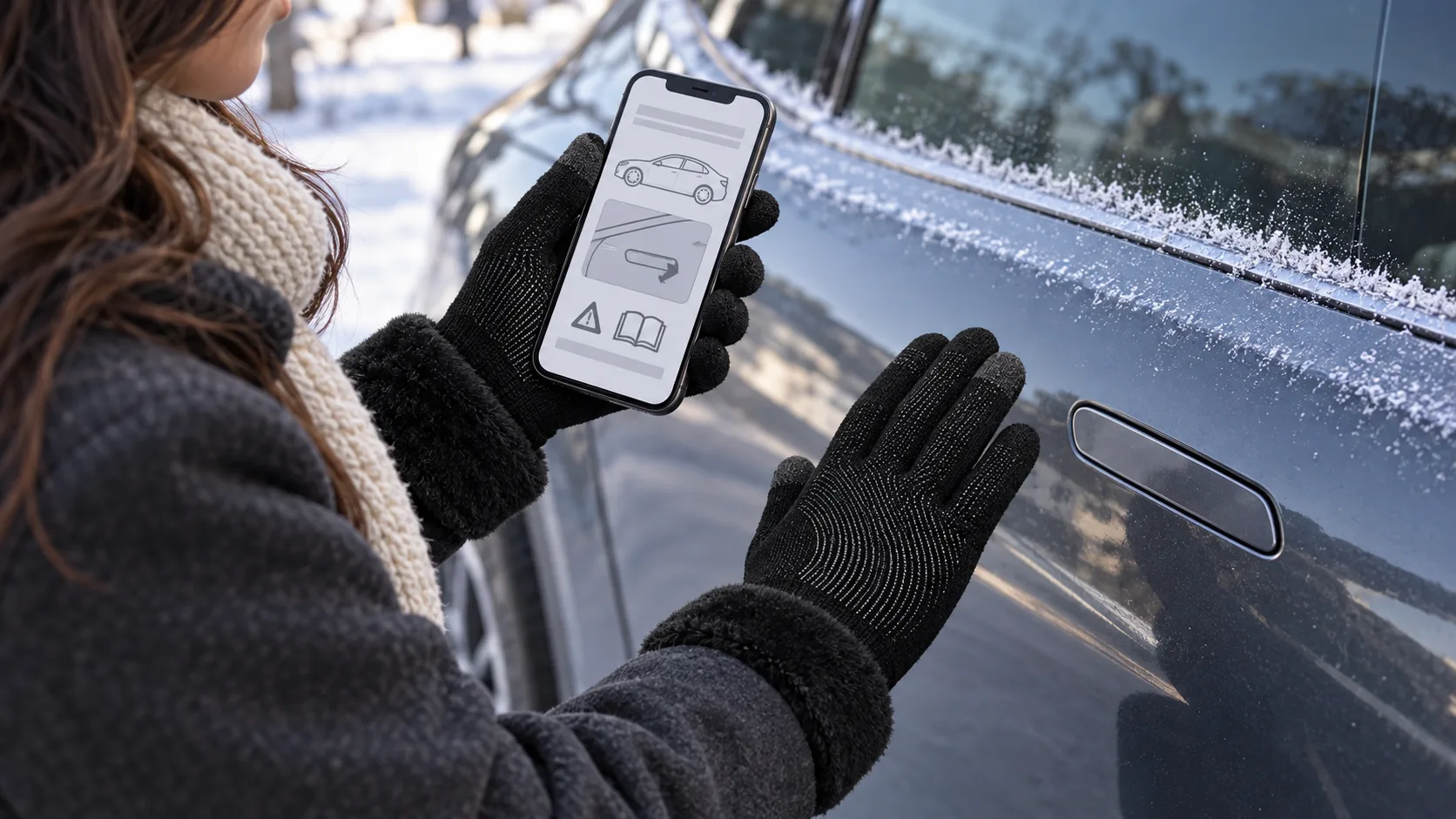
Frameless windows deserve extra caution because the glass may need to move slightly before the door can open. If the glass does not respond normally, use the manufacturer’s cold-weather or preconditioning instructions. Do not pry at the glass or force the door past a frozen upper seal.
Which Frozen-Door Methods Should You Avoid?
Avoid any method that is hard to control, adds a second hazard, or can damage a component before you know what is frozen.
- Do not yank the handle. A handle is leverage, not an ice breaker; force can damage the handle, linkage, or seal.
- Do not pry with metal. Screwdrivers and similar tools can scratch paint, cut weatherstripping, bend trim, or load the glass.
- Do not use boiling water. Thermal shock can damage cold glass, and the added water may freeze again.
- Do not use an open flame or heat gun. Flames threaten paint, plastic, electronics, fuel vapors, clothing, and hands; concentrated heat is also difficult to control.
- Do not substitute kitchen or personal-care products by default. Online lists disagree about vinegar, sanitizer, petroleum jelly, cooking spray, and general lubricants. Use only products allowed by the vehicle maker and the product label.
- Do not drive with an uncertain latch. Opening the door is only half the job. It must close and latch normally before the vehicle moves.
How Do You Prevent the Door From Refreezing?
Once the door opens, remove loose ice and dry the weatherstrip and mating frame with a clean microfiber cloth. Open and close the handle normally several times only if the manufacturer allows it. Confirm that the window, handle, lock, and latch return to their usual positions and that the door closes fully.
Before the next freeze:
- Wipe moisture from door jambs and weatherstripping after washing the car, wet snow, or freezing rain.
- Park under cover when practical and check the local forecast before a temperature drop.
- Use only a manufacturer-approved treatment for rubber seals, locks, or handle pivots. The correct product can differ by vehicle and component.
- Keep a labeled automotive lock de-icer, clean microfiber cloth, and the roadside-assistance number somewhere accessible outside the vehicle.
- Save or download the vehicle’s cold-weather instructions before a storm, especially for flush handles and frameless windows.
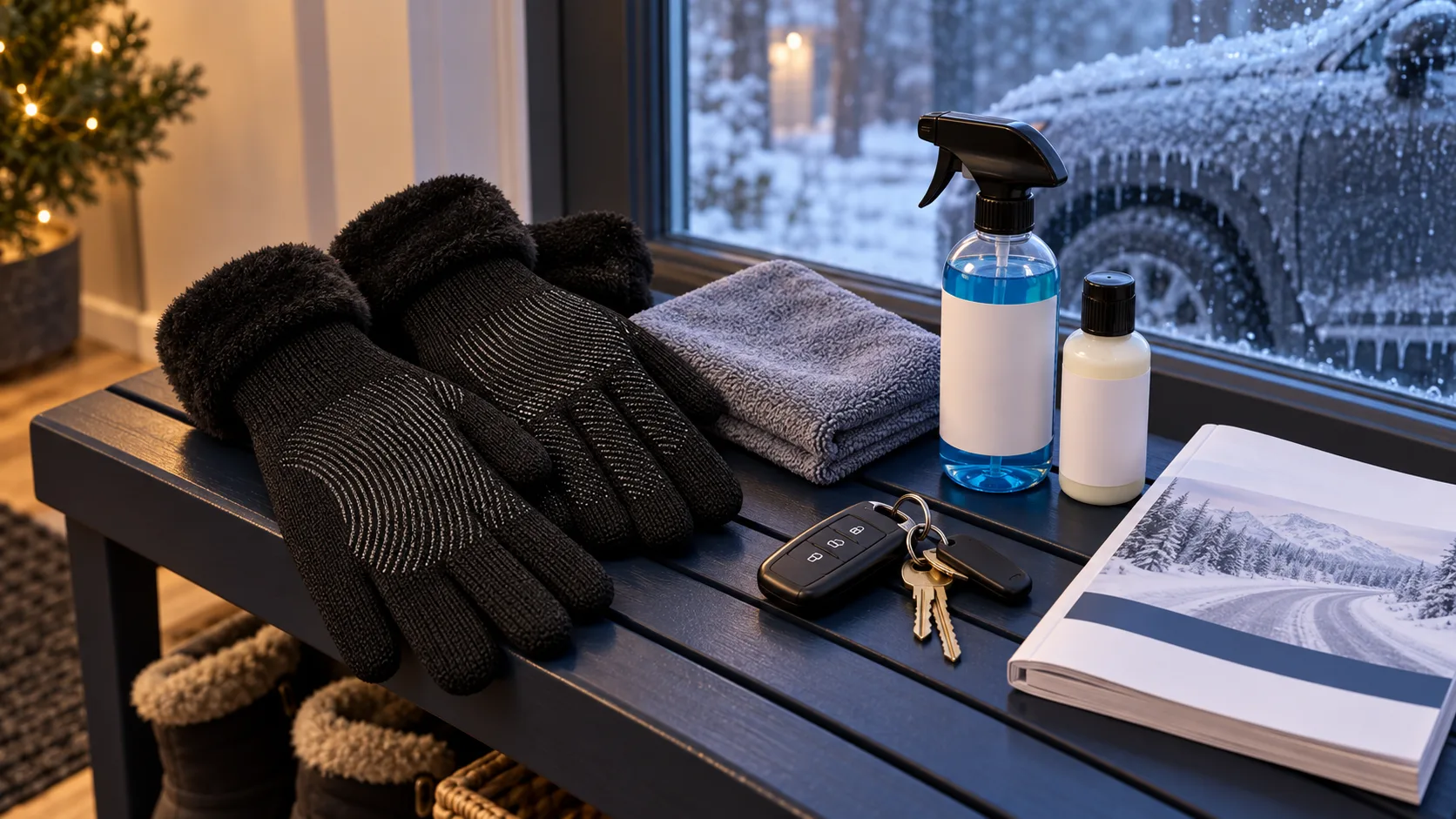
For the rest of the vehicle, use our separate guide to remove windshield ice without improvising on the glass. A complete winter car emergency kit also prepares you for delays after you get inside.
Where Do Everyday Winter Gloves Fit?
Everyday gloves help limit skin contact with a cold handle and can preserve dexterity while you inspect the door, use a phone, or hold a clean cloth. A close fit is useful because loose fingertips make small controls harder to manage. Textured grip can help with ordinary objects, but it is not proof of secure grip on wet ice or chemicals.
CozyGalar gloves are black wool-blend knit gloves with fleece lining, conductive fingertips, and a textured palm/finger surface. They are intended for ordinary cool-to-cold routines. They are not waterproof, chemical-resistant PPE, cut protection, impact protection, or an extreme-cold system. Do not let de-icer soak into them; follow the chemical label’s protection instructions and change out of wet gloves.
After the vehicle is safely closed and road-ready, our winter driving glove guide explains the separate warmth-versus-control decision inside the cabin.
For ordinary dry winter routines
CozyGalar’s fleece-lined wool-blend knit gloves are a practical everyday option for cold door-to-car moments, phone checks while parked, and routine errands. They are not automotive PPE or a substitute for model-specific cold-weather instructions.
Commercial disclosure: CozyGalar owns this product link. It does not generate an affiliate commission.
When Should You Stop and Call for Help?
Stop when you cannot identify the frozen component, the manual gives a different procedure, the handle or key begins to flex, the glass does not move normally, the lock seems mechanically damaged, or the door opens but will not close and latch securely. Contact roadside assistance, the vehicle maker, or a qualified repair facility.
Also separate the door problem from the driving decision. NHTSA advises checking weather and traffic conditions and postponing non-essential travel when roads are not in good shape. Getting the door open does not make an icy route safe.
Frequently Asked Questions
Can I pour hot water on a frozen car door?
Do not use boiling water. AAA warns that temperature shock on cold glass can cause damage. Even lukewarm water can refreeze, so a labeled automotive de-icer and vehicle-specific instructions are a more controlled general approach.
Why does the car unlock but the door still not open?
The latch may have released while the rubber seal remains frozen to the frame. Try another door, then use gentle inward pressure around the perimeter before a careful pull. Stop if the handle flexes or the seal stretches.
Should I keep lock de-icer in the car?
Keep at least one accessible outside the locked vehicle, such as in the house. Store it according to the label. A second product in a winter kit can help after entry, but it cannot solve a door that traps the only can inside.
Can I drive after the door finally opens?
Only after the handle, window, lock, and latch work normally and the door closes fully and securely. If it will not latch, do not drive. Resolve the ice or mechanical problem first.
Sources and Methodology
Research was checked September 9, 2026 for the US market. OpenSEO supplied live keyword metrics, SERP composition, and competitor data. We read six relevant ranking pages and separated their coverage patterns from factual evidence. No first-hand vehicle or product testing was performed.
- AAA Club Alliance: thawing frozen car doors and locks
- Tesla Model Y service guidance: removing ice from a flush handle
- NHTSA: winter driving preparation and go/no-go guidance
- Coverage comparison: Christian Brothers Automotive, Aceable, Uniroyal, Girls Auto Clinic, and Don Lee’s Tire & Auto.
Original AI-assisted editorial imagery is based on brand-owned CozyGalar glove references. It is not vehicle-manufacturer guidance, an exact vehicle depiction, a collaboration, endorsement, or test result.