

Rink-ready hand comfort
What Are the Best Gloves for Ice Skating?
Choose by the session and the real risk: casual warmth, cushioning for repeated falls, or manufacturer-described cut resistance.
Price, rating, and availability check: September 8, 2026. Stock, review counts, and prices change, so confirm the exact size, shipping date, and final price before ordering.
Editorial disclosure: CozyGalar’s Amazon link is brand-owned and commercial. SkatingSpirit, Edea, Skates US, Figure Skating Store, and all other third-party links are unpaid; CozyGalar earns no commission from them. We did not personally test these gloves. Brand specifications, retailer facts, official guidance, customer ratings, and community anecdotes are labeled separately. Original AI-assisted images are illustrative—not exact third-party product photographs, endorsements, certifications, or product-test evidence.
Which ice skating gloves should you buy?
Buy for the session you will actually skate. A relaxed public session, a class built around new skills, and a crowded practice with sharper blade-contact concerns are different hand problems.
| Best for | Exact current option | Live buying evidence | Material drawback |
|---|---|---|---|
| Casual recreational warmth | CozyGalar Fleece Lined Wool Winter Gloves | $11.99; In Stock; S–XL shown in stock; 4.4/5 from 1,195 Amazon customer ratings. | Not padded, waterproof, windproof, cut resistant, skating certified, or extreme-cold rated. Grip and touchscreen response are not guaranteed. |
| Lessons or practice with repeated falls | SkatingSpirit Padded Skating Gloves | $24.99; Add to Cart; sizes displayed. The brand page showed no aggregate rating or review count. | Brand specifies gel padding and water-resistant fabric, but displays no standardized impact or cut-protection rating. |
| When blade-contact risk is a priority | Edea Cut Resistant E-Gloves at Skates US | $69; Add to Cart; S/M/L. No aggregate rating or review count displayed; evidence is retailer availability plus manufacturer specifications. | The checked pages exposed no EN388 or ANSI cut rating. Cut resistant is not cut proof and cannot guarantee against injury. |
| Low-cost spare | Kami-So Magic Gloves at Figure Skating Store | $3.50; Choose Options. No aggregate rating or review count displayed. | Basic thin knit only; no visible padding, waterproofing, or cut-protection claim. It is not a safety upgrade. |
Fast fallback: If a padded glove is unavailable, do not treat a basic knit spare as equivalent protection—shorten or change the practice plan with your instructor. If Edea’s price or missing numerical cut rating does not meet your requirement, ask the rink, coach, or maker for the relevant protection standard before buying. For a casual session, use a glove you already own if it fits securely and passes the movement check below.
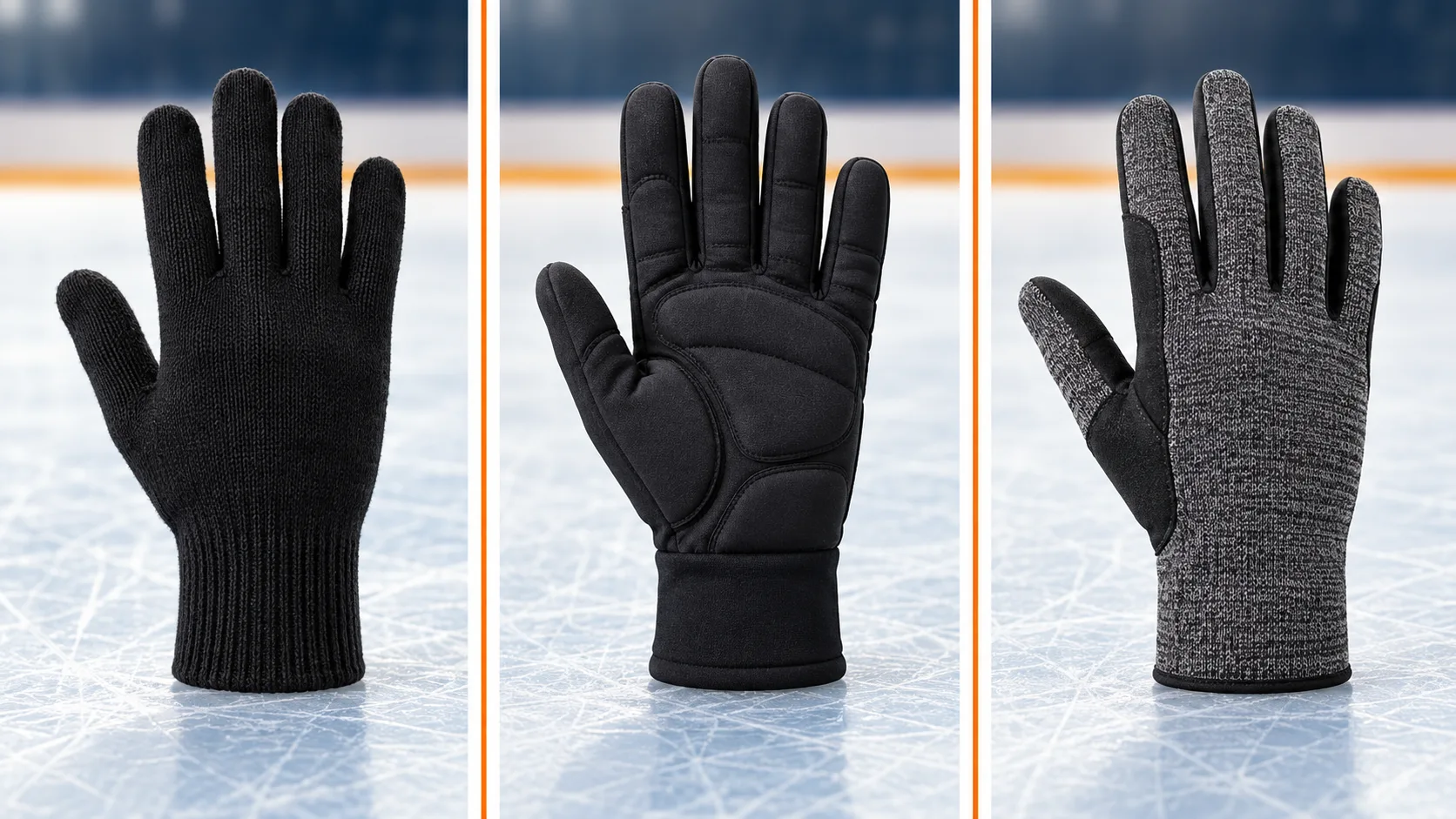
Do you need ordinary knit, padded, or cut-resistant gloves?
Start with the consequence of the likely failure—not the longest feature list.
Choose ordinary knit for low-risk casual warmth
A close-fitting knit glove is the economical choice for easy laps, a short session, or the off-ice walk to the rink. It should cover the skin, stay out of the way, and let you move each finger naturally. This category is about comfort and basic coverage. It is not a substitute for protective equipment.
Choose padding when repeated falls are part of practice
Purpose-built skating gloves can place cushioning around common hand-contact zones. SkatingSpirit says its $24.99 model uses three gel pads, a silicone-coated palm, fleece lining, water-resistant fabric, and a touchscreen thumb. That is brand-supplied specification evidence, not an independent impact test. Buy it if cushioning is the feature you need; do not infer blade-cut protection from the word “padded.”
Investigate cut resistance when blade contact is a material concern
Edea describes an internal anti-cut material around the palm and fingers, plus palm padding and three touch-sensitive fingertips. Skates US listed the glove at $69 with Add to Cart. The limitation matters: neither checked page displayed a numerical EN388 or ANSI cut rating. Ask what test or standard supports the claim if your risk assessment depends on it. No textile glove is a promise against injury.
How much warmth does an indoor ice rink require?
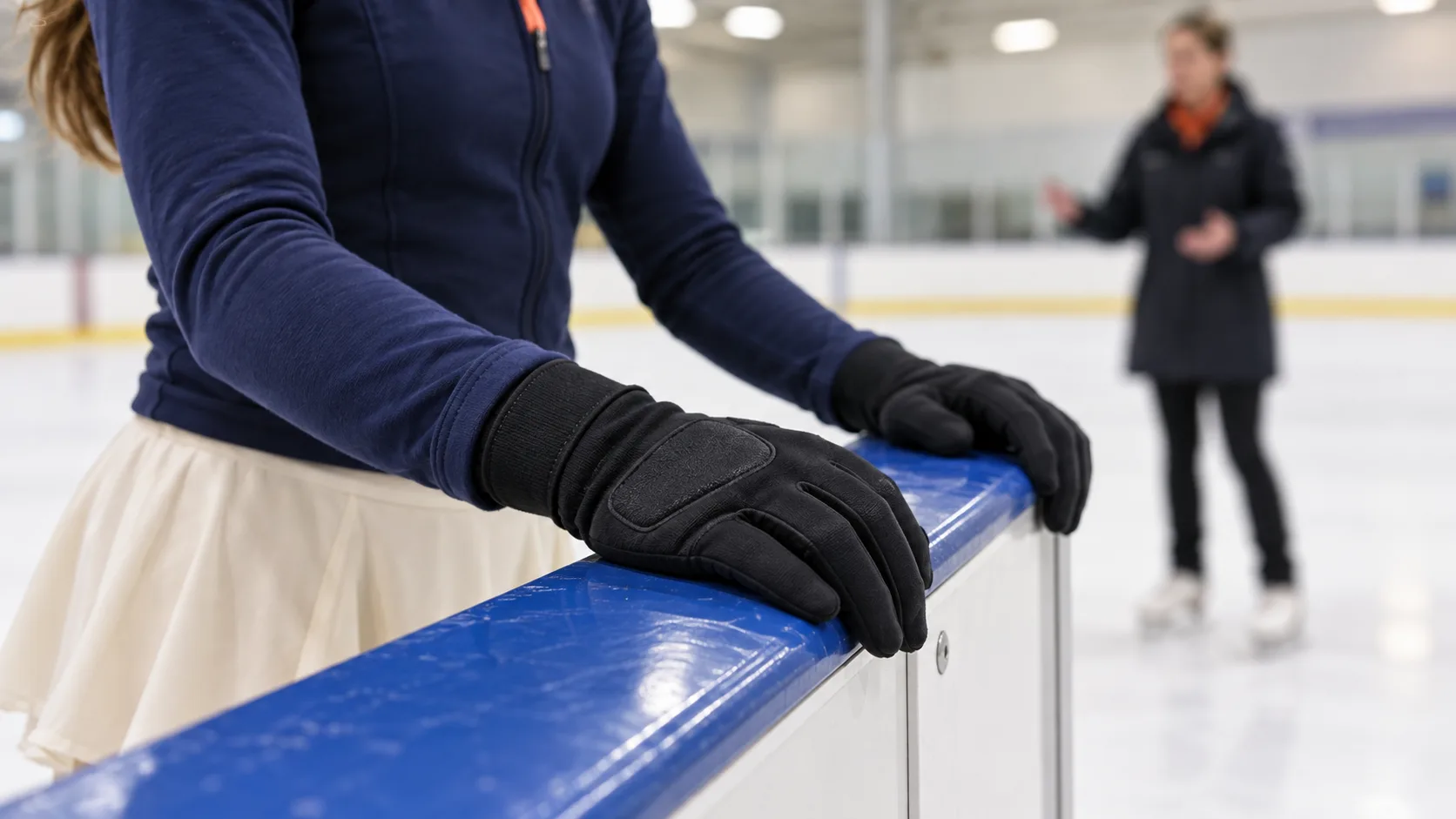
Indoor does not mean warm. A Learn to Skate USA lesson guide says indoor arenas are commonly cool and recommends warm, comfortable layers plus gloves or mittens. Treat that as planning guidance, not a universal thermostat: rink design, seating area, session length, activity level, and your circulation all change comfort.
For active skating, the warmest-looking glove can be the wrong one if it becomes sweaty or bulky. Choose enough insulation to stay comfortable while keeping natural hand motion. For outdoor ponds or rinks, wind and wetness can change the problem quickly; a knit glove is not a weather shell. Read our separate guide on why knit gloves should not be assumed waterproof.
Bring a dry spare when wet snow, repeated contact with ice, or a long outdoor session is plausible. If a liner makes the glove tight, it can reduce movement and compress insulation; see when glove liners help.
What should beginners wear for a first lesson?
Follow the rink and instructor first. Learn to Skate USA recommends warm layers, gloves or mittens, and a helmet for beginner skaters of all ages. This article does not replace that guidance or teach fall technique.
- Gloves: secure at the wrist, dry at the start, and appropriate to the class. Ask whether padded or cut-resistant construction is expected.
- Helmet: use the rink or program’s guidance; Learn to Skate USA recommends one for beginners of all ages.
- Clothing: warm, flexible layers that do not trail or restrict knees and hips.
- Fit check: open and close both hands, bend every finger, and verify that excess fabric does not fold over the fingertips.
- Stop plan: know where to warm up and replace a wet glove. Stop if numbness, pain, or lost coordination develops.
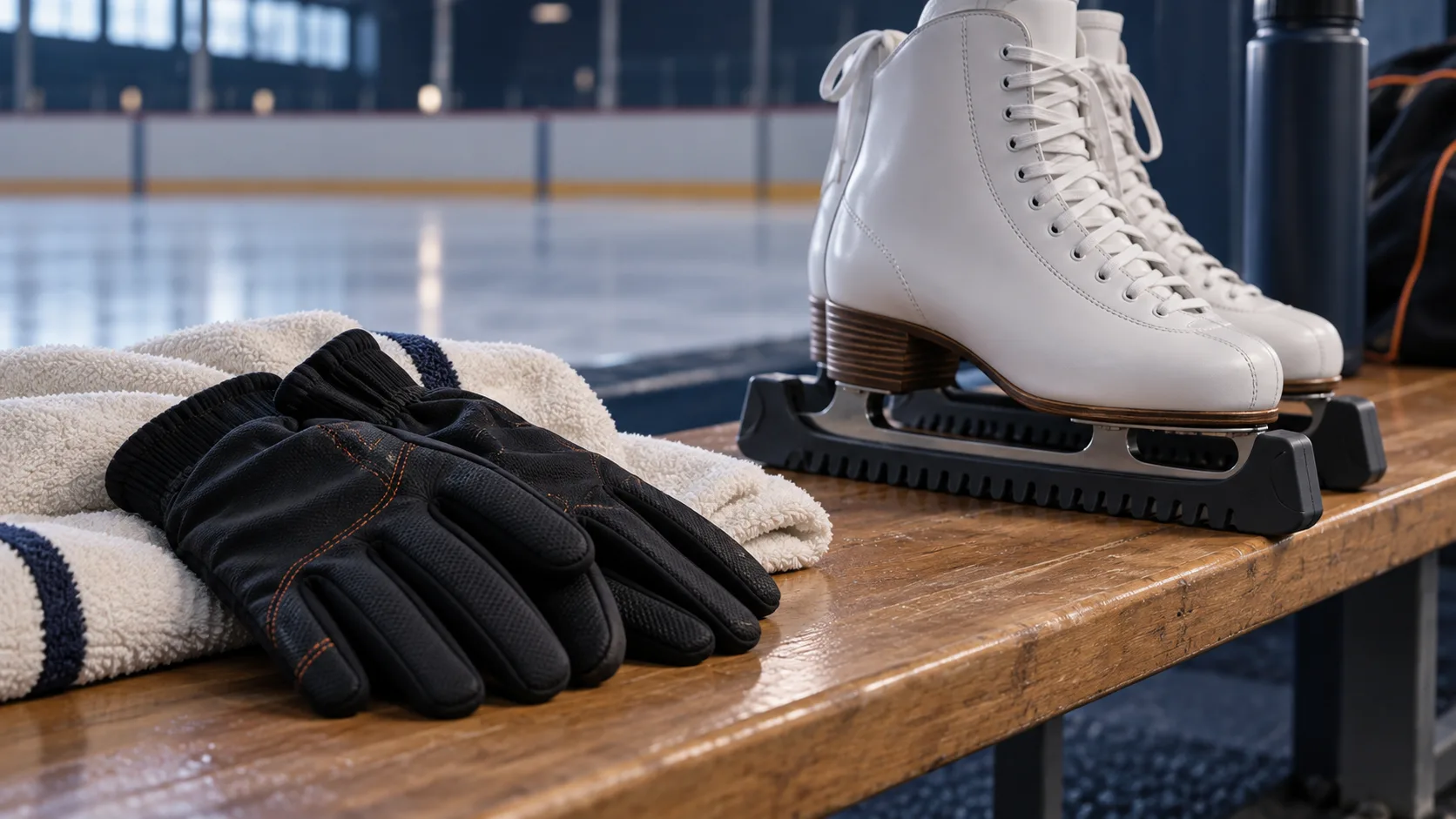
How should ice skating gloves fit?
The glove should move with you without compressing the hand. Too much fingertip space can fold and snag; too little can pull seams, restrict movement, and reduce useful insulation. Use the maker’s current chart, then run this stationary check before stepping on the ice:
- Seat each finger fully. The fingertip should reach the glove end without painful pressure or a loose flap.
- Open wide, make a relaxed fist, and spread again. Stop if seams bite, the lining twists, or fingers cannot move independently.
- Check the wrist. The cuff should stay secure under normal movement without cutting circulation.
- Use the smallest item you need. Try a locker key, zipper, lace guard, or phone while standing off the ice.
- Repeat when cool. A glove that feels fine in a warm room can behave differently at the rink. Keep the first check close to warmth and help.
For hand-measurement mechanics, use our complete winter-glove fit guide. Fit advice is model-specific; your everyday size is only a starting point.
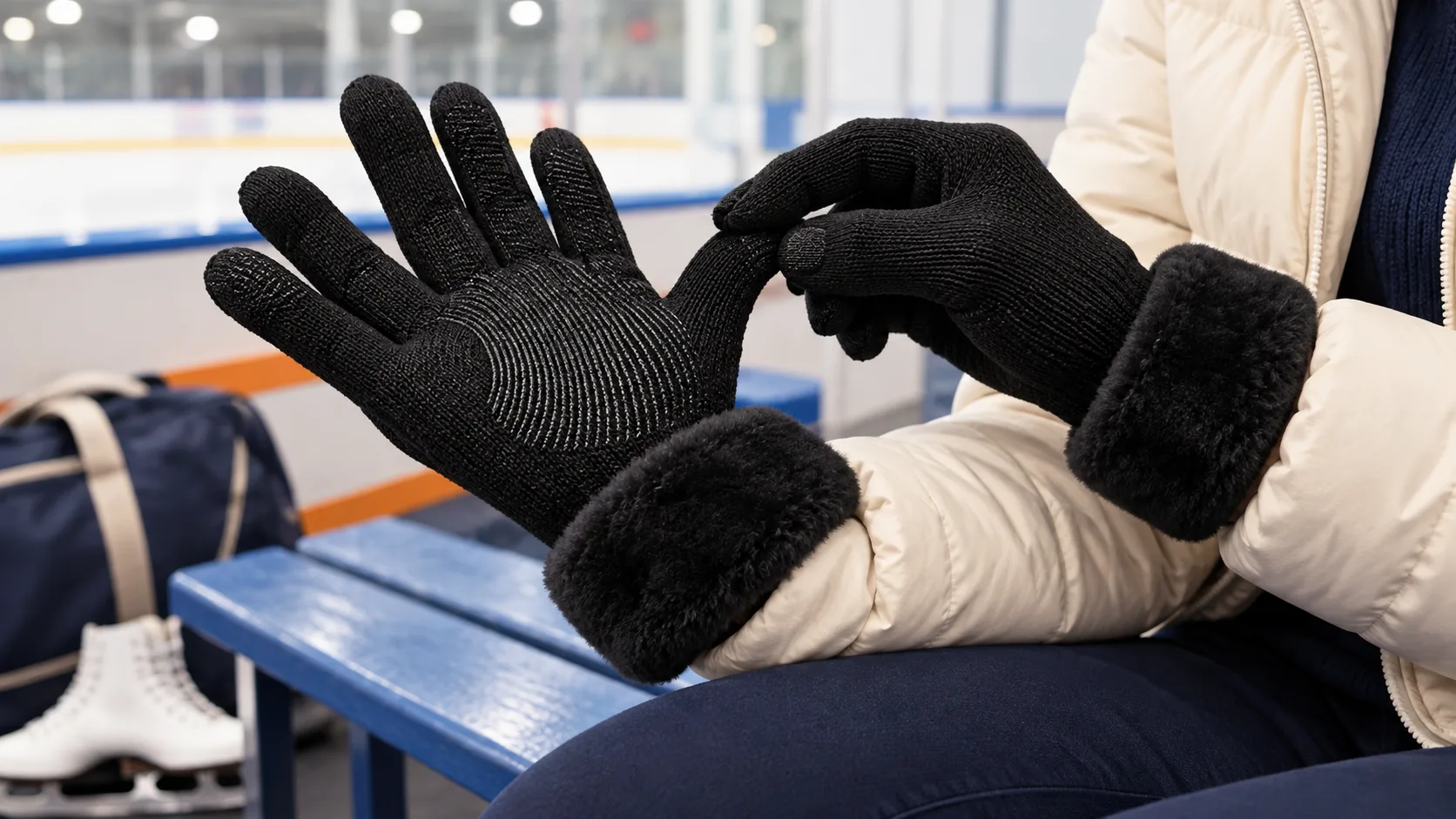
Can CozyGalar gloves work for casual ice skating?
Yes—for the limited job they actually do. CozyGalar is a budget fleece-lined knit glove for everyday cold-weather comfort. The verified blend is 65% polyester, 20% merino wool, 10% elastane, and 5% conductive fiber. Amazon showed $11.99, In Stock, sizes S–XL, and 4.4/5 from 1,195 customer ratings on the check date.
Reasonable role: relaxed indoor public skating, the walk between parking and the rink, or a short dry outdoor session where a basic warm glove fits the rink’s rules and your own risk decision.
Wrong role: repeated-fall practice, blade-contact protection, wet outdoor ice, strong wind without a shell, prolonged exposure, or any setting that requires certified protection. CozyGalar is not padded, waterproof, windproof, cut resistant, skating certified, or extreme-cold rated. Its textured palm and conductive fingertips may help in some situations, but grip and touchscreen response vary and are not guaranteed.
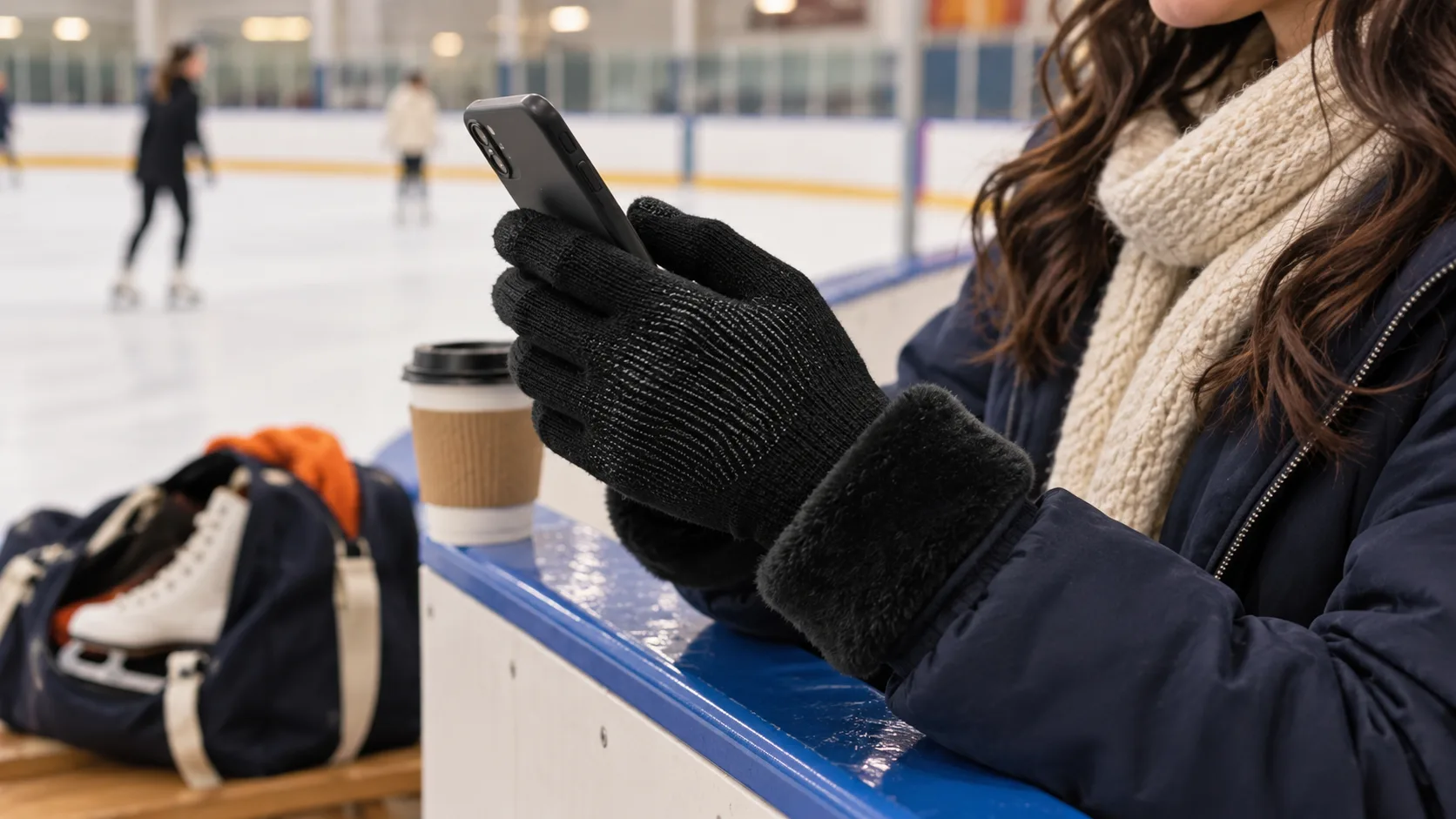
What glove claims should you treat carefully?
- “Protective” without a test: ask what hazard, test method, and numerical level the word refers to.
- “Cut resistant” as “cut proof”: resistance can reduce some risk; it does not eliminate it.
- Padding as blade protection: cushioning and cut resistance solve different problems.
- Water resistant as waterproof: brief splashes and sustained wet contact are not the same exposure.
- Touchscreen compatible as guaranteed: screen, protector, fit, finger alignment, pressure, temperature, and moisture all affect response.
- A high customer rating as a lab test: ratings describe customer experience, not certified impact or cut performance.
Community discussions can still be useful for discovering fit complaints or spare-glove habits, but a forum anecdote does not establish consensus. The checked Reddit discussion included people who preferred thin running or liner gloves and others who mentioned skating-specific brands; those comments helped identify questions, not prove performance.
Frequently asked questions
Are mittens better than gloves for ice skating?
Mittens can reduce exposed surface area and may feel warmer, while gloves allow more independent finger movement. The better choice depends on the session, program rules, and whether you need keys, laces, or small controls. Neither shape proves padding or cut resistance.
Should figure-skating gloves be thin?
Thin gloves can improve feel and dexterity for some skaters, but practice goals and risks matter more than a universal thickness rule. If repeated falls or blade contact is a concern, compare purpose-built features and their supporting evidence rather than buying on thickness alone.
Can I wear running gloves for ice skating?
For an easy, low-risk session, a close-fitting running glove may provide basic warmth and movement. It should not be treated as padded or cut resistant unless the exact maker supplies that evidence. Check wrist security, dry-condition suitability, and rink requirements first.
Do I need waterproof gloves for indoor skating?
Not automatically. Indoor sessions can still wet gloves through ice contact, but full waterproofing may add bulk. Choose for the expected contact and bring a dry spare if falls are likely. For outdoor ice, wind and precipitation make weather protection more important.
How do I warm cold hands safely at the rink?
Leave the ice, replace wet gloves, add dry layers, and use the rink’s warming area. Do not keep skating with numb or poorly coordinated hands. Our cold-hands troubleshooting guide covers routine causes, but persistent or severe symptoms need professional advice.
Need the casual-warmth option?
CozyGalar is the budget knit pick for relaxed indoor laps and the dry off-ice routine—not the padded or cut-resistant choices above. Check the current Amazon size, price, and availability only if those limits match your session.
Sources and methodology
- Learn to Skate USA / U.S. Figure Skating: lesson preparation guide
- SkatingSpirit: Padded Skating Gloves
- Edea: E-Gloves Anti-Cut
- Skates US: Edea Cut Resistant E-Gloves
- Figure Skating Store: Ice Skating Gloves
- Discount Skatewear: Gloves
- CRS Cross: Padded Figure Skating Gloves
- XAMAS: ice-skating glove guide
We inspected all 27 live CozyGalar posts, evaluated ten candidates across the Amasty retail-blog ideation framework, used OpenSEO for current US keyword metrics and three live SERPs, and read nine official, manufacturer, retailer, specialist, and community sources. Purchase facts were checked September 8, 2026. We found no independent test that establishes protection performance for the three main picks, so none is implied.