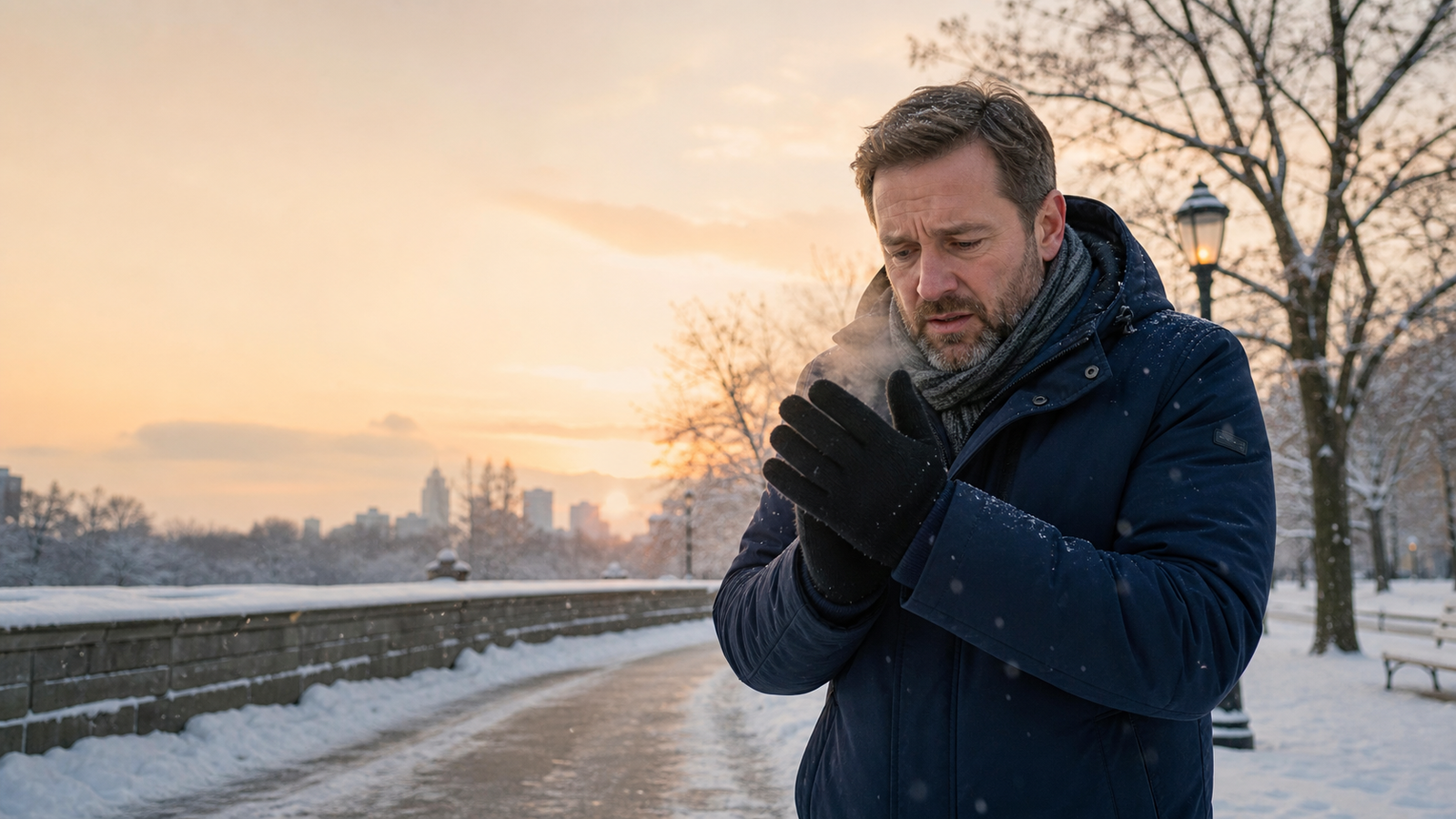


Winter driving preparedness
What Should Be in a Winter Car Emergency Kit? 21 Essentials
Build for five jobs: make the car visible, restore basic mobility, stay warm, communicate, and cover essential food or medical needs. Then put the items you may need while trapped inside the passenger compartment—not only in the trunk.
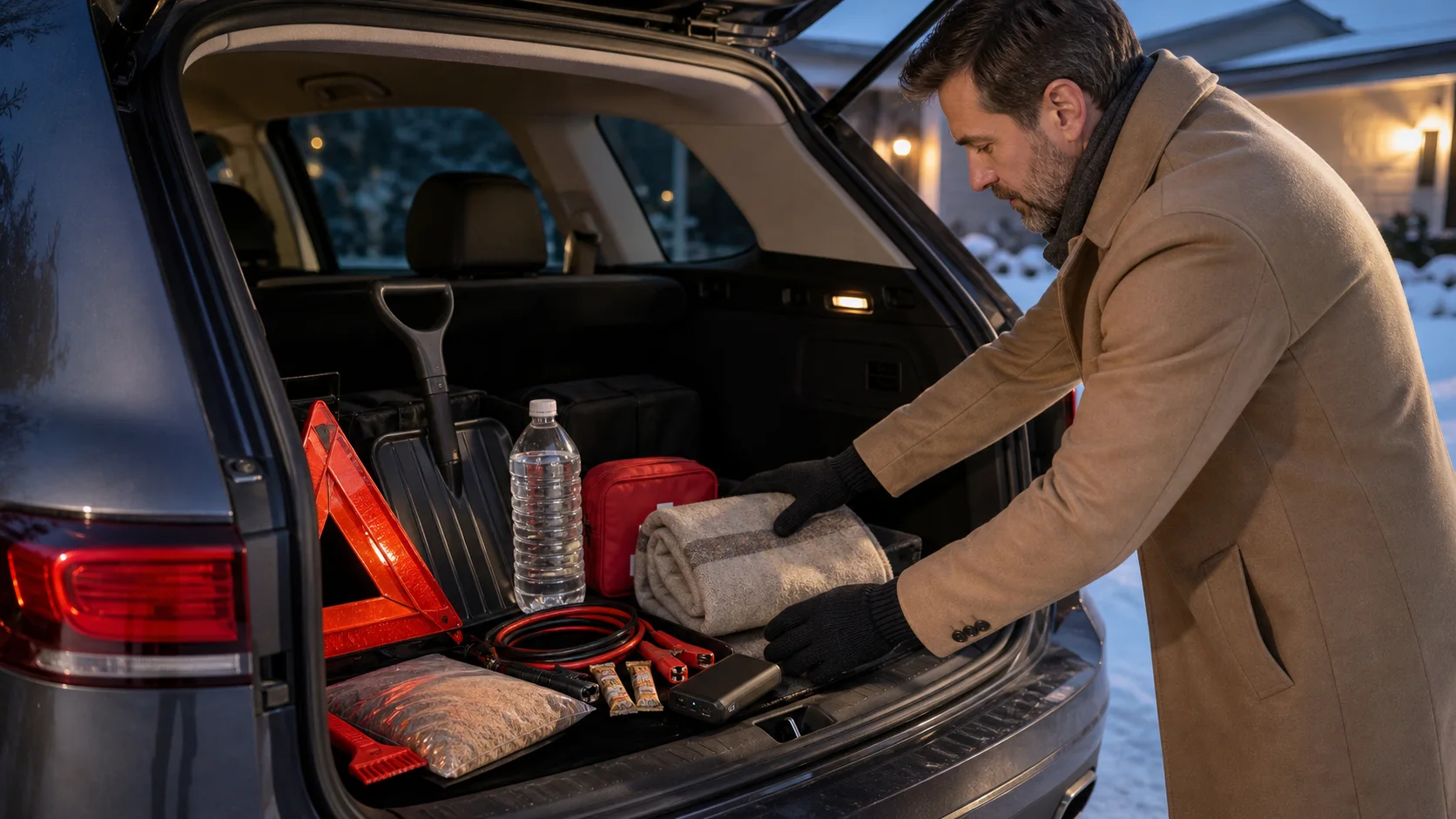
Safety note: This checklist supports preparation; it does not replace current weather alerts, local transportation guidance, vehicle-specific instructions, or emergency services. The safest choice in a severe forecast may be to postpone nonessential travel. Never use gear you have not learned to operate safely.
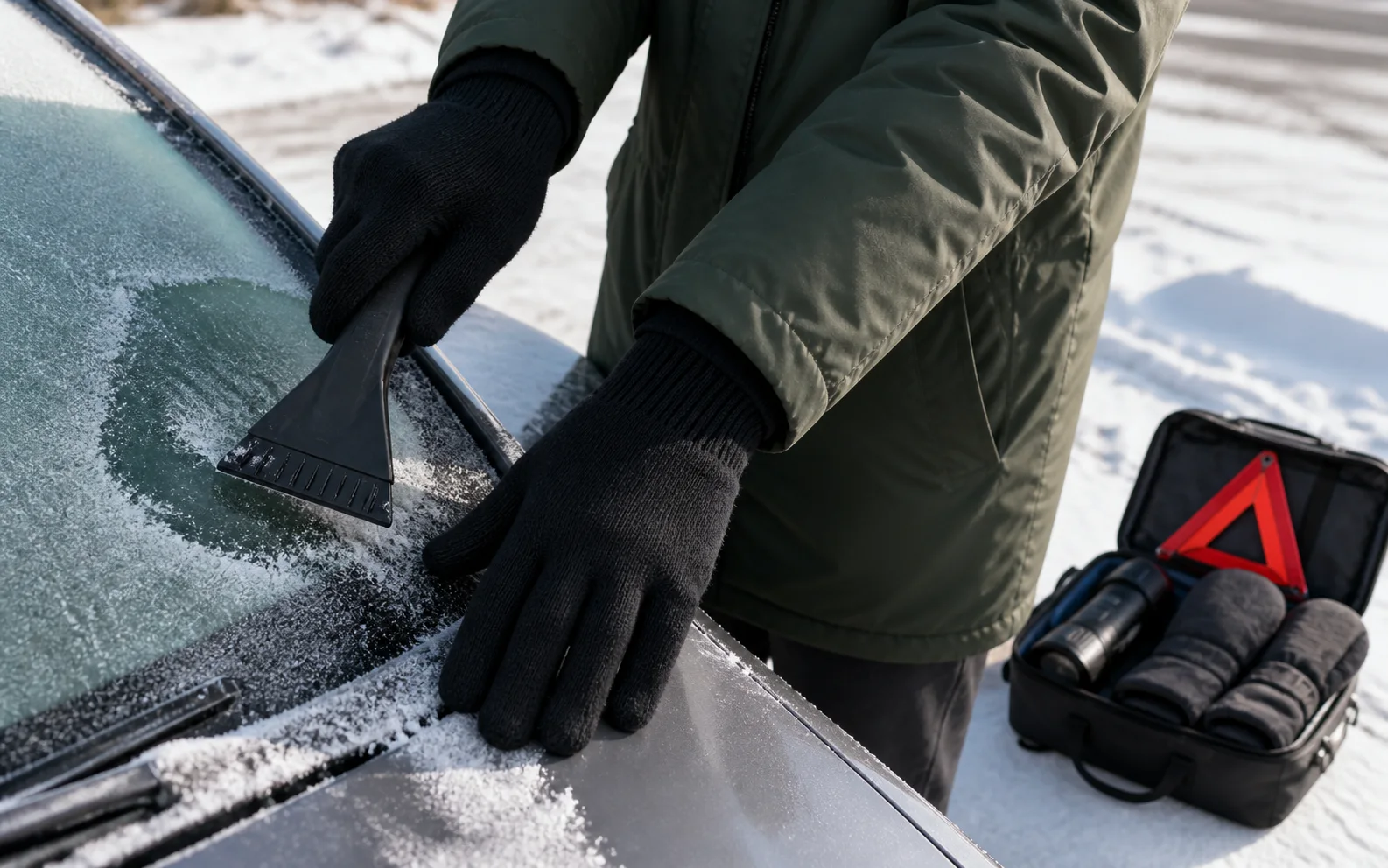
Editorial disclosure: CozyGalar sells the knit gloves linked below and may benefit from purchases. We receive no commission for the independent public-safety sources cited in this guide. We did not laboratory-test the emergency products illustrated here, and the images are original editorial composites rather than test evidence.
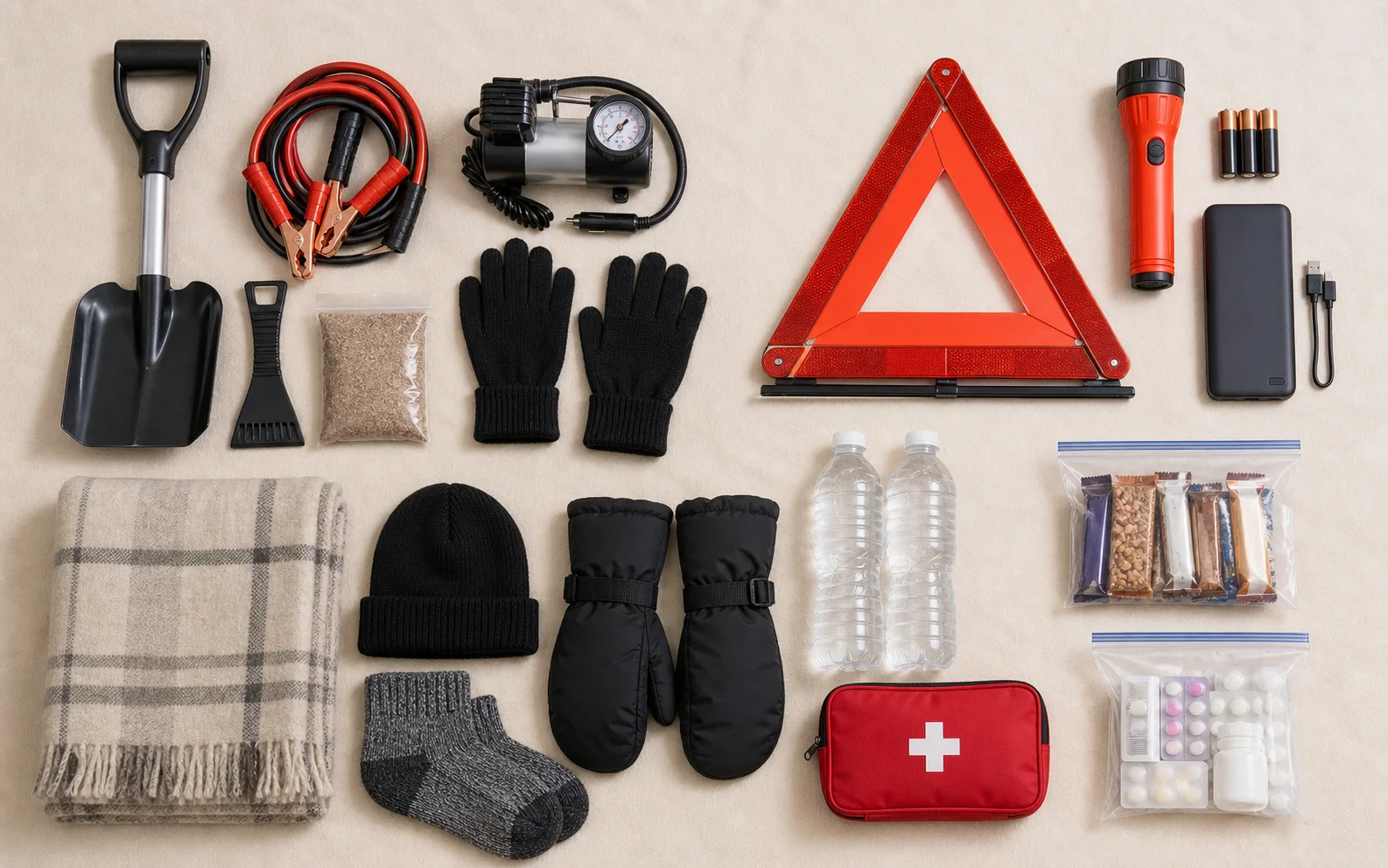
The 21-item winter car emergency kit checklist
Instead of buying a mysterious prepacked bag, use this list to see which failure each item solves. A ready-made kit can be convenient, but check every component: tiny tools, expired food, an undersized blanket, or a power bank you never recharge create false confidence.
| # | Essential | What it does | Where to keep it |
|---|---|---|---|
| 1 | Snow brush and sturdy ice scraper | Clears glass, lights, roof, and sensors before driving | Cabin |
| 2 | Compact snow shovel | Clears around tires and the exhaust outlet | Trunk/cargo area |
| 3 | Sealed abrasive traction material | May improve tire grip on packed snow or ice | Trunk/cargo area |
| 4 | Jumper cables or charged jump pack | Addresses a weak or dead 12-volt battery | Trunk/cargo area |
| 5 | 12-volt tire inflator and gauge | Restores pressure after a slow leak where appropriate | Trunk/cargo area |
| 6 | Three reflective warning triangles | Improves stopped-vehicle visibility where placement is safe and legal | Easy-access cargo pocket |
| 7 | Bright flashlight or headlamp | Provides task light without using the phone | Cabin |
| 8 | Spare batteries or crank light | Adds a cold-weather backup for lighting | Cabin |
| 9 | High-visibility vest | Makes the wearer easier to see if exiting is necessary and safe | Driver-door pocket |
| 10 | Car charger and charged power bank | Preserves phone communication and navigation | Cabin |
| 11 | Battery or hand-crank weather radio | Provides alerts if mobile service or phone power fails | Cabin |
| 12 | Blanket or compact sleeping bag | Reduces heat loss during a long delay | Cabin or rear-seat floor |
| 13 | Warm hat | Adds readily adjustable insulation | Cabin |
| 14 | Dry wool-blend socks and winter boots | Replace wet socks and protect feet if walking is unavoidable | Cabin/cargo area |
| 15 | Everyday dexterity gloves | Help with phone, scraper, keys, and light tasks in ordinary dry cold | Cabin |
| 16 | Waterproof insulated backup mittens or gloves | Provide more appropriate protection for prolonged wet or severe exposure | Cabin |
| 17 | Air-activated hand warmers | Add temporary supplemental warmth; follow package directions | Cabin |
| 18 | Water in freeze-tolerant containers | Covers basic hydration during a delay | Cabin, inspected often |
| 19 | High-calorie, nonperishable food | Provides energy without cooking | Cabin |
| 20 | First-aid kit | Covers minor injuries until help arrives | Cabin |
| 21 | Needed medicines and personal supplies | Prevents a roadside delay from becoming a health crisis | Cabin; rotate for temperature and expiry limits |
Which vehicle and traction tools matter most?
Start with the tools that can prevent a small problem from becoming a long wait: a full-size brush with a real scraper, a shovel you can use while wearing bulky gloves, and a sealed bag of sand or non-clumping cat litter for traction. Road salt is not the same tool; CAA specifically recommends sand or kitty litter rather than salt for this purpose.
For battery trouble, choose between quality jumper cables and a portable jump pack. Cables require another suitable vehicle and correct connection; a jump pack works independently but only if it is charged and used within its temperature and vehicle-size limits. Read the manuals before winter. If you are unsure around a damaged, leaking, or frozen battery, call roadside assistance.
A compact inflator and accurate gauge can help with ordinary low tire pressure, but they do not repair sidewall damage, reseat every tire, or make an unsafe tire drivable. Check the vehicle placard for correct cold-tire pressure. Also keep winter-rated washer fluid topped up; it belongs in the seasonal vehicle check even though a loose bottle should be secured against leaks.
How do you stay visible, informed, and reachable?
Use a flashlight or headlamp instead of draining your phone for light. Add fresh spare batteries—or choose a crank light as a second power path. Reflective warning triangles do not expire like chemical flares, but placement beside a high-speed or low-visibility road can expose you to traffic. Stay inside the vehicle unless exiting is necessary and can be done safely; follow local rules and emergency instructions.
Pack both a vehicle charger and a charged power bank with the correct cable. Save local roadside-assistance and emergency numbers, and download offline maps before a remote trip. The National Weather Service advises keeping the phone charged and avoiding hazardous winter travel when possible.
What warmth, food, and care supplies should you pack?
A blanket or compact sleeping bag is the foundation. Add a hat, dry socks, boots, and hand protection in a sealed bag. Choose water containers that tolerate the temperatures your vehicle experiences and leave expansion room if the manufacturer permits freezing. Rotate water and food rather than assuming they remain useful indefinitely.
Pick food that is calorie-dense, shelf-stable, easy to open with cold hands, and safe for everyone who regularly rides in the car. Include child, pet, allergy, disability, and dietary needs. A first-aid kit should match your training; open it now, identify the contents, and replace expired or heat-damaged items. Medicines may have tighter temperature limits than the rest of the kit, so follow the label and pharmacist guidance rather than permanently storing them in a hot-or-freezing car.
The American Red Cross checklist includes warm clothes and blankets, water and food, first aid, a phone power bank, lighting, traction tools, and vehicle recovery supplies. That broad overlap across public-safety sources is why these categories form the core of this list.
Which gloves should be in a winter car emergency kit?
Pack two different handwear states rather than asking one pair to do everything.
- Everyday dexterity pair: a close-fitting glove for the phone, keys, flashlight, seat-belt hardware, and light frost scraping in ordinary dry cold.
- Protective backup: purpose-built waterproof insulated mittens or gloves for prolonged exposure, wet snow, digging, or a severe roadside delay.
CozyGalar’s wool-blend touchscreen gloves fit the first role. They are fleece-lined, have touchscreen-compatible fingertips and textured grip, and come in sizes S–XL. Their blend is 50% Merino Wool, 5% Conductive Fiber, 45% Polyester. That makes them a practical cabin pair for ordinary dry winter tasks when the fit and warmth work for you.
The limitation is important: we do not present them as waterproof, windproof, safety-rated, or suitable for severe cold. They do not replace insulated weather-protective emergency mittens. Touchscreen response can also vary by device, screen protector, moisture, and fit. If the everyday use case matches your needs, check current CozyGalar sizes on Amazon; the brand owns this product link.
For a deeper material comparison, see whether knit gloves are waterproof and our guide to choosing gloves for extreme cold.
Should the emergency kit go in the trunk or the cabin?
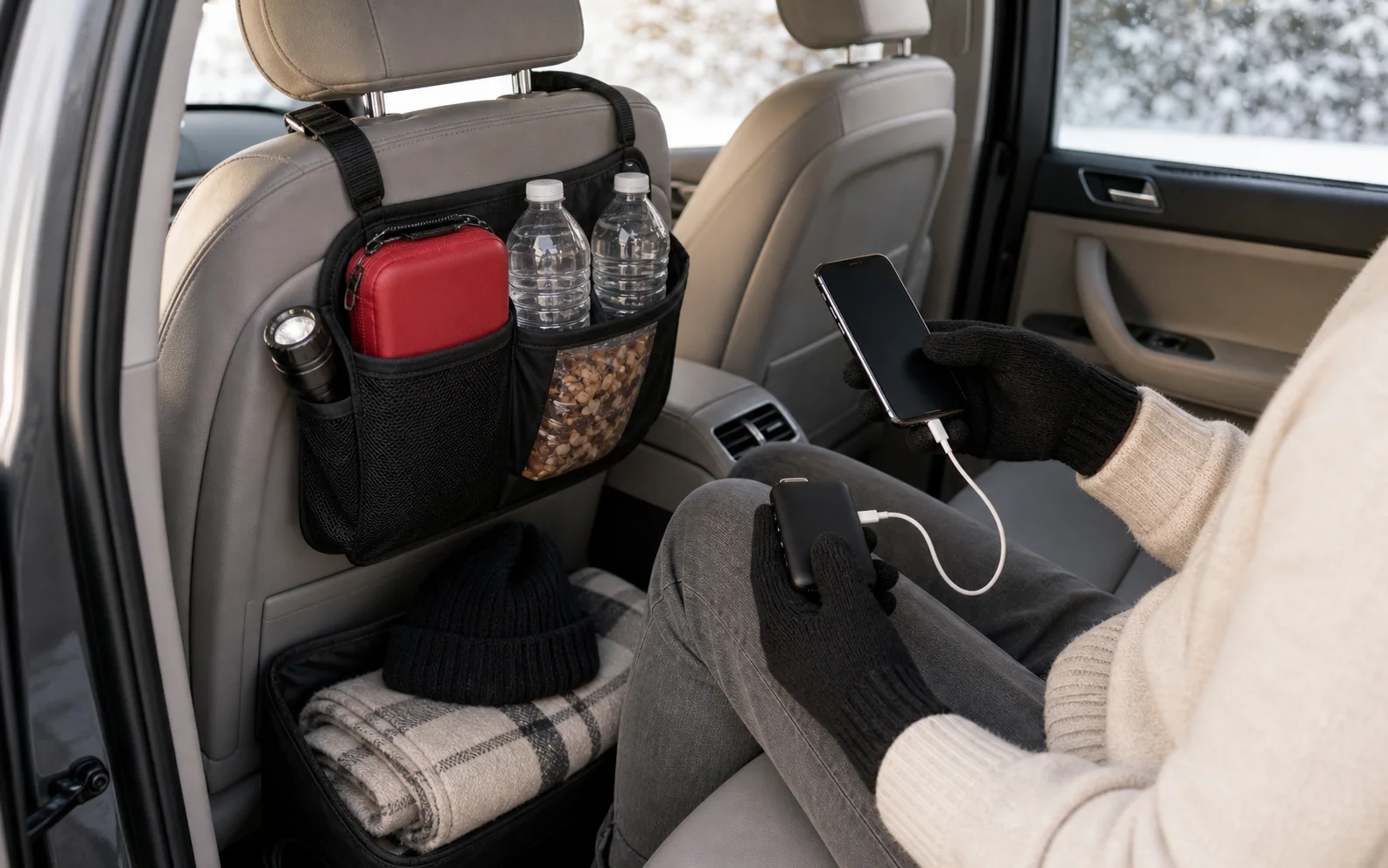
Split it. Heavy or dirty tools—shovel, traction material, cables, and inflator—belong secured in the cargo area. Warmth, lighting, food, water, first aid, medicines, gloves, charger, power bank, and a visibility vest should remain reachable from the passenger compartment.
Wisconsin DOT advises keeping a survival kit in the back seat because a trunk can freeze shut. Secure every item in an organizer, compartment, or tied-down container; an unsecured flashlight, water bottle, or shovel can become dangerous in a collision.
Do not block airbags, pedals, driver visibility, child-seat installation, or emergency exits. In a pickup bed, protect supplies from water and theft. In an EV, learn the manufacturer’s towing, 12-volt access, and cold-weather charging instructions; do not assume procedures match a gasoline vehicle.
What should you do if you are stranded in winter?
Call emergency services or roadside assistance, share your location, and follow their instructions. In most situations, the vehicle provides better shelter and visibility than walking into a storm. NHTSA advises staying with the car, making it visible, clearing snow from the exhaust pipe, and running the engine only periodically for warmth.
- Move only as local authorities or the situation safely allows; activate hazard lights.
- Keep the exhaust outlet clear whenever it can be checked without unsafe exposure. Carbon monoxide is odorless and can be fatal.
- Use blankets and dry layers before you become deeply chilled.
- Conserve phone power after sharing an accurate location.
- Do not run the vehicle inside an enclosed space or use outdoor combustion heaters in the cabin.
- Do not attempt traffic-side repairs, towing, or vehicle recovery beyond your training and equipment.
If anyone has confusion, unusual drowsiness, slurred speech, severe shivering, loss of coordination, chest pain, breathing difficulty, or other urgent symptoms, contact emergency services. A product checklist is not medical guidance.
How often should you inspect a winter car kit?
Do a full inspection before the first sustained cold spell, a quick check before long winter trips, and another after any use. Put a repeating reminder in your calendar.
- Charge the jump pack, power bank, light, and radio.
- Test cables and confirm the right connectors are packed.
- Check food, water, medicine, hand-warmer, battery, and first-aid dates.
- Dry wet gear completely; replace leaking, damaged, or missing items.
- Try on the hat, boots, socks, knit gloves, and insulated backup mittens.
- Confirm the shovel, inflator, and traction material suit the actual vehicle.
- Review the vehicle manual and show regular drivers where everything lives.
Finally, prepare the vehicle itself: tires, lights, wipers, washer fluid, battery or EV charge, brakes, and fuel. NHTSA recommends keeping the tank close to full—or the EV battery adequately charged—and checking weather and route conditions before departure. A packed bag cannot compensate for worn tires or a trip that should have been postponed.
What is the simplest way to start today?
Put a blanket, flashlight, charger, first aid, water, food, hat, socks, and both glove layers into a secure cabin organizer. Add the shovel, scraper, traction material, warning triangles, cables or jump pack, and inflator to the cargo area. Then set a charging and expiry reminder.
The goal is not to own the biggest kit. It is to have a small, understood system that still works when visibility is poor, the phone is low, the trunk is frozen, or an ordinary delay lasts much longer than expected.
Sources and methodology
- National Highway Traffic Safety Administration: Winter Driving Tips
- Wisconsin Department of Transportation: Winter Survival Kit
- American Red Cross: What to Include in a Car Emergency Kit
- National Weather Service: Winter Driving Safety
- CAA: Winter Driving Emergency Kit
- Clear Roads: Winter Driving Emergency Kit Checklist
We researched live US search demand and results with OpenSEO, reviewed six current public-safety and road-agency sources, checked CozyGalar’s published inventory for overlap, and separated official guidance from editorial synthesis. The topic adapts Amasty’s problem-solving, product-use, and list directions without copying its prose. Original AI-assisted images use a brand-owned glove reference and illustrate scenarios; they do not represent equipment tests.