


Snow-removal glove guide
What Are the Best Gloves for Shoveling Snow?
Match waterproofing, insulation, grip, cuff, and fit to the snow you clear and the amount of work you do.
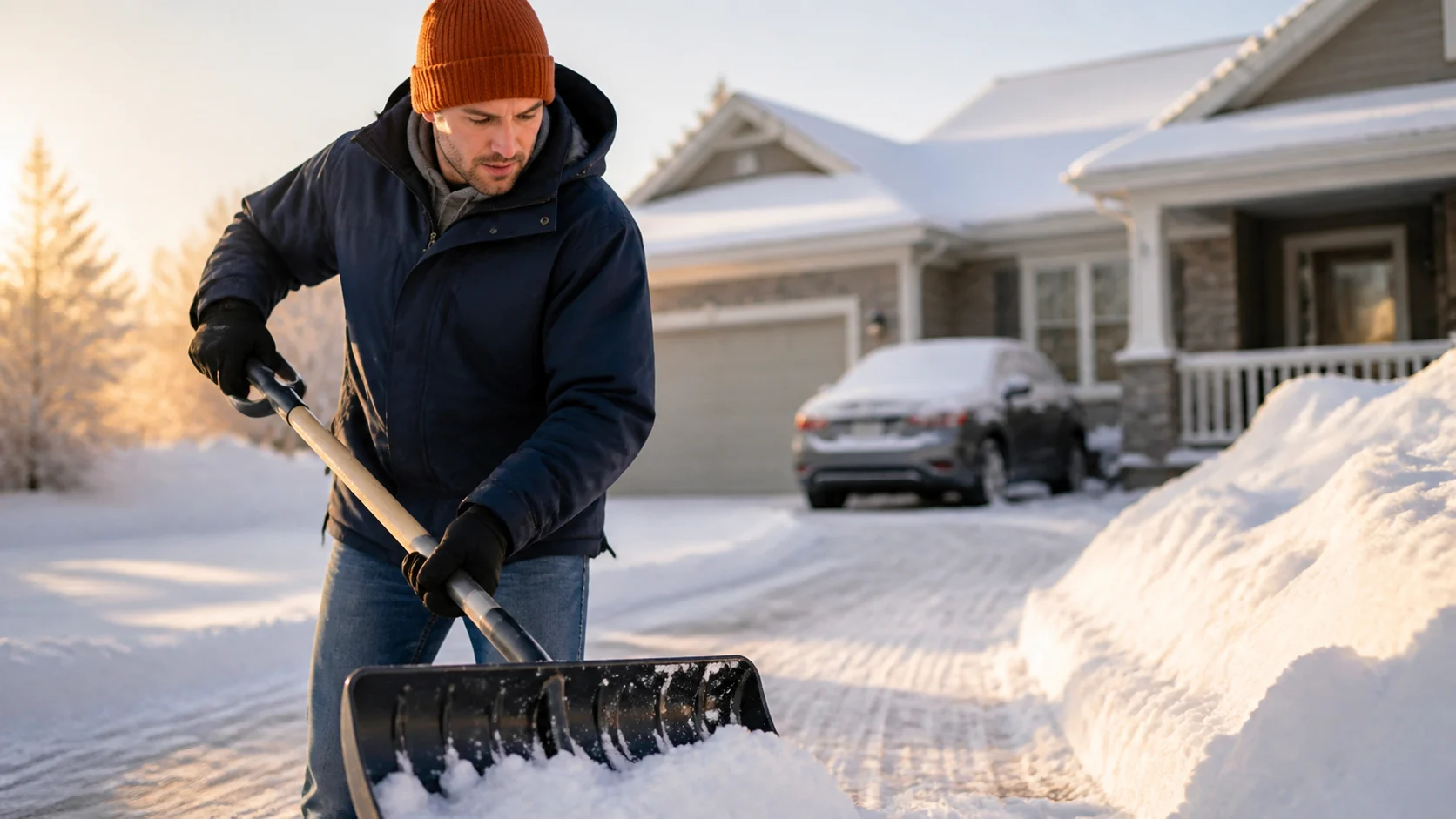
Snow removal creates a harsher glove test than a winter walk. Your hands squeeze and rotate a cold handle, brush against snowbanks, and may work hard enough to sweat. Wet snow can soak the outside at the same time. A warm glove that slips, leaks, or traps too much sweat can fail before the driveway is clear.
Current US search results mix ski gloves, winter work gloves, product grids, and forum recommendations. The useful question is not which pair feels warmest in a store. You need to know which construction fits your snow, session length, shovel, and work rate.
Why does snow shoveling need a different kind of glove?
Shoveling combines weather exposure with tool work. The glove must retain warmth without preventing the hand from wrapping around a D-grip or straight shaft. Its palm must resist the repeated rubbing that comes from pushing, lifting, and dumping. The cuff must stay put as jacket sleeves move.
Moisture arrives from both directions. Snow melts against the shell while your hands produce sweat inside. CDC/NIOSH warns that tight protective clothing can restrict circulation and that highly insulated protective equipment may create a warm microclimate that causes sweating. Once the work stops, evaporation can cool a damp hand.
A waterproof shell addresses snow and meltwater. Breathability, measured insulation, and breaks address sweat. A glove can block outside water and still leave the lining wet from the inside.
Should snow-shoveling gloves be waterproof or water-resistant?
Choose by contact, not by the forecast icon. A few inches of cold powder may brush away before it melts. Dense wet snow, slush, and a snow-covered shovel handle keep water against the glove much longer.
A water-resistant treatment can shed light snow for a short session. It cannot guarantee that seams, knit backs, or cuffs will stop prolonged moisture. A waterproof glove uses a barrier, coating, or construction intended to prevent water penetration. Read the product’s own claim and look for a named membrane or clear construction description instead of assuming that “snow glove” means waterproof.
REI’s glove guidance makes the tradeoff clear: more weather protection can reduce the rate at which sweat escapes. Use the protection your snow contact requires. For slush or repeated hand contact with snow, verified waterproof construction is the safer choice. For a five-minute sweep of dry powder, a lighter water-resistant work glove may feel better.
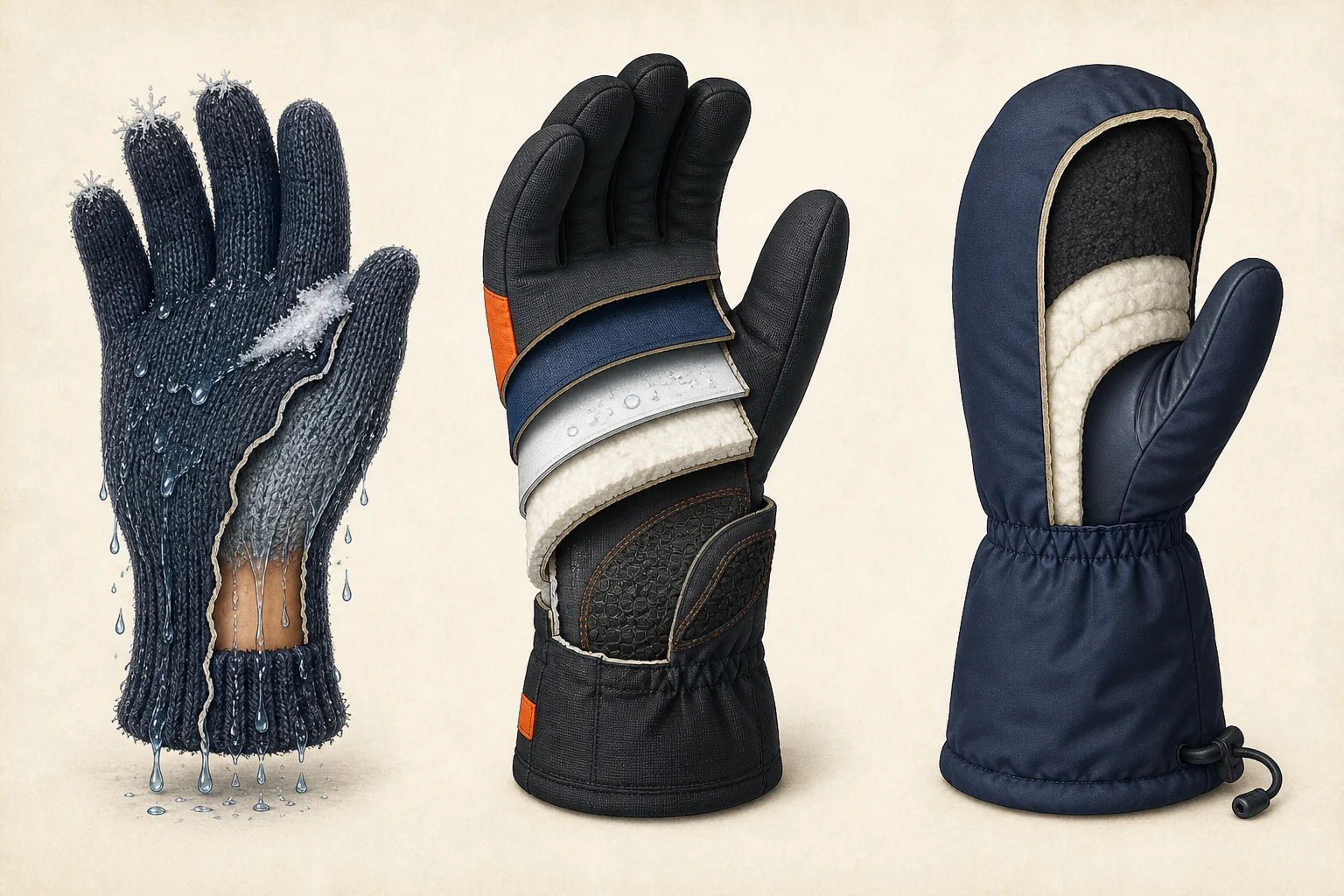
Casual knit gloves do not become waterproof because they contain wool or polyester. The open structure and seams remain potential paths for water. Our guide to whether knit gloves are waterproof shows what to look for in a hidden barrier and how to separate water resistance from a waterproof claim.
How much insulation is enough for shoveling snow?
Match insulation to temperature, wind, work rate, and duration. Shoveling wet snow on a long driveway produces much more body heat than sweeping light powder from three steps. A glove built for standing still can become sweaty during heavy lifting. A thin work glove may be comfortable while moving yet chill fast during a pause.
| Work pattern | Useful starting point | Main risk |
|---|---|---|
| Fast, short cleanup in mild cold | Light to moderate insulation with weather protection | Overheating in a bulky glove |
| Steady driveway clearing | Moderate synthetic insulation and a protective shell | Wet lining if the glove cannot vent |
| Slow work, strong wind, or long pauses | More insulation; consider a mitten or layered system | Loss of shovel control if too bulky |
| Long job with changing effort | Two-pair system or removable liner | No dry backup after sweat or leakage |
Do not use an unverified temperature number as a shortcut. Brands measure ratings differently, and people vary in circulation and cold tolerance. Start with the conditions and task, then check fit. If your hands stay cold in a dry glove, use our cold-hands troubleshooting guide before adding more bulk.
Which palm gives the best shovel grip?
A shovel handle loads the glove in more than one direction. You squeeze while pushing, but the shaft also rotates as snow shifts in the blade. Test the palm under a twisting motion. A straight squeeze alone misses the part that makes a wet handle slip.
Textured rubber or latex coatings can grip wet plastic and metal well. Reinforced leather or synthetic-leather palms can improve abrasion resistance and control, but the material needs enough texture and flex. Smooth insulated fabric may feel comfortable and still slide on a handle.
Bob Vila’s current winter-work-glove testing illustrates the tradeoff. Its waterproof latex-coated pick gripped wet objects well but trapped heat, while a water-resistant insulated leather option gained durability and grip at the cost of bulk. OutdoorGearLab also flags slippery fabric and thick fingers as weaknesses in a warm budget glove. The pattern matters more than a single winner: waterproofing, grip, breathability, and dexterity rarely peak in the same construction.
Wear the glove, hold a broom or shovel shaft, and rotate the handle through both hands. The liner should not slide inside the shell, the fingers should bend without fighting the insulation, and your grip should remain secure with modest pressure.
Which cuff keeps snow out?
Snow often enters at the wrist, especially when you lift a loaded blade, clear steps, or reach into a bank. A short knit cuff works for dry powder and brief cleanup if it overlaps the jacket sleeve. A longer gauntlet with a drawcord gives more protection when snow is deep or blowing.
A wrist cinch keeps the glove seated and reduces cold-air pumping as the hand moves. Check the complete jacket-and-glove connection before buying. An excellent cuff can still leave a gap when the sleeve rides up, and an overstuffed cuff can bunch under a narrow coat sleeve.
Choose an over-cuff or under-cuff setup and keep it consistent. A gauntlet usually goes over the sleeve. A trim cuff can sit under it. Mixing both halfway creates folds where snow collects.
How should snow-shoveling gloves fit?
Your fingertips should reach near the ends without pressing hard into them. The palm should sit flat when the hand is open, and you should make a fist without strong pressure across the knuckles. A tight glove compresses insulation and can restrict comfortable movement. An oversized glove increases handle movement inside the palm and makes the hand work harder.
Use the exact brand chart because letter sizes vary. Measure hand circumference and length, then run these tests indoors while the return window is open:
- Wrap both hands around a shovel, broom, or similar shaft.
- Push the handle forward and pull it back without the cuffs creeping off the wrists.
- Rotate the shaft while keeping a relaxed grip.
- Pick up keys and fasten a jacket zipper.
- Wear the gloves for ten minutes and check for pressure, slipping liners, or rapid sweat buildup.
Our detailed guide to men’s winter-glove fit explains palm, finger, cuff, grip, and touchscreen checks.
Are gloves or mittens better for snow shoveling?
Five-finger gloves usually suit a shovel because they give the hand more control over the shaft and D-grip. Mittens share heat between the fingers and can be warmer during slow work or long pauses, but they reduce independent finger movement.
A trigger-finger or split-finger mitten can provide a middle ground. A liner glove under a roomy waterproof mitten lets you remove the shell for a small task without exposing bare skin. Confirm that the layers do not squeeze the fingers or make the shovel unstable.
For most homeowners, the decision follows the work rate. Use a flexible insulated glove for sustained pushing and lifting. Consider a mitten or layered system for slow snow blowing, stationary breaks, or severe cold. If you choose a mitten, test the shovel grip first.
What should you wear for dry powder, wet snow, or slush?
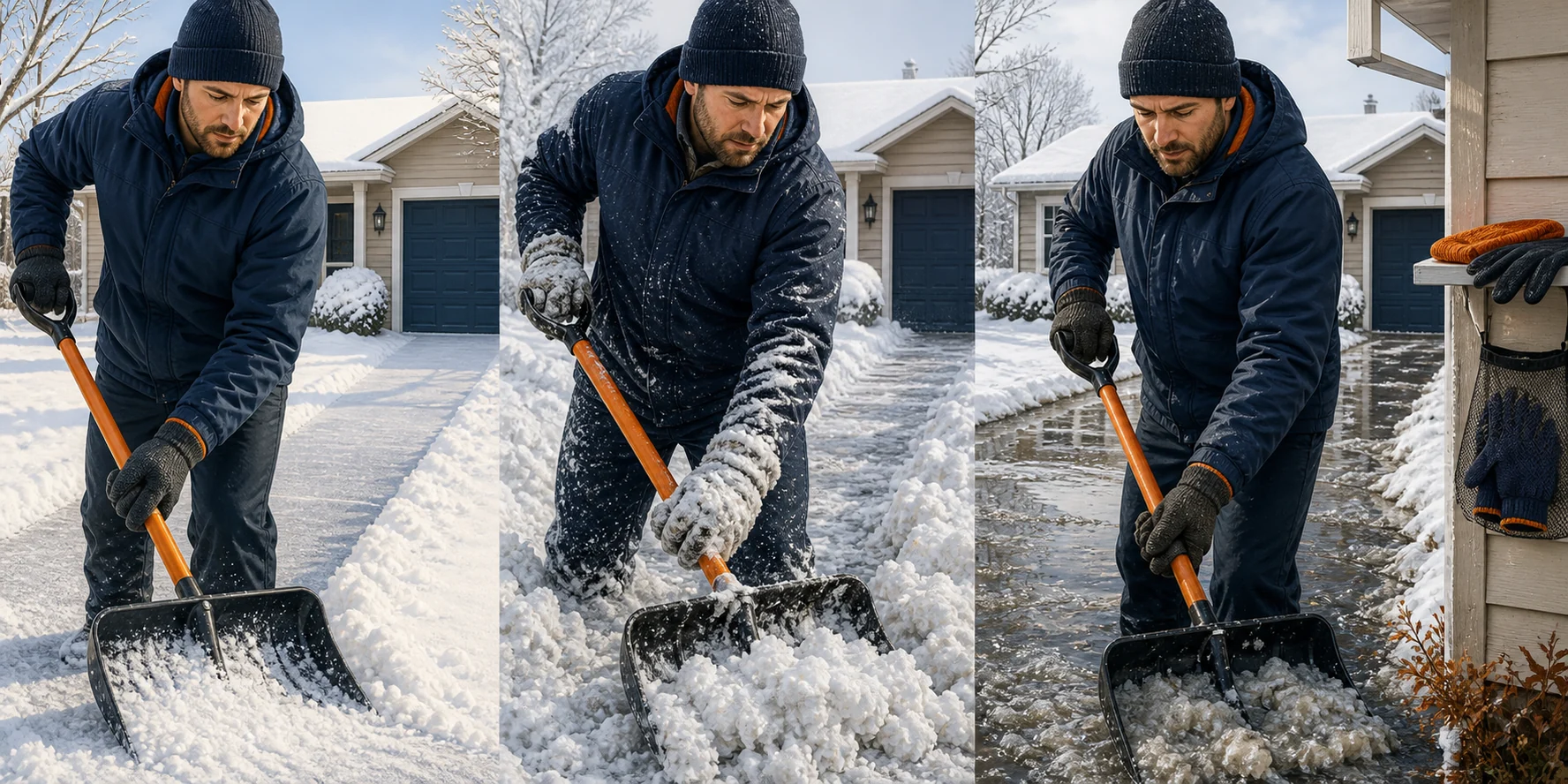
| Snow and job | Glove construction | Useful features | Avoid |
|---|---|---|---|
| Dry powder, short walkway | Flexible insulated work glove; water resistance may be enough | Secure palm, overlapping cuff, moderate breathability | Bulky ski glove that makes the handle hard to feel |
| Wet, heavy snow | Verified waterproof insulated work or snow glove | Wet-grip palm, reinforced wear zones, wrist cinch | Open knit, fabric-backed leather palm, vague “weatherproof” claim |
| Slush and meltwater | Waterproof glove with sealed construction and long cuff | Grip that works wet, easy-to-dry liner, dry spare | Absorbent exterior and exposed wrist gap |
| Deep cold with slow removal | Warmer glove, split-finger mitten, or layered mitten system | Room for fingers, gauntlet cuff, backup pair | Tight layers that compress insulation |
| Long driveway with high effort | Moderately insulated breathable waterproof glove | Stable liner, rotation grip, replaceable dry pair | Maximum insulation chosen only for the starting temperature |
Once the lining becomes damp, another layer of insulation cannot make it dry. Switch pairs before a long break or the final low-output cleanup phase. CDC/NIOSH also recommends carrying extra cold-weather gear in case clothing or gloves become wet.
Is CozyGalar suitable for shoveling snow?
CozyGalar men’s gloves are fleece-lined wool-blend knit gloves with conductive fingertips and a textured palm. They are built for everyday cool-to-cold routines such as commuting, driving, errands, and dry dog walks. Sizes run from S through XL.
They are not verified waterproof work gloves, and we do not position them for wet snow, slush, heavy abrasion, or prolonged snow contact. They may serve for a quick brush of dry powder from steps when conditions are mild and dry. Choose a purpose-built waterproof insulated work or snow glove for a driveway, wet storm, or long snow-removal session.
Need an everyday glove after the driveway is clear?
CozyGalar is the lighter five-finger option for driving, phone use, and routine winter errands. Check the verified materials, sizes, current price, and availability on Amazon.
Shopping disclosure: CozyGalar sells this product on Amazon. This is not an affiliate-commission link. Amazon controls current price and availability.
When should you stop shoveling?
Gloves cannot make heavy snow removal safe for every person or every condition. The American Heart Association warns that snow shoveling combines strenuous arm work with cold-air exposure, which can raise cardiovascular strain. It advises people with known or suspected heart disease or relevant risk factors to get someone else to clear the snow.
If you do shovel, start at a gradual pace, push snow when possible, take breaks, and avoid loading the shovel until it becomes a heavy lift. Stop at once for chest pain or pressure, lightheadedness, palpitations, or unusual shortness of breath. Call 911 if symptoms do not settle after stopping.
Cold injury also requires action. Go indoors if fingers become numb, painful, clumsy, pale, or discolored. Replace wet gloves with a dry pair. Severe cold, high wind, or a remote location calls for a complete clothing and safety plan, not a glove recommendation alone.
What is the snow-glove buying checklist?
- A specific waterproof or water-resistant construction that matches the snow contact
- Enough insulation for the coldest low-output part of the job without causing immediate sweat
- A palm that stays secure when a wet handle twists
- Reinforcement where the shaft rubs the palm and thumb web
- A cuff that overlaps the jacket and keeps snow from entering
- A fit that allows a fist and full finger bend without pressure
- A liner that stays stable and can dry between storms
- A return policy that lets you perform an indoor handle test
If two gloves pass the list, choose the one that lets you hold the shovel with less effort. Excess grip pressure tires the forearms and often signals that the palm is slippery, the fingers are too bulky, or the fit is wrong.
Frequently asked questions
Can I shovel snow in ordinary knit gloves?
Only for brief contact with dry snow in mild conditions. Ordinary knit gloves are not automatically waterproof, and wet snow can soak the yarn and seams.
Are ski gloves good for shoveling?
They can be warm and weather-protective, but some are too bulky or slippery for a shovel. Test handle rotation, palm grip, cuff movement, and sweat buildup before keeping them.
Are leather gloves waterproof enough for snow?
Leather may resist some moisture when treated, but construction and seams still matter. Use the manufacturer’s stated protection level and care instructions. Do not treat every leather glove as waterproof.
Should I use heated gloves for shoveling?
Most healthy adults generate substantial heat while shoveling. Heated gloves add batteries, bulk, and care requirements. They may suit specific low-output or medical needs, but a breathable waterproof glove is a more practical starting point for active snow removal.
Why do my hands sweat and then get cold?
The glove traps more heat than the work requires, moisture builds in the lining, and evaporation cools the hand when you pause. Reduce insulation, slow the pace, vent clothing, or change to a dry pair. See our guide to sweaty hands in winter gloves.
Should I keep a second pair by the door?
Yes for long jobs, wet snow, or repeated storms. A dry spare is useful when the first pair becomes wet from snow or sweat, and it gives the lining time to dry fully.
Sources and research notes
CozyGalar did not laboratory-test snow-shoveling gloves for this guide. We synthesized OpenSEO US keyword and competitor data dated August 13, 2026, current ranking-page coverage, primary safety guidance, and verified CozyGalar product facts. Product features, prices, and availability can change.