

Heated glove buying guide
Are Heated Gloves Worth It?
A practical decision guide to heat coverage, real-world runtime, fit, moisture, safety, alternatives, and the situations where powered warmth earns its price.
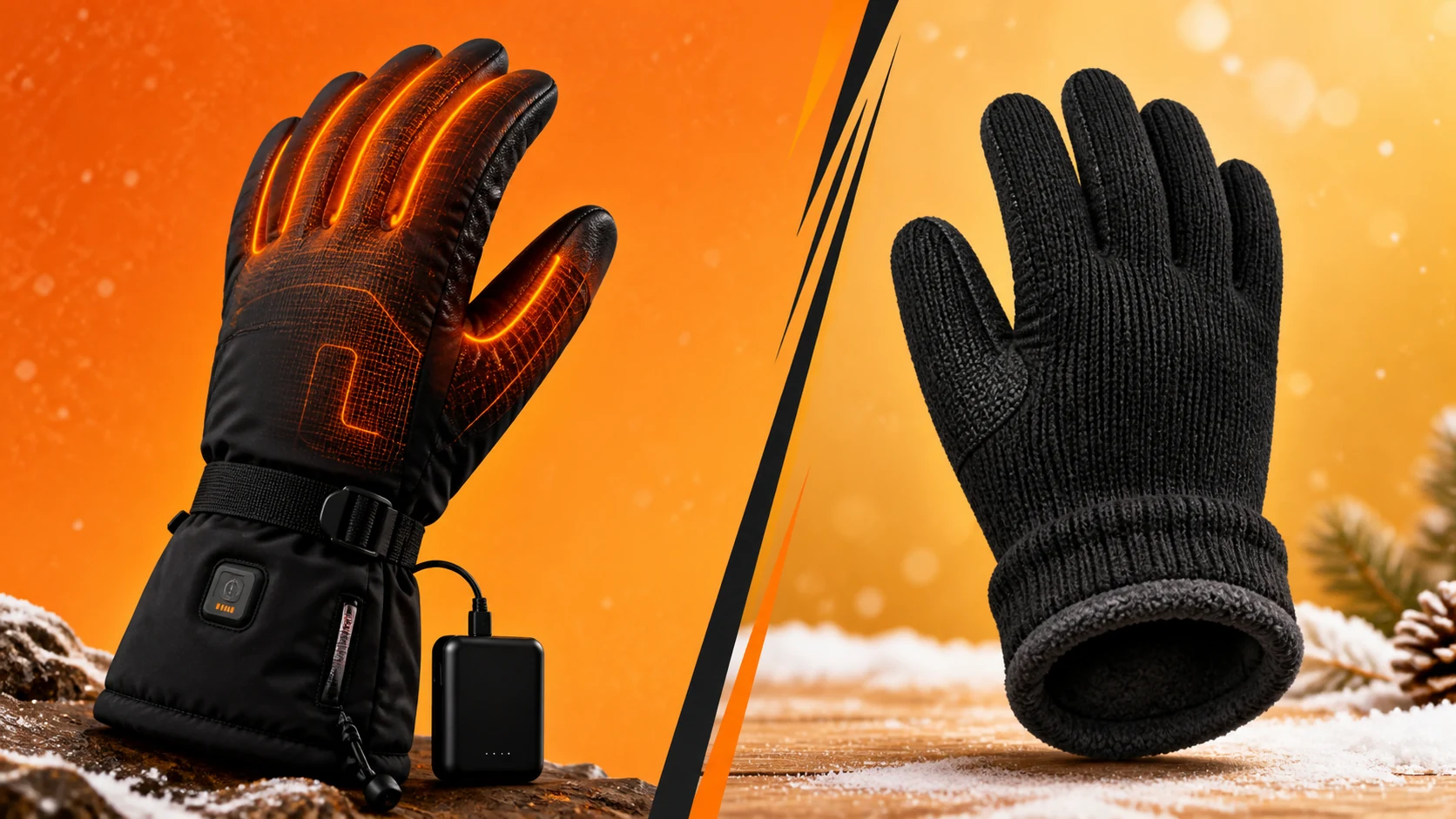
A useful heated glove has to do two jobs. Its shell and insulation must slow heat loss, while its battery replaces some of the warmth your hands cannot produce or retain. Buying on temperature alone ignores half of the system. A hot element inside a drafty, wet, or poorly fitted glove can still leave your fingertips cold.
Are heated gloves worth it for your routine?
Start with the cold event you need to solve. Write down its duration, how much you move, whether wind or water is present, the finger tasks you perform, and where you can warm up. Heated gloves earn their price when several of these conditions occur together:
- You remain outdoors for hours rather than minutes.
- You sit, stand, operate equipment, or ride instead of producing steady body heat.
- Your fingers become uncomfortable in a suitable insulated glove that is dry and correctly sized.
- You need separate fingers and cannot accept the dexterity loss of a mitten.
- You can recharge the batteries and carry passive backup protection.
A 20-minute dog walk and a seven-hour shift should not lead to the same purchase. A commuter may get better value from a light fleece-lined glove. A ski-lift operator, winter spectator, motorcycle commuter, or person whose hands remain cold during low-output exposure has a stronger reason to pay for active heat.
Divide the price premium over an adequate passive glove by the number of cold hours when you expect to use powered heat. A $150 premium used for five short outings costs $30 per outing. The same premium spread across 100 hours of outdoor shifts costs $1.50 per hour. Use your real winter, not a product-page lifestyle image.
How do heated gloves work, and where should the heat go?
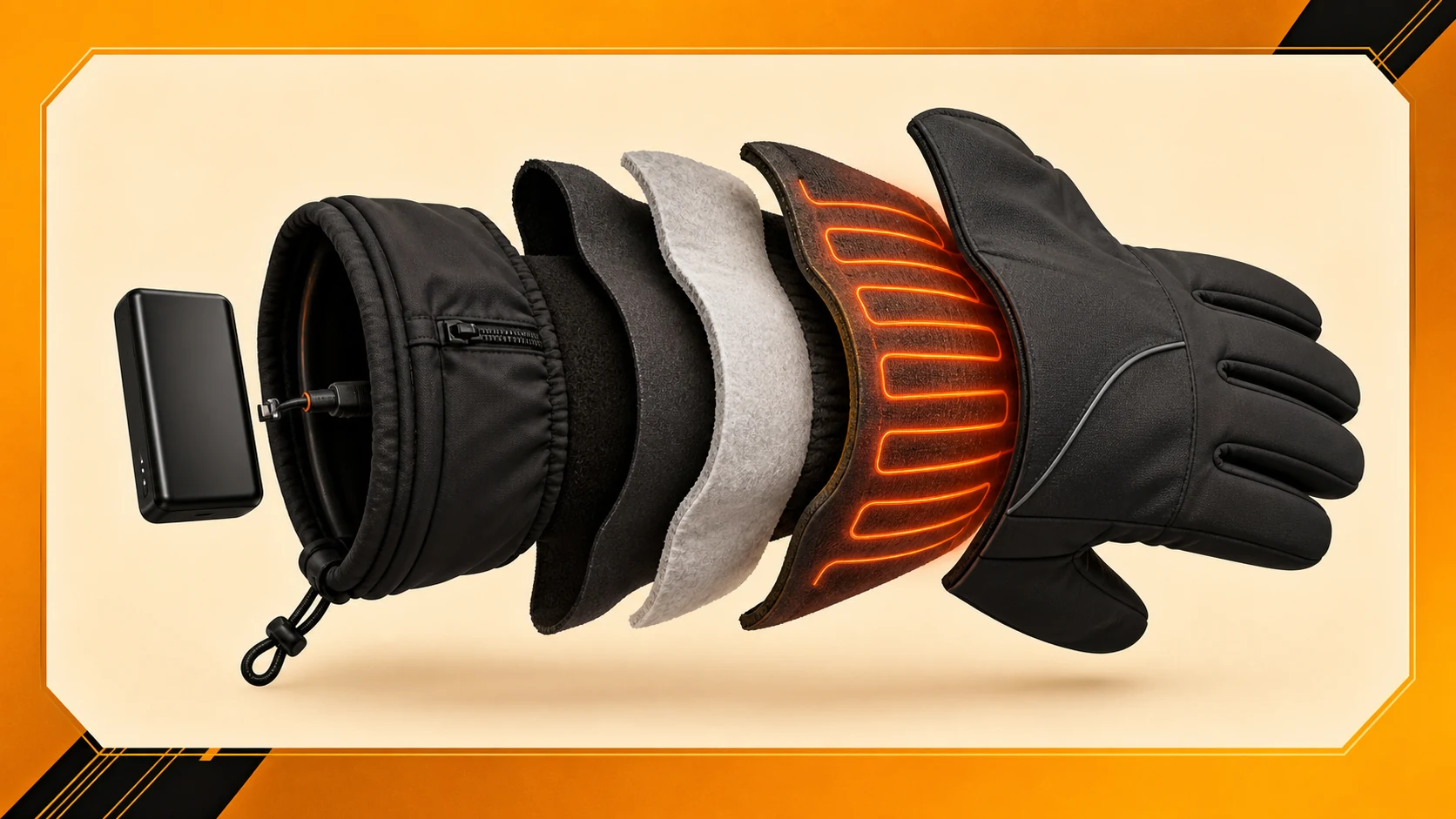
Rechargeable heated gloves pass current through a resistive element. A controller changes the power level, and a removable battery usually sits in a cuff pocket. The element may run across the back of the hand, along the fingers, around the fingertips, or through a smaller zone. Brands use different layouts, so “heated” does not describe the coverage.
Finger and fingertip coverage deserves priority when your complaint is numb fingertips. A back-of-hand element can feel warm near the control button while the distal fingers remain uncomfortable. Request a heating-zone diagram or read the manual before buying. Product photos that show a glowing whole hand are illustrations, not measurements.
The heating element cannot supply wind protection, waterproofing, abrasion resistance, or insulation after the battery ends. Those come from the shell, membrane, seams, insulation, cuff, and fit. Treat the glove as winter protection first and an electrical device second.
Who benefits most from heated gloves?
Heated gloves make the strongest case during long exposure with low physical output. A spectator may sit for three hours. A lift operator may spend a shift outside. A skier can cool down on repeated chairlift rides even if the descent creates body heat. In those situations, adjustable heat fills a gap that thicker insulation may not solve without adding more bulk.
They can also help someone who has already tried an appropriate size, dry insulation, and a wind-blocking shell but still cannot keep fingers comfortable. If your current gloves feel cold because they are wet, loose, or too tight, fix that problem first. Our guide to why hands stay cold inside winter gloves covers those checks.
The U.S. National Institute of Arthritis and Musculoskeletal and Skin Diseases advises people with Raynaud’s phenomenon to keep the whole body warm and says heated gloves or hand warmers may be considered. A glove is not a diagnosis or treatment plan. New color changes, pain, sores, or persistent numbness need medical advice.
Athletes often need less insulation. Cross-country skiing, winter running, and steep hiking generate heat and sweat. REI’s glove guidance recommends lighter gloves for aerobic activities because the body already produces substantial warmth. Powered heat can make moisture management harder in that setting.
When are heated gloves not worth the money?
Short, predictable outings rarely justify the battery system. If you need gloves for a 20-minute commute, errands, driving, or a quick dog walk in ordinary winter weather, a well-fitting fleece-lined glove may provide enough comfort with less bulk and no charging.
Heated gloves are also a weak choice when you need precise finger work and the model uses thick insulation or a large battery pocket. Travel + Leisure’s multi-product testing found that some heated models maintained warmth but felt too bulky for comfortable hand use. Touchscreen labels deserve the same caution: a conductive patch cannot remove the precision loss created by thick fingers or excess fabric.
Remote trips demand another calculation. Outdoor Life advises users to treat heated gloves as ordinary gloves without the heating element or carry a spare pair in the backcountry. A dead battery should create an inconvenience, not remove your only useful hand protection.
A Reddit discussion supplied by the owner asked about seven hours at -35 C. The most useful replies did not promise that one battery glove would solve the exposure. People recommended layered liners and mittens, spare heat sources, and a plan for the battery running out. These are personal accounts rather than controlled tests, but they expose the right failure question: how will you protect your hands if seven planned hours become longer?
Extreme cold is a safety problem, not a comfort-product comparison. The National Weather Service warns that wind increases heat loss and that fingers are among the areas most prone to frostbite. Heated gloves must sit inside a complete cold-weather plan that covers wind, moisture, the rest of the body, emergency shelter, and the duration of exposure.
Imagine the battery is empty before you leave. Would the glove’s insulation and shell still be suitable for the route home? If the answer is no, buy a warmer passive glove, carry a backup, or choose a heated model with stronger insulation.
How long do heated glove batteries really last?
Runtime depends on the glove, battery, setting, temperature, battery age, and use. Treat every “up to” number as the best case for that model and setting, not a promise for your coldest day.
ORORO’s official help center lists most of its heated gloves at about three hours on High, four hours on Medium, and 8.5 hours on Low. It also notes that colder weather, battery age, and usage habits can change performance. Outdoor Life reports that the top setting on the models it tested generally lasted two to two and a half hours.
OutdoorGearLab’s Sureshot test provides a useful model-specific example. Its battery lasted a little over two hours on High, around five hours on Medium, and up to about eight hours on Low. A full recharge took at least six hours. Those numbers should not be transferred to another glove, but they show why the highest heat setting and advertised maximum runtime answer different questions.
Use the runtime on the setting you expect to need. Add travel time and a 25% reserve. A six-hour event with a three-hour High runtime needs a lower-setting strategy, a compatible spare battery, or enough passive insulation to finish the day.
Can battery specifications predict runtime?
Battery capacity helps compare products only when voltage and capacity are both stated. Watt-hours equal volts multiplied by amp-hours. A 7.4-volt, 2.2-amp-hour battery stores about 16.3 watt-hours. It does not follow that every glove with that battery runs for the same time. Element resistance, controller behavior, heat setting, wiring losses, and cold-weather battery performance change the result.
Look for a model-specific table listing High, Medium, and Low runtimes. A single maximum number hides the setting. Also check whether replacement batteries remain available, what one costs, whether both gloves charge at once, and how long a full charge takes. SKI Magazine’s tested roundup adds a useful ownership detail that many buying guides omit: replacement batteries are an ongoing part of the product, not an invisible accessory.
Should you run High all day?
High heat is useful for warming the glove at the beginning of exposure, but it consumes the battery fastest and may increase perspiration. Many users can preheat, switch to a lower setting, and raise the heat during stationary periods. The correct setting is the lowest one that keeps the hand comfortable and dry.
High heat during a climb or fast walk can make the lining damp. If activity slows or the battery ends, that moisture increases heat loss and comfort drops. Manage heat before the glove feels sweaty; do not wait until the lining is wet.
Are heated gloves still warm when the battery dies?
Some are, and some lose much of their advantage. The answer depends on insulation and shell construction. OutdoorGearLab praised the Sureshot’s dexterity but found very little passive insulation; the tester’s hands became cold after the battery died. A bulkier ski glove with substantial insulation may remain useful without power.
Look past the heating controls in the product listing. Check insulation type and amount when the brand provides it, cuff coverage, wind resistance, water protection, and the glove’s intended activity. Reviews that describe performance after the battery ends are more informative than reviews that only mention the first few minutes of heat.
Mittens remain a strong passive alternative. REI explains that mittens made from the same materials tend to be warmer because fingers share heat and the design has fewer seams. The tradeoff is reduced dexterity. A split-finger mitten can sit between a glove and a full mitten.
Should you buy heated gloves, liners, mittens, or hand warmers?
Integrated heated gloves are easier to manage. The shell, insulation, controls, and heat system arrive as one product. They suit buyers who want a complete solution for skiing, outdoor work, or long stationary exposure. The drawbacks are price, bulk, and limited ability to change the outer layer.
Heated liners give you more flexibility. You can wear them under a waterproof shell in wet snow, then use another outer glove for a different task. They must fit under the shell without compressing your fingers, and the shell still needs to handle wind, abrasion, and water. Outdoor Life notes that heated liners are not automatically waterproof because manufacturers design them to sit under a protective glove.
Passive mittens remain the most dependable choice when maximum warmth matters more than separate-finger control. The National Weather Service notes that mittens are warmer than gloves, and SKI Magazine’s testing explains the mechanism: adjacent fingers share heat. A split-finger or flip-open mitten can recover some access for short tasks.
Chemical or reusable hand warmers cost less and have no wiring inside the glove, but they heat a smaller area and can interfere with grip. They work best in a roomy mitten or dedicated pocket. They are less suitable when you need even warmth across individual fingers.
Measure before combining layers. A liner plus a tight shell can restrict movement and create pressure. Our men’s winter-glove fit guide explains how fingertip space and palm tension affect warmth, grip, and touchscreen control.
| Option | Best fit | Main limitation |
|---|---|---|
| Integrated heated glove | Long, low-output exposure with one complete system | Cost, charging, battery bulk |
| Heated liner plus shell | Users who need to change outer protection by weather or task | Layering fit and no weather protection from the liner alone |
| Insulated mitten | Maximum reliable warmth without electronics | Reduced fine-finger control |
| Hand warmer plus mitten | Occasional cold days and inexpensive backup heat | Uneven heat and limited dexterity |
| Fleece-lined knit glove | Short errands, commuting, driving, and everyday cool-to-cold use | Not for wet exposure or extreme cold |
Are heated gloves waterproof and touchscreen-friendly?
Heating does not guarantee either feature. Waterproofing comes from the shell, membrane, seams, and cuff construction. “Water resistant” may be adequate for dry snow or a short shower but should not be read as waterproof. Check the exact model’s specifications and care instructions.
Touchscreen performance depends on conductive material making close contact with the screen. Thick insulation, long fingertips, and internal seams reduce accuracy. A glove may handle a large tap or a call button yet struggle with typing. Test the phone, case, and screen protector together while the return window is open.
How should heated gloves fit?
A heated glove should feel secure without pulling across the palm or squeezing the fingers. Excess empty space makes the heating system warm more air and reduces fingertip control. A tight fit can compress insulation and make controls harder to reach.
Measure hand circumference and length, then use the brand’s size chart. Do not assume your usual glove size transfers between companies. If you plan to add a liner, confirm that the manufacturer allows room for one rather than sizing up by guesswork.
Check four pressure points during the return window: fingertips, thumb web, palm when gripping, and the cuff battery pocket. Bend every finger, hold a steering wheel or pole, zip a coat, and operate the heat button. A battery that feels acceptable while standing can press into the wrist under a jacket cuff.
Do waterproofing and breathability still matter?
Yes. A heating system cannot keep insulation effective after water reaches it. For skiing, snow work, winter cycling, or prolonged wet weather, verify the shell and membrane claims for the exact model. “Water resistant” and “waterproof” are different promises, and a product should explain its construction rather than rely on a generic snowflake icon.
Breathability matters during changing activity. A sealed glove may keep precipitation out while trapping perspiration. Use lower heat when moving, open cuffs during breaks when conditions permit, and dry the glove according to the manual before the next charge-and-use cycle.
What safety and travel checks matter?
Use the supplied or manufacturer-approved charger, remove the batteries before washing, and follow the product’s drying instructions. Stop using a battery that is damaged, swollen, unusually hot, or recalled. Keep the cuff pocket and connectors dry before reinstalling power.
For air travel, the FAA says spare lithium-ion batteries belong in carry-on baggage and their terminals must be protected from short circuits. Batteries cannot exceed 100 watt-hours without additional airline approval, and airlines may apply stricter rules. Keep batteries in a case or their retail packaging and check the carrier before departure.
Heating controls should be reachable with gloves on. Start with a lower setting until you understand how the pair feels in your weather. A persistent hot spot, damaged wire, or unreliable control is a reason to stop using the glove and contact the manufacturer.
Which product-page claims deserve extra checking?
Heated-glove listings often compress several different facts into one promise. Read the manual and warranty before relying on any of these claims:
- “Up to 10 hours”: Which setting, ambient condition, and battery capacity produced that result?
- “Heats the whole hand”: Does a diagram show the element reaching each finger and fingertip?
- “Waterproof”: Is there a named membrane, seam construction, or test standard?
- “Instant heat”: How long does it take the fingertips, rather than the control button area, to feel warm?
- “Touchscreen compatible”: Which fingers have conductive material, and can the return policy cover a test with your phone?
- “Safe”: Does the battery show voltage, capacity, watt-hours, manufacturer identity, and applicable certification?
A useful review names the temperature, wind or moisture, activity, heat setting, duration, fit, and what happened after the battery weakened. “Very warm” cannot tell you whether the pair will cover your commute or ski day. Give more weight to specific reports that resemble your use case, while remembering that customer reviews are observations rather than controlled tests.

Which glove type fits your winter routine?
| Routine | Best starting category | Reason |
|---|---|---|
| Short commute, driving, errands | Fleece-lined knit or light insulated glove | Low cost, easy dexterity, no battery planning |
| Outdoor game, lift rides, long stationary work | Integrated heated glove with useful passive insulation | Adjustable heat helps during low-output exposure |
| Wet skiing or snow work | Waterproof insulated glove or mitten; heated only if the shell is suitable | Moisture protection remains essential |
| Winter running or hard uphill travel | Light breathable glove | Your activity produces heat and moisture |
| Remote or all-day cold | Passive glove or mitten plus backup; heated system only with a power plan | Battery failure must not remove essential protection |
For ordinary driving and commuting, grip and finger control can matter more than maximum insulation. Our winter driving glove guide covers that narrower decision.
Can a non-heated glove be the better value?
Yes. CozyGalar’s men’s wool-blend gloves use a fleece lining, conductive fingertips, and a textured grip for everyday cool-to-cold routines. They are not heated, waterproof, or designed for extreme cold. At the owner-supplied price of $11.99, they are a practical starting point for commuting, driving, and short dog walks when powered heat would add cost without solving a longer-exposure problem.
Check current size and price on Amazon
Shopping disclosure: CozyGalar sells this product on Amazon. This is not an affiliate-commission link. Amazon controls current price and availability.
How should you test heated gloves during the return window?
Charge both batteries fully and perform this test before depending on the gloves in remote or severe conditions:
- Confirm that both gloves heat at the same speed and that the controls work through the outer layer.
- Wear them outdoors for the length of your normal trip, using the setting you expect to need.
- Perform real tasks: grip a handle, use a zipper, operate a phone, and fit the cuff under or over your jacket.
- Lower the setting during movement and check whether the lining becomes damp.
- Turn the heat off for the final portion. Decide whether the unpowered glove is adequate for the route home.
- Record runtime, recharge time, hot spots, battery-pocket pressure, and any difference between the left and right glove.
Do not perform a cold-safety test by staying outside after numbness, pain, or skin color changes begin. Return indoors and follow official cold-injury guidance.
What is the final buying test?
Heated gloves are worth buying when their real runtime covers your exposure, the unpowered glove remains adequate, and the shell matches the weather. They are especially useful for long periods of low movement. Ordinary insulated gloves or mittens give better value when outings are short, activity is high, or you do not want battery maintenance.
Before checkout, write down six answers: exposure time, activity level, wind and moisture, required finger control, expected runtime on the needed setting, and the backup if power fails. Heated gloves are worth the cost when those answers point to a repeatable need for active heat.
Frequently asked questions
Are heated gloves worth it for skiing?
They can be, especially for cold chairlift rides or skiers whose fingers stay cold in an appropriate insulated glove. Choose a ski-specific shell, useful passive insulation, a secure cuff, and runtime that covers the day. Carry a backup in remote terrain.
Are heated gloves worth it for Raynaud’s phenomenon?
NIAMS includes heated gloves or hand warmers among options for keeping warm, but Raynaud’s can have primary and secondary forms with different risks. Treat the glove as comfort equipment, keep the core warm, and ask a health professional about severe, new, or worsening symptoms.
Can you wash heated gloves?
Follow the exact model’s manual. Remove batteries when instructed, protect connectors, avoid wringing or high heat, and reinstall power only after the glove and connector are dry. Do not assume that a washable textile means the electrical assembly can be submerged.
How long do heated glove batteries last?
Model-specific runtime can range from a few hours on High to much longer on Low. Cold, battery age, and charging history affect the result. Use the manufacturer’s setting-by-setting table and test your pair before a long outing.
Do heated gloves keep working after the battery dies?
The heating stops. Remaining warmth depends on the glove’s passive insulation, shell, fit, and moisture level. A suitable remote-use glove should remain protective enough to reach shelter, or you should carry a backup.
Sources and research notes
We did not laboratory-test heated gloves for this article. The guide combines current manufacturer information, independent product testing, official safety guidance, and CozyGalar’s verified product facts.
- Federal Aviation Administration: PackSafe lithium batteries
- NIAMS: Raynaud’s phenomenon treatment and steps to take
- National Weather Service: cold weather safety
- ORORO Help Center: heating duration by product and setting
- REI Expert Advice: choosing snow gloves and mittens
- Outdoor Life: heated glove testing and battery guidance
- OutdoorGearLab: Sureshot heated glove test
- Travel + Leisure: multi-product heated glove testing
- SKI Magazine: tested heated-glove comparisons
Competitor pages reviewed for coverage and content gaps: MotionHeat, HeatedGear360 UK, GoKozyWear, SKI Magazine, and the owner-supplied Reddit discussion. Commercial pages were used to map questions, not as sole evidence for medical, safety, or performance claims.